From 14 cars to 4: PM Modi, ministers trim VIP convoys
It is not just Prime Minister Narendra Modi and his Cabinet who have taken steps as part of the austerity drive. Several BJP-ruled states have also issued directives aimed at cutting down government expenditure and promoting restraint among ministers and officials.
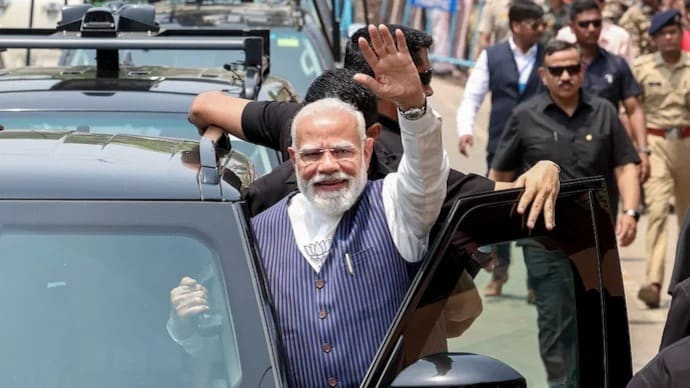
Following Prime Minister Narendra Modi’s appeal to citizens to adopt austerity measures in response to the economic impact of rising global oil prices triggered by the conflict in the Middle East, several Union ministers have reduced the number of vehicles in their official convoys.
Sources told India Today TV that many Cabinet ministers have cut the size of their security convoys by nearly 50 per cent. Leading by example, the Prime Minister himself arrived at his office from his residence for the Cabinet meeting today with a convoy of just two vehicles.
This marks a significant departure from the norm, as the “Blue Book”, the protocol manual based on the security standards established for the Prime Minister, stipulates that his convoy usually consists of 14 to 17 vehicles.
In addition, depending on the prevailing security threat perception, personnel and vehicles from state police forces are also deployed as part of the convoy. As a result, the total number of vehicles accompanying the Prime Minister can at times increase to between 30 and 40.
The Prime Minister has also advocated greater use of electric vehicles. Sources indicated that PM Modi stressed that no new vehicles should be purchased as part of the transition.
Apart from PM Modi, Defence Minister Rajnath Singh, who is entitled to Z+ category security and typically travels with an 11-vehicle motorcade, has now begun using a convoy of only four vehicles.
Similarly, Home Minister Amit Shah and Health Minister JP Nadda have also reduced their official convoys to just four vehicles each. Both ministers, like the Defence Minister, are also provided Z+ category security.
MEASURES TAKEN BY BJP-RULED STATES
It is not just Prime Minister Narendra Modi and his Cabinet who have taken steps as part of the austerity drive. Several BJP-ruled states have also issued directives aimed at cutting down government expenditure and promoting restraint among ministers and officials.
In Maharashtra, the government has barred ministers from using government aircraft at will, except for urgent official business, which will now require prior approval from the Chief Minister. Some ministers’ foreign visits have also been cancelled.
In Delhi, Chief Minister Rekha Gupta announced on X that ministers and government officials would use a “minimum number of vehicles” and prioritise carpooling and public transport.
In Uttar Pradesh, Chief Minister Yogi Adityanath has ordered a 50 per cent reduction in the size of convoys accompanying ministers and senior officials. Following his appeal, several MLAs have also begun giving up their escort vehicles.
In Gujarat, Chief Minister Bhupendra Patel has started travelling with a convoy of just three vehicles, while the state’s health and labour ministers have decided to forgo escort vehicles altogether.
Gujarat Deputy Chief Minister Harsh Sanghvi has also cancelled his proposed visit to the United States, where he was scheduled to attend a convention.
Neighbouring Madhya Pradesh has similarly reduced the number of vehicles in the Chief Minister’s convoy from 13 to eight. The state government has also directed ministers and newly appointed heads of corporations and boards to avoid organising vehicle rallies.
REVISITING PM MODI'S APPEAL
Addressing a Telangana BJP rally in Hyderabad on Sunday, PM Modi had urged people to adopt austerity measures to help the country tackle the economic impact of the Iran war and conserve foreign exchange reserves.
The Prime Minister called for reduced consumption of petrol and diesel, greater use of Metro rail services, carpooling, electric vehicles and railway parcel services, while also encouraging work-from-home practices wherever possible.
Stressing the need to protect foreign exchange reserves, he urged citizens to postpone gold purchases and non-essential foreign travel for a year. He also advocated lower consumption of edible oil, reduced dependence on chemical fertilisers, promotion of natural farming and greater use of swadeshi (local) products to strengthen self-reliance.
Emphasising that the Centre was trying to shield citizens from the fallout of the West Asia crisis, PM Modi said prudent fuel use and cost-cutting measures would help strengthen the economy during a period of global uncertainty.
Following Prime Minister Narendra Modi’s appeal to citizens to adopt austerity measures in response to the economic impact of rising global oil prices triggered by the conflict in the Middle East, several Union ministers have reduced the number of vehicles in their official convoys.
Sources told India Today TV that many Cabinet ministers have cut the size of their security convoys by nearly 50 per cent. Leading by example, the Prime Minister himself arrived at his office from his residence for the Cabinet meeting today with a convoy of just two vehicles.
This marks a significant departure from the norm, as the “Blue Book”, the protocol manual based on the security standards established for the Prime Minister, stipulates that his convoy usually consists of 14 to 17 vehicles.
In addition, depending on the prevailing security threat perception, personnel and vehicles from state police forces are also deployed as part of the convoy. As a result, the total number of vehicles accompanying the Prime Minister can at times increase to between 30 and 40.
The Prime Minister has also advocated greater use of electric vehicles. Sources indicated that PM Modi stressed that no new vehicles should be purchased as part of the transition.
Apart from PM Modi, Defence Minister Rajnath Singh, who is entitled to Z+ category security and typically travels with an 11-vehicle motorcade, has now begun using a convoy of only four vehicles.
Similarly, Home Minister Amit Shah and Health Minister JP Nadda have also reduced their official convoys to just four vehicles each. Both ministers, like the Defence Minister, are also provided Z+ category security.
MEASURES TAKEN BY BJP-RULED STATES
It is not just Prime Minister Narendra Modi and his Cabinet who have taken steps as part of the austerity drive. Several BJP-ruled states have also issued directives aimed at cutting down government expenditure and promoting restraint among ministers and officials.
In Maharashtra, the government has barred ministers from using government aircraft at will, except for urgent official business, which will now require prior approval from the Chief Minister. Some ministers’ foreign visits have also been cancelled.
In Delhi, Chief Minister Rekha Gupta announced on X that ministers and government officials would use a “minimum number of vehicles” and prioritise carpooling and public transport.
In Uttar Pradesh, Chief Minister Yogi Adityanath has ordered a 50 per cent reduction in the size of convoys accompanying ministers and senior officials. Following his appeal, several MLAs have also begun giving up their escort vehicles.
In Gujarat, Chief Minister Bhupendra Patel has started travelling with a convoy of just three vehicles, while the state’s health and labour ministers have decided to forgo escort vehicles altogether.
Gujarat Deputy Chief Minister Harsh Sanghvi has also cancelled his proposed visit to the United States, where he was scheduled to attend a convention.
Neighbouring Madhya Pradesh has similarly reduced the number of vehicles in the Chief Minister’s convoy from 13 to eight. The state government has also directed ministers and newly appointed heads of corporations and boards to avoid organising vehicle rallies.
REVISITING PM MODI'S APPEAL
Addressing a Telangana BJP rally in Hyderabad on Sunday, PM Modi had urged people to adopt austerity measures to help the country tackle the economic impact of the Iran war and conserve foreign exchange reserves.
The Prime Minister called for reduced consumption of petrol and diesel, greater use of Metro rail services, carpooling, electric vehicles and railway parcel services, while also encouraging work-from-home practices wherever possible.
Stressing the need to protect foreign exchange reserves, he urged citizens to postpone gold purchases and non-essential foreign travel for a year. He also advocated lower consumption of edible oil, reduced dependence on chemical fertilisers, promotion of natural farming and greater use of swadeshi (local) products to strengthen self-reliance.
Emphasising that the Centre was trying to shield citizens from the fallout of the West Asia crisis, PM Modi said prudent fuel use and cost-cutting measures would help strengthen the economy during a period of global uncertainty.

