Punjab to cap private school fee hikes at 5% with new law: CM Bhagwant Mann
Bhagwant Mann has announced a law to cap private school fee hikes in Punjab at 5 per cent a year. The proposed framework also seeks refunds, audits and penalties to curb arbitrary charges.
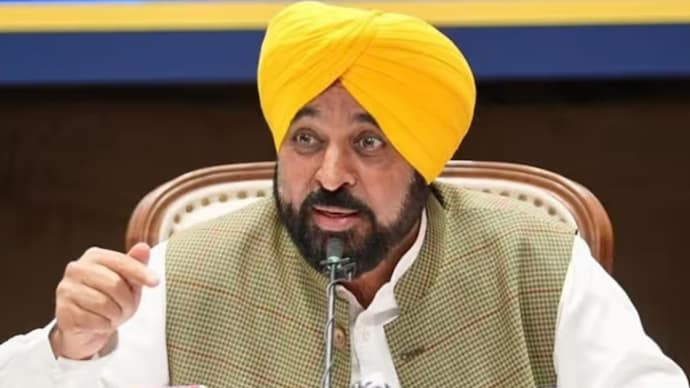
Punjab Chief Minister Bhagwant Mann on Wednesday announced that private schools in the state will not be allowed to increase fees by more than 5 per cent annually, a move aimed at providing relief to lakhs of families. He said the Punjab government will introduce a law in the next Assembly session and described it as the country's toughest legislation against arbitrary fee hikes by private schools. The proposed law will apply to all private schools across Punjab.
Mann said the 5 per cent ceiling will cover not only tuition fees but also all mandatory charges and funds collected by schools. He stated that the measure would close loopholes often used by institutions to impose additional financial burdens on parents. The chief minister said unchecked fee hikes were enabled by amendments introduced by the previous Congress government in 2019 and asserted that the new law would restore accountability in the education sector, protect parents from exploitation, and permanently end the harassment of children and families over school fees.
Addressing the media, Mann said the government decided to act after receiving several calls from parents following a recent tragedy in Amritsar. A 17-year-old student allegedly died by suicide after facing mental harassment by her school over pending dues. Mann said the student lost her life to the system or "school mafia" and alleged that she had been pressured to pay arbitrary fees.
"The Punjab government has decided that fee hike by private schools will be capped at 5 per cent per annum. They can raise fee only by 5 per cent in a year," Mann said. He clarified that the cap will apply to all kinds of fees and not just tuition fees. He also announced that schools that increased fees by more than 15 per cent over the past three years will have to refund the portion charged above the 15 per cent increase.
The chief minister said the fee structure of private unaided schools is currently governed by the Punjab Regulation of Fee of Unaided Educational Institutions Act, 2016, which was amended in 2019. However, he said successive governments failed to implement the law effectively, allowing schools to impose excessive fee hikes on parents.
Mann said the 2019 amendment permitted schools to increase fees beyond the prescribed limit through a disclosure mechanism. Under this mechanism, schools were required to publicly display proposed fee hikes on notice boards, school websites, and the Department of School Education's website before admissions began. He said that although the law mandated transparency regarding fee increases, authorities rarely implemented these provisions in practice, resulting in continued excessive fee burdens on parents.
The chief minister said the government will examine and act on all pending complaints related to fee hikes. He announced that a regulatory body will closely monitor fee increases to ensure they are justified by actual expenditure or developmental activities and do not result in profiteering. The body will also ensure that schools do not divert funds collected from students for any other purpose. He said authorities could impose penalties, withdraw recognition or affiliation, and order schools to refund excess fees in cases of serious violations.
Under the proposed framework, schools found violating the law will face a graded penalty system. For a first violation, authorities can impose fines ranging from Rs 30,000 for primary schools to Rs 1 lakh for senior secondary schools. Repeat violations will attract fines ranging from Rs 60,000 to Rs 2 lakh. In cases of a third violation, authorities may withdraw a school's recognition or affiliation in addition to imposing financial penalties. The regulatory body will also have the authority to order refunds of excess fees collected from parents.
The Punjab government is also examining mechanisms for financial audits of private schools. According to an official statement, one proposal under consideration involves empanelling Chartered Accountants to review schools' financial records from the previous three to five years, including fee collections, expenditure, salaries, infrastructure investments, reserves, and related-party transactions. The government said such audits would help determine whether schools justified fee hikes and whether they used collected funds for educational purposes.
Punjab Chief Minister Bhagwant Mann on Wednesday announced that private schools in the state will not be allowed to increase fees by more than 5 per cent annually, a move aimed at providing relief to lakhs of families. He said the Punjab government will introduce a law in the next Assembly session and described it as the country's toughest legislation against arbitrary fee hikes by private schools. The proposed law will apply to all private schools across Punjab.
Mann said the 5 per cent ceiling will cover not only tuition fees but also all mandatory charges and funds collected by schools. He stated that the measure would close loopholes often used by institutions to impose additional financial burdens on parents. The chief minister said unchecked fee hikes were enabled by amendments introduced by the previous Congress government in 2019 and asserted that the new law would restore accountability in the education sector, protect parents from exploitation, and permanently end the harassment of children and families over school fees.
Addressing the media, Mann said the government decided to act after receiving several calls from parents following a recent tragedy in Amritsar. A 17-year-old student allegedly died by suicide after facing mental harassment by her school over pending dues. Mann said the student lost her life to the system or "school mafia" and alleged that she had been pressured to pay arbitrary fees.
"The Punjab government has decided that fee hike by private schools will be capped at 5 per cent per annum. They can raise fee only by 5 per cent in a year," Mann said. He clarified that the cap will apply to all kinds of fees and not just tuition fees. He also announced that schools that increased fees by more than 15 per cent over the past three years will have to refund the portion charged above the 15 per cent increase.
The chief minister said the fee structure of private unaided schools is currently governed by the Punjab Regulation of Fee of Unaided Educational Institutions Act, 2016, which was amended in 2019. However, he said successive governments failed to implement the law effectively, allowing schools to impose excessive fee hikes on parents.
Mann said the 2019 amendment permitted schools to increase fees beyond the prescribed limit through a disclosure mechanism. Under this mechanism, schools were required to publicly display proposed fee hikes on notice boards, school websites, and the Department of School Education's website before admissions began. He said that although the law mandated transparency regarding fee increases, authorities rarely implemented these provisions in practice, resulting in continued excessive fee burdens on parents.
The chief minister said the government will examine and act on all pending complaints related to fee hikes. He announced that a regulatory body will closely monitor fee increases to ensure they are justified by actual expenditure or developmental activities and do not result in profiteering. The body will also ensure that schools do not divert funds collected from students for any other purpose. He said authorities could impose penalties, withdraw recognition or affiliation, and order schools to refund excess fees in cases of serious violations.
Under the proposed framework, schools found violating the law will face a graded penalty system. For a first violation, authorities can impose fines ranging from Rs 30,000 for primary schools to Rs 1 lakh for senior secondary schools. Repeat violations will attract fines ranging from Rs 60,000 to Rs 2 lakh. In cases of a third violation, authorities may withdraw a school's recognition or affiliation in addition to imposing financial penalties. The regulatory body will also have the authority to order refunds of excess fees collected from parents.
The Punjab government is also examining mechanisms for financial audits of private schools. According to an official statement, one proposal under consideration involves empanelling Chartered Accountants to review schools' financial records from the previous three to five years, including fee collections, expenditure, salaries, infrastructure investments, reserves, and related-party transactions. The government said such audits would help determine whether schools justified fee hikes and whether they used collected funds for educational purposes.

