Brakes fail, warnings ignored: Vande Bharat rake travels 463 km across 2 states
An empty Vande Bharat rake travelled 463 km despite repeated warnings over ineffective coach brakes. The railway probe will examine multiple staff failures and recommend safeguards against recurrence.
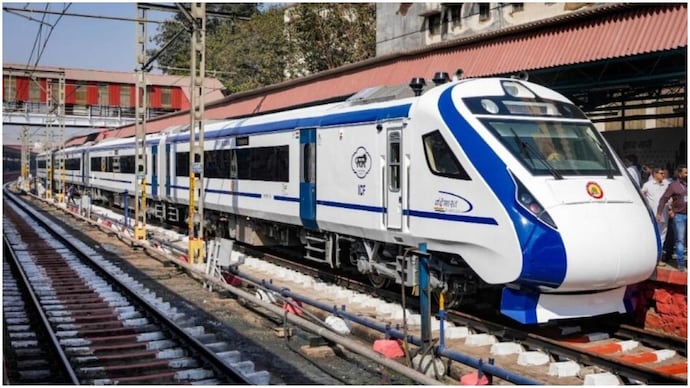
An empty Vande Bharat train with an ineffective braking system was allowed to travel about 463 km between Jharkhand and Uttar Pradesh in October, posing a potential threat to other passenger trains, news agency Press Trust of India reported.
The South Eastern Railway has ordered a detailed investigation into the October 24 incident, which occurred days before the Kolkata-Sairang Express derailed in Assam on November 11 because of almost similar negligence.
“Running a train without adequate brake power is a serious safety concern that may lead to a major accident, endangering the lives of staff and passengers and affecting the safety of railway operations,” the railway zone said.
The empty chair car rake was to be moved from Hatia in Jharkhand to Jhansi in Uttar Pradesh using a freight locomotive. Officials told PTI that the Vande Bharat rake's braking system was supposed to be integrated with that of the locomotive pulling it throughout the journey.
However, railway staff failed to ensure that the systems were properly integrated and ignored warnings from the train crew after the problem was reported.
In a November 7 order asking the Ranchi Divisional Railway Manager to initiate an investigation, the South Eastern Railway said instructions had been issued on October 24 to move the empty rake from Hatia to Jhansi.
“As per the statement of the loco pilot, the brake feel and brake power test was conducted after departure from HTE (Hatia) in the HTE-RNC (Hatia-Ranchi) section, in accordance with the existing instructions in force,” the order said. “However, during the test, the LP found that the brake power of the train was very poor and ineffective.”
After reaching Ranchi station, the loco pilot submitted a written complaint about the poor brake power to the section controller and traction locomotive controller. “The train was permitted to proceed in the same condition despite the reported poor brake power,” the order noted.
Another loco pilot, who operated the train from Muri station, also informed the controllers concerned about the poor braking performance. He specifically reported that the brakes could not be applied by reducing the brake pipe pressure.
Railway staff took action only after the train reached Deen Dayal Upadhyaya station in Uttar Pradesh's Chandauli district. An inspection there found that the braking systems of all the coaches had been isolated, preventing the brakes from being applied.
According to PTI, the preliminary investigation identified negligence by coach and wagon maintenance staff, section and traction controllers at the stations concerned, and the train crew that operated the rake from Hatia to Deen Dayal Upadhyaya station.
The investigation found that the maintenance staff had failed to physically check whether the brakes were working before allowing the empty rake to leave. The order also said railway staff took no action despite receiving information about the poor brake power.
It further noted that the train crew were unfamiliar with the Vande Bharat's braking system and failed to physically check whether the brakes were being applied in the coaches.
“From the above, it is evident that there were multiple failures on the part of various staff, resulting in the train being worked without effective train brakes,” the order said.
The train travelled about 463 km using only the locomotive's brakes and regenerative braking, without the coaches' braking systems being applied.
“In view of the above, it is requested that the matter should be investigated in detail to ascertain the lapses on the part of the staff concerned. Necessary corrective and preventive measures may also be taken to prevent the recurrence of such incidents in the future,” the order concluded.
The investigation will examine how the empty Vande Bharat rake was allowed to cover about 463 km without effective coach brakes despite repeated warnings, and identify measures to prevent similar incidents.

