How Annamalai has switched to North-South politics, but with a difference
K Annamalai, after quitting the BJP, is seemingly rejigging the old political template of the North versus South debate in Tamil Nadu, with a new approach. Annamalai flagged the recent cases of crimes by "North Indian migrant workers" and sought that they be tackled through administrative interventions.
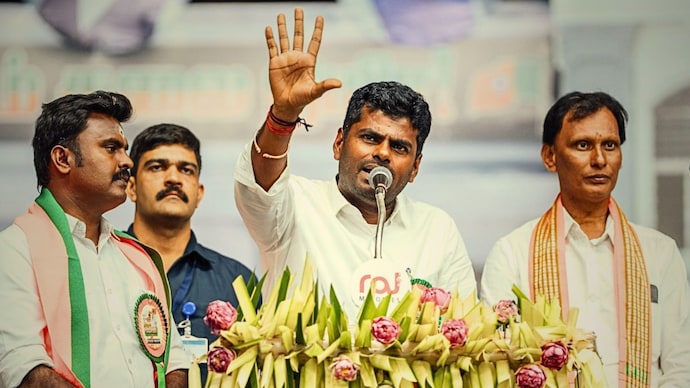
In Tamil Nadu, politics has long revolved around Tamil identity and language, Dravidian ideology, regional pride, and anti-northern India rhetoric. For decades, Dravidian parties have successfully used narratives centred around these and built powerful electoral hegemonies. The rise of the Dravidian movement and the dominance of the DMK and the AIADMK further cemented these political planks over six decades. Is K Annamalai, who lambasted the Dravidian parties for their divisive politics, taking on an anti-North stance?
Tamil Nadu is on the boil over the rape and murder of a three-year-old girl and the sexual harassment of a 10-year-old. The accused in both the cases are migrant workers. On Monday, Annamalai, the former Tamil Nadu BJP president, criticised what he described as the growing involvement of "North Indian labourers" in serious crimes in the state.
Annamalai appears to be charting a narrative similar to the Dravidian parties, but with a slight variation. Since launching his new political movement after quitting the BJP, Annamalai has been invoking the North-South debate not in the traditional Dravidian mould but in a more pragmatic one. Instead of framing it around language, culture, or federalism, Annamalai is focusing on governance and law-and-order concerns, particularly involving migrant populations from northern states.
Referring to two recent cases involving minor girls, Annamalai highlighted the lack of a proper registry for migrant workers and the difficulty in tracking individuals who move into Tamil Nadu for employment.
The remarks stand out because they mark a departure from Annamalai's political positioning during his years in the BJP. As state BJP president, Annamalai was one of the strongest critics of the DMK's anti-northern Indian rhetoric. He frequently accused the DMK of creating divisions and portrayed both the BJP and Tamil society as welcoming towards migrants from other parts of India.
His June 15 posts on X, therefore, represent a notable shift in emphasis. While he did not attack the northern Indians as a community, he repeatedly referred to "North Indian states" and "North Indians" while discussing crime and demanding greater monitoring of migrant populations.
Political observers and locals have particularly noted the frequency with which those terms appeared in his statement on Monday.
Editor of the Tamil Nadu-based Tughlak Magazine, S Gurumurthy, who is also considered one of Annamalai's mentors, raised scepticism about whether Annamalai is "taking a step to another Dravidian movement".
"I had always viewed Annamalai positively in the BJP, even after he left. But this narrative against North Indian states is unacceptable. Is it a slip from or a step to another Dravidian movement? Future alone can tell," Gurumurthy posted on X on Tuesday.
Though Annamalai is framing the migration from "northern states" through the prism of law and order, pinning the blame of crimes on a migrant group is drawing criticism.
ANNAMALAI FLAGS RISING INVOLVEMENT OF 'NORTH INDIAN MIGRANTS' IN TAMIL NADU CRIMES
"The news of a three-year-old toddler falling victim to sexual assault near Gummidipoondi in Thiruvallur district and succumbing to her injuries despite treatment has caused profound shock and grief," Annamalai, an IPS officer-turned-politician, wrote on X on Monday.
Annamalai was referring to a case reported from the SIPCOT Industrial Estate in Gummidipoondi near Chennai, where a three-year-old girl died at Stanley Government Hospital after allegedly being sexually assaulted. The child, belonging to a migrant worker family residing in the industrial area, went missing on Sunday and was later found injured in a nearby bush. She was initially treated at the government hospital in Gummidipoondi before being shifted to Chennai for advanced care, where she later succumbed to her injuries. Police arrested 19-year-old Bipin Manjhi, a native of Bihar, in connection with the crime.
In the same post on X, Annamalai also cited another case involving the alleged sexual harassment of a 10-year-old girl in Athanur village in Kanchipuram district. The accused, identified as 43-year-old Jaishanth, is a migrant worker from Bihar, according to reports.
"A person from a North Indian state who sexually harassed a 10-year-old child in Athanur, Kanchipuram district, has also been arrested. Over the past few months, there has been a noticeable increase in the involvement of individuals from North Indian states in crimes occurring across various parts of Tamil Nadu," Annamalai said.
According to media reports, police have arrested Jaishanth and are interrogating him in a secret location.
HOW ANNAMALAI IS FRAMING 'NORTHERN STATE' ISSUE THROUGH PRISM OF LAW AND ORDER
What makes Annamalai's intervention politically significant is that it differs from the conventional Dravidian approach to North-South politics. Unlike the DMK's rhetoric, which often focusses on linguistic identity, cultural imposition, or fiscal grievances against the Centre, Annamalai is framing the issue through the lens of crime, migrant registration, and administrative accountability.
In his post on X, Annamalai also flagged several cases involving migrant workers from northern states to support his argument.
Among them was the June 3 chain-snatching incident in Chennai's Vyasarpadi, where traffic police chased and apprehended a 24-year-old person from Jharkhand after he allegedly snatched a gold chain from a 68-year-old woman.
He also referred to the May 29 gang rape of a 61-year-old mentally challenged homeless woman in Velachery, in which two workers from Bihar were arrested by the police.
By listing these incidents alongside the recent cases involving minor girls, Annamalai argued that there had been a noticeable rise in crimes involving individuals from North Indian states and reiterated his demand for a comprehensive registry and monitoring mechanism for migrant workers entering Tamil Nadu.
"These are just a few instances where young men from North Indian states have been arrested, raising numerous questions," Annamalai wrote after highlighting these cases.
NEED TO BE TRACKED: ANNAMALAI'S DEMAND TO JOSEPH VIJAY-LED GOVERNMENT
While condemning the recent crimes, Annamalai praised the Tamil Nadu Police for swiftly identifying and arresting the accused in the cases he cited. He also argued that the bigger question was how the Tamil Nadu government had planned to prevent such crimes from occurring in the first place.
"The police's prompt identification and arrest of those involved in such crimes is commendable. However, what measures will the Tamil Nadu government take to prevent these crimes from occurring in the first place?" Annamalai asked.
The IPS officer-turned-politician also stressed that migration for employment is natural and beneficial, noting that just as people from other states come to Tamil Nadu for work, Tamils too, migrate across India in search of opportunities. His concern, he said, was not migration itself but the lack of a systematic mechanism to track and verify the details of migrant workers entering the state.
Annamalai questioned if contractors, employers, and company owners in Tamil Nadu maintained proper records of workers arriving from other states and whether such information was being shared with the government. He called for a regulated system under which employers would be required to furnish comprehensive details of migrant workers, including their native place, place of work, place of residence, and the number of workers employed.
Annamalai urged the CM Joseph Vijay-led government to create a state-wide database and monitoring mechanism for migrant labourers, arguing that such a system would improve accountability and help law enforcement agencies respond more effectively to crimes involving individuals who move across state borders for work.
Annamalai has, after quitting the BJP, seemingly repackaged an old political template in Tamil Nadu with a new approach. His recent comments suggest that he is willing to engage with a theme that has traditionally been monopolised by Dravidian parties — the North versus South debate — but on terms that are more issue-driven and administrative than rooted in identity politics. Rather than invoking language, culture, and regional pride as a divisive tool, Annamalai is framing his discussion around governance, law and order, and safeguards needed to host lakhs of migrant labourers. However, one needs to be cautious that such remarks do not end up building anti-immigration sentiments where guest workers are vilified and targeted.
In Tamil Nadu, politics has long revolved around Tamil identity and language, Dravidian ideology, regional pride, and anti-northern India rhetoric. For decades, Dravidian parties have successfully used narratives centred around these and built powerful electoral hegemonies. The rise of the Dravidian movement and the dominance of the DMK and the AIADMK further cemented these political planks over six decades. Is K Annamalai, who lambasted the Dravidian parties for their divisive politics, taking on an anti-North stance?
Tamil Nadu is on the boil over the rape and murder of a three-year-old girl and the sexual harassment of a 10-year-old. The accused in both the cases are migrant workers. On Monday, Annamalai, the former Tamil Nadu BJP president, criticised what he described as the growing involvement of "North Indian labourers" in serious crimes in the state.
Annamalai appears to be charting a narrative similar to the Dravidian parties, but with a slight variation. Since launching his new political movement after quitting the BJP, Annamalai has been invoking the North-South debate not in the traditional Dravidian mould but in a more pragmatic one. Instead of framing it around language, culture, or federalism, Annamalai is focusing on governance and law-and-order concerns, particularly involving migrant populations from northern states.
Referring to two recent cases involving minor girls, Annamalai highlighted the lack of a proper registry for migrant workers and the difficulty in tracking individuals who move into Tamil Nadu for employment.
The remarks stand out because they mark a departure from Annamalai's political positioning during his years in the BJP. As state BJP president, Annamalai was one of the strongest critics of the DMK's anti-northern Indian rhetoric. He frequently accused the DMK of creating divisions and portrayed both the BJP and Tamil society as welcoming towards migrants from other parts of India.
His June 15 posts on X, therefore, represent a notable shift in emphasis. While he did not attack the northern Indians as a community, he repeatedly referred to "North Indian states" and "North Indians" while discussing crime and demanding greater monitoring of migrant populations.
Political observers and locals have particularly noted the frequency with which those terms appeared in his statement on Monday.
Editor of the Tamil Nadu-based Tughlak Magazine, S Gurumurthy, who is also considered one of Annamalai's mentors, raised scepticism about whether Annamalai is "taking a step to another Dravidian movement".
"I had always viewed Annamalai positively in the BJP, even after he left. But this narrative against North Indian states is unacceptable. Is it a slip from or a step to another Dravidian movement? Future alone can tell," Gurumurthy posted on X on Tuesday.
Though Annamalai is framing the migration from "northern states" through the prism of law and order, pinning the blame of crimes on a migrant group is drawing criticism.
ANNAMALAI FLAGS RISING INVOLVEMENT OF 'NORTH INDIAN MIGRANTS' IN TAMIL NADU CRIMES
"The news of a three-year-old toddler falling victim to sexual assault near Gummidipoondi in Thiruvallur district and succumbing to her injuries despite treatment has caused profound shock and grief," Annamalai, an IPS officer-turned-politician, wrote on X on Monday.
Annamalai was referring to a case reported from the SIPCOT Industrial Estate in Gummidipoondi near Chennai, where a three-year-old girl died at Stanley Government Hospital after allegedly being sexually assaulted. The child, belonging to a migrant worker family residing in the industrial area, went missing on Sunday and was later found injured in a nearby bush. She was initially treated at the government hospital in Gummidipoondi before being shifted to Chennai for advanced care, where she later succumbed to her injuries. Police arrested 19-year-old Bipin Manjhi, a native of Bihar, in connection with the crime.
In the same post on X, Annamalai also cited another case involving the alleged sexual harassment of a 10-year-old girl in Athanur village in Kanchipuram district. The accused, identified as 43-year-old Jaishanth, is a migrant worker from Bihar, according to reports.
"A person from a North Indian state who sexually harassed a 10-year-old child in Athanur, Kanchipuram district, has also been arrested. Over the past few months, there has been a noticeable increase in the involvement of individuals from North Indian states in crimes occurring across various parts of Tamil Nadu," Annamalai said.
According to media reports, police have arrested Jaishanth and are interrogating him in a secret location.
HOW ANNAMALAI IS FRAMING 'NORTHERN STATE' ISSUE THROUGH PRISM OF LAW AND ORDER
What makes Annamalai's intervention politically significant is that it differs from the conventional Dravidian approach to North-South politics. Unlike the DMK's rhetoric, which often focusses on linguistic identity, cultural imposition, or fiscal grievances against the Centre, Annamalai is framing the issue through the lens of crime, migrant registration, and administrative accountability.
In his post on X, Annamalai also flagged several cases involving migrant workers from northern states to support his argument.
Among them was the June 3 chain-snatching incident in Chennai's Vyasarpadi, where traffic police chased and apprehended a 24-year-old person from Jharkhand after he allegedly snatched a gold chain from a 68-year-old woman.
He also referred to the May 29 gang rape of a 61-year-old mentally challenged homeless woman in Velachery, in which two workers from Bihar were arrested by the police.
By listing these incidents alongside the recent cases involving minor girls, Annamalai argued that there had been a noticeable rise in crimes involving individuals from North Indian states and reiterated his demand for a comprehensive registry and monitoring mechanism for migrant workers entering Tamil Nadu.
"These are just a few instances where young men from North Indian states have been arrested, raising numerous questions," Annamalai wrote after highlighting these cases.
NEED TO BE TRACKED: ANNAMALAI'S DEMAND TO JOSEPH VIJAY-LED GOVERNMENT
While condemning the recent crimes, Annamalai praised the Tamil Nadu Police for swiftly identifying and arresting the accused in the cases he cited. He also argued that the bigger question was how the Tamil Nadu government had planned to prevent such crimes from occurring in the first place.
"The police's prompt identification and arrest of those involved in such crimes is commendable. However, what measures will the Tamil Nadu government take to prevent these crimes from occurring in the first place?" Annamalai asked.
The IPS officer-turned-politician also stressed that migration for employment is natural and beneficial, noting that just as people from other states come to Tamil Nadu for work, Tamils too, migrate across India in search of opportunities. His concern, he said, was not migration itself but the lack of a systematic mechanism to track and verify the details of migrant workers entering the state.
Annamalai questioned if contractors, employers, and company owners in Tamil Nadu maintained proper records of workers arriving from other states and whether such information was being shared with the government. He called for a regulated system under which employers would be required to furnish comprehensive details of migrant workers, including their native place, place of work, place of residence, and the number of workers employed.
Annamalai urged the CM Joseph Vijay-led government to create a state-wide database and monitoring mechanism for migrant labourers, arguing that such a system would improve accountability and help law enforcement agencies respond more effectively to crimes involving individuals who move across state borders for work.
Annamalai has, after quitting the BJP, seemingly repackaged an old political template in Tamil Nadu with a new approach. His recent comments suggest that he is willing to engage with a theme that has traditionally been monopolised by Dravidian parties — the North versus South debate — but on terms that are more issue-driven and administrative than rooted in identity politics. Rather than invoking language, culture, and regional pride as a divisive tool, Annamalai is framing his discussion around governance, law and order, and safeguards needed to host lakhs of migrant labourers. However, one needs to be cautious that such remarks do not end up building anti-immigration sentiments where guest workers are vilified and targeted.

