300-year-old Karnataka stepwell restored after decades under garbage
A near 300-year-old stepwell in Belagavi has been restored by volunteers after decades under waste and silt. The revival has exposed its historic design and renewed attention on heritage conservation and traditional water systems.
A forgotten piece of Karnataka's architectural heritage has been brought back to life in Belagavi district, where a nearly 300-year-old stepwell buried beneath garbage, rubble and silt for decades has been painstakingly restored through a community-led effort. The revival has not only uncovered an impressive historical structure but also reignited conversations around heritage conservation and traditional water management.
A HIDDEN HERITAGE SITE EMERGES AGAIN
Located in Kanchveer Nagar of Mutga village near Belagavi, the historic stepwell had remained hidden for nearly 30 years under layers of sewage, plastic waste, rubble and vegetation. Volunteers worked extensively to clear the accumulated debris and restore the structure to its original form, revealing its remarkable craftsmanship.
RESTORED BY A COMMUNITY EFFORT
The restoration was led by the Belagavi-based Pyaas Foundation with support from National Service Scheme (NSS) volunteers, local residents and donors. The project reflects how community participation can play a vital role in preserving historical monuments that might otherwise be lost to neglect.
53 STONE STEPS AND A SHIVA LINGAM-SHAPED DESIGN
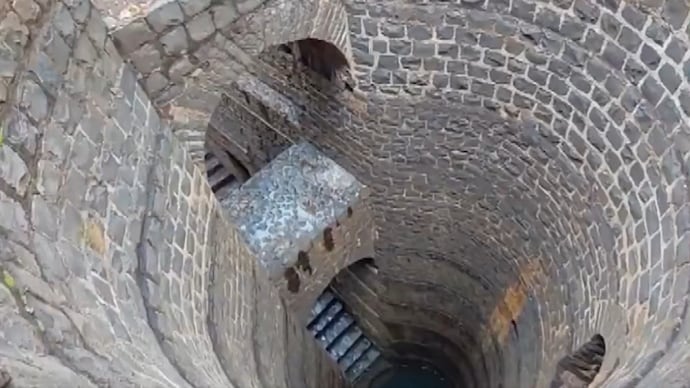
One of the most striking discoveries during the restoration was the stepwell's unique architectural layout. The structure features 53 stone steps descending to the water and, when viewed from above, resembles the shape of a Shiva Lingam. The restored stone arches, pillars and intricate masonry showcase the engineering excellence of the period in which it was built.
Historians believe the stepwell dates back around 300 years and may have been constructed during the Adil Shahi or early Maratha period. While its exact date of construction remains uncertain, its architectural style reflects the sophisticated design of historical water structures built in the Deccan region.
FRESH WATER SPRINGS DISCOVERED
During excavation, volunteers restored the well to a depth of about 60 feet before digging an additional 10 feet. This led to the discovery of active natural freshwater springs at the bottom, highlighting the effectiveness of traditional water conservation systems that continue to function centuries later.
A SYMBOL OF HERITAGE AND WATER CONSERVATION
The restored stepwell has quickly become a point of interest for visitors, historians and local residents. Beyond its architectural beauty, experts say the project demonstrates how restoring traditional water bodies can contribute to both heritage preservation and sustainable water management, especially at a time when many regions face water stress.
India is home to thousands of historic stepwells, many of which have fallen into disrepair over the years. The revival of the Belagavi stepwell serves as a reminder that community-driven conservation can protect cultural heritage while restoring valuable traditional water infrastructure for future generations.
A forgotten piece of Karnataka's architectural heritage has been brought back to life in Belagavi district, where a nearly 300-year-old stepwell buried beneath garbage, rubble and silt for decades has been painstakingly restored through a community-led effort. The revival has not only uncovered an impressive historical structure but also reignited conversations around heritage conservation and traditional water management.
A HIDDEN HERITAGE SITE EMERGES AGAIN
Located in Kanchveer Nagar of Mutga village near Belagavi, the historic stepwell had remained hidden for nearly 30 years under layers of sewage, plastic waste, rubble and vegetation. Volunteers worked extensively to clear the accumulated debris and restore the structure to its original form, revealing its remarkable craftsmanship.
RESTORED BY A COMMUNITY EFFORT
The restoration was led by the Belagavi-based Pyaas Foundation with support from National Service Scheme (NSS) volunteers, local residents and donors. The project reflects how community participation can play a vital role in preserving historical monuments that might otherwise be lost to neglect.
53 STONE STEPS AND A SHIVA LINGAM-SHAPED DESIGN
One of the most striking discoveries during the restoration was the stepwell's unique architectural layout. The structure features 53 stone steps descending to the water and, when viewed from above, resembles the shape of a Shiva Lingam. The restored stone arches, pillars and intricate masonry showcase the engineering excellence of the period in which it was built.
Historians believe the stepwell dates back around 300 years and may have been constructed during the Adil Shahi or early Maratha period. While its exact date of construction remains uncertain, its architectural style reflects the sophisticated design of historical water structures built in the Deccan region.
FRESH WATER SPRINGS DISCOVERED
During excavation, volunteers restored the well to a depth of about 60 feet before digging an additional 10 feet. This led to the discovery of active natural freshwater springs at the bottom, highlighting the effectiveness of traditional water conservation systems that continue to function centuries later.
A SYMBOL OF HERITAGE AND WATER CONSERVATION
The restored stepwell has quickly become a point of interest for visitors, historians and local residents. Beyond its architectural beauty, experts say the project demonstrates how restoring traditional water bodies can contribute to both heritage preservation and sustainable water management, especially at a time when many regions face water stress.
India is home to thousands of historic stepwells, many of which have fallen into disrepair over the years. The revival of the Belagavi stepwell serves as a reminder that community-driven conservation can protect cultural heritage while restoring valuable traditional water infrastructure for future generations.

