Why does the sun set later on Burj Khalifa's upper floors?
At Dubai's Burj Khalifa, sunset does not happen at the same time for everyone. The building's enormous height means people on higher floors can see the sun for a few minutes longer.
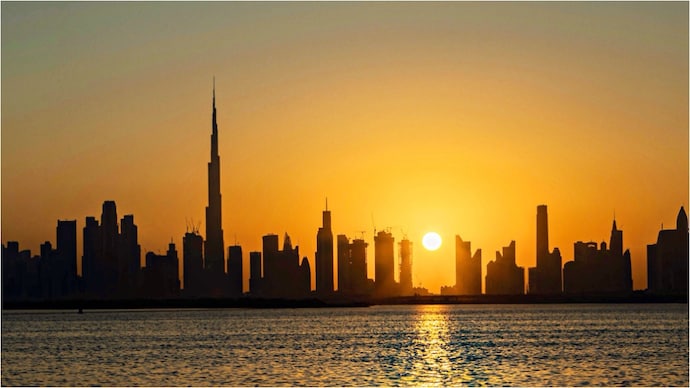
Most people assume that everyone in a city sees the sun set at the same time. But at Dubai's Burj Khalifa, the world's tallest building, that isn't the case. Standing 828 metres tall, the skyscraper is so high that people on its upper floors can watch the sun for a few minutes longer than those at ground level.
The phenomenon may sound unusual, but it is completely explained by science. In fact, the difference is large enough that special guidelines have even been issued for residents during Ramadan.
WHY DOES SUNSET HAPPEN LATER ON HIGHER FLOORS?
The answer lies in the shape of the Earth. Because the Earth is curved rather than flat, the higher you go, the farther your horizon extends.
This allows people at greater heights to continue seeing the sun even after it has disappeared from view at ground level.
In a building as tall as Burj Khalifa, this effect becomes noticeable. People on the upper floors can see the sun for around two to three minutes longer than those standing at the base of the tower.
WHY DOES IT MATTER DURING RAMADAN?
The sunset difference is more than just an interesting science fact. During Ramadan, Muslims break their fast after sunset.
Because people on higher floors can still see the sun, religious scholars in Dubai have advised residents on different floors to wait slightly longer before ending their fast.
According to guidance issued for Burj Khalifa residents, people living above certain floors may need to wait around two to three additional minutes compared with those on the ground floor.
CAN YOU REALLY WATCH TWO SUNSETS IN ONE DAY?
One of the most fascinating claims about Burj Khalifa is that it may be possible to witness a sunset twice on the same day.
If someone watches the sunset from the ground floor and then quickly travels to one of the building's higher observation decks using its high-speed lifts, the sun can briefly come back into view before finally disappearing below the horizon.
This unusual experience has helped make Burj Khalifa one of the world's most talked-about buildings for science enthusiasts and travellers alike.
ALSO READ: The Burj Khalifa dream: What it really costs, celebs who own luxury homes there
A SIMPLE LESSON IN SCIENCE
The changing sunset times inside Burj Khalifa show how everyday observations can reveal important scientific principles.
The tower's extraordinary height provides a real-world demonstration of the Earth's curvature and how our view of the horizon changes with altitude.
So the next time someone says sunset happens at the same moment for everyone in a city, Burj Khalifa offers a remarkable exception.
Most people assume that everyone in a city sees the sun set at the same time. But at Dubai's Burj Khalifa, the world's tallest building, that isn't the case. Standing 828 metres tall, the skyscraper is so high that people on its upper floors can watch the sun for a few minutes longer than those at ground level.
The phenomenon may sound unusual, but it is completely explained by science. In fact, the difference is large enough that special guidelines have even been issued for residents during Ramadan.
WHY DOES SUNSET HAPPEN LATER ON HIGHER FLOORS?
The answer lies in the shape of the Earth. Because the Earth is curved rather than flat, the higher you go, the farther your horizon extends.
This allows people at greater heights to continue seeing the sun even after it has disappeared from view at ground level.
In a building as tall as Burj Khalifa, this effect becomes noticeable. People on the upper floors can see the sun for around two to three minutes longer than those standing at the base of the tower.
WHY DOES IT MATTER DURING RAMADAN?
The sunset difference is more than just an interesting science fact. During Ramadan, Muslims break their fast after sunset.
Because people on higher floors can still see the sun, religious scholars in Dubai have advised residents on different floors to wait slightly longer before ending their fast.
According to guidance issued for Burj Khalifa residents, people living above certain floors may need to wait around two to three additional minutes compared with those on the ground floor.
CAN YOU REALLY WATCH TWO SUNSETS IN ONE DAY?
One of the most fascinating claims about Burj Khalifa is that it may be possible to witness a sunset twice on the same day.
If someone watches the sunset from the ground floor and then quickly travels to one of the building's higher observation decks using its high-speed lifts, the sun can briefly come back into view before finally disappearing below the horizon.
This unusual experience has helped make Burj Khalifa one of the world's most talked-about buildings for science enthusiasts and travellers alike.
ALSO READ: The Burj Khalifa dream: What it really costs, celebs who own luxury homes there
A SIMPLE LESSON IN SCIENCE
The changing sunset times inside Burj Khalifa show how everyday observations can reveal important scientific principles.
The tower's extraordinary height provides a real-world demonstration of the Earth's curvature and how our view of the horizon changes with altitude.
So the next time someone says sunset happens at the same moment for everyone in a city, Burj Khalifa offers a remarkable exception.

