Ceiling fan or air cooler: Which uses less electricity in summer?
Ceiling fans and air coolers offer different trade-offs in cost, power use, and cooling. The better choice depends on climate, comfort needs, maintenance, and budget.
As temperatures rise, keeping your home cool without driving up electricity bills becomes a priority. While air conditioners offer powerful cooling, many households rely on ceiling fans and air coolers as more affordable alternatives. But when it comes to electricity consumption, which one is the better choice?
The answer depends on your room size, climate, and cooling needs. Here's how ceiling fans and air coolers compare.
HOW A CEILING FAN WORKS
A ceiling fan does not lower the room's temperature. Instead, it circulates air, creating a wind-chill effect that helps sweat evaporate from your skin, making you feel cooler. It works best in well-ventilated rooms and moderate heat.
Also read: Glass water bottles vs steel bottles: Which is better for summer hydration?
HOW AN AIR COOLER WORKS
An air cooler cools the air by passing it through water-soaked cooling pads. As the water evaporates, the air temperature drops before it is blown into the room. Air coolers perform best in hot and dry climates where evaporation is more effective.
WHICH USES LESS ELECTRICITY?
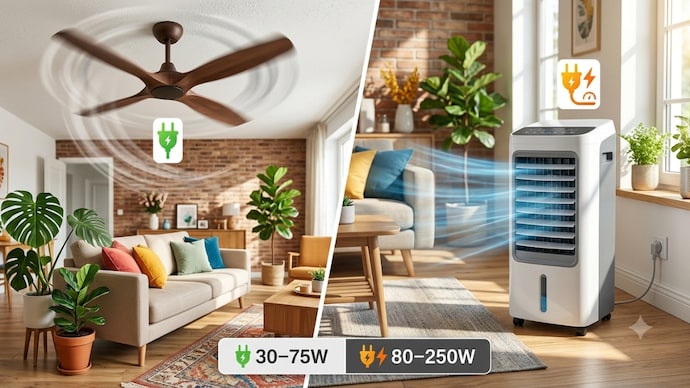
A ceiling fan is the clear winner when it comes to electricity savings. Most standard ceiling fans consume around 30 to 75 watts of power, depending on their size and speed.
Air coolers generally consume between 80 and 250 watts, depending on the model, fan size, and water pump. While they use much less electricity than air conditioners, they still consume more power than ceiling fans.
WHICH IS MORE COST-EFFECTIVE?
If your goal is simply to reduce electricity bills, a ceiling fan is the more economical option. It has lower purchase costs, requires minimal maintenance, and consumes less electricity during daily use.
An air cooler costs more to buy and run, but it provides noticeably better cooling, making the extra electricity worthwhile for many people during peak summer.
A ceiling fan only makes you feel cooler by improving air circulation. It does not reduce indoor temperature.
An air cooler can actually lower the temperature by several degrees under suitable conditions, making it a better option for extremely hot days.
WHICH IS BETTER FOR DIFFERENT CLIMATES?
Ceiling fans work well in almost all climates, especially when combined with open windows or natural ventilation.
Air coolers are most effective in dry regions where humidity is low. In humid areas, their cooling performance drops significantly because evaporation becomes less efficient.
MAINTENANCE REQUIREMENTS
Ceiling fans require very little maintenance apart from occasional cleaning and checking for loose fittings.
Air coolers need regular refilling of water, cleaning of the cooling pads and water tank, and periodic maintenance to prevent mould, bacteria, and unpleasant odours.
WHEN SHOULD YOU CHOOSE A CEILING FAN?
Choose a ceiling fan if:
You want the lowest possible electricity bill.
- advertisement
Your area experiences moderate heat.
You need a low-maintenance cooling solution.
You already have good ventilation.
WHEN SHOULD YOU CHOOSE AN AIR COOLER?
Choose an air cooler if:
You live in a hot, dry climate.
You need stronger cooling than a fan can provide.
You want an energy-efficient alternative to an air conditioner.
You're comfortable with regular maintenance and water refills.
If saving electricity is your top priority, a ceiling fan is the most energy-efficient choice, consuming significantly less power than an air cooler. However, if you need greater cooling comfort without the high electricity costs of an air conditioner, an air cooler offers a good balance between performance and energy efficiency. The best option ultimately depends on your climate, comfort needs, and monthly electricity budget.
As temperatures rise, keeping your home cool without driving up electricity bills becomes a priority. While air conditioners offer powerful cooling, many households rely on ceiling fans and air coolers as more affordable alternatives. But when it comes to electricity consumption, which one is the better choice?
The answer depends on your room size, climate, and cooling needs. Here's how ceiling fans and air coolers compare.
HOW A CEILING FAN WORKS
A ceiling fan does not lower the room's temperature. Instead, it circulates air, creating a wind-chill effect that helps sweat evaporate from your skin, making you feel cooler. It works best in well-ventilated rooms and moderate heat.
Also read: Glass water bottles vs steel bottles: Which is better for summer hydration?
HOW AN AIR COOLER WORKS
An air cooler cools the air by passing it through water-soaked cooling pads. As the water evaporates, the air temperature drops before it is blown into the room. Air coolers perform best in hot and dry climates where evaporation is more effective.
WHICH USES LESS ELECTRICITY?
A ceiling fan is the clear winner when it comes to electricity savings. Most standard ceiling fans consume around 30 to 75 watts of power, depending on their size and speed.
Air coolers generally consume between 80 and 250 watts, depending on the model, fan size, and water pump. While they use much less electricity than air conditioners, they still consume more power than ceiling fans.
WHICH IS MORE COST-EFFECTIVE?
If your goal is simply to reduce electricity bills, a ceiling fan is the more economical option. It has lower purchase costs, requires minimal maintenance, and consumes less electricity during daily use.
An air cooler costs more to buy and run, but it provides noticeably better cooling, making the extra electricity worthwhile for many people during peak summer.
A ceiling fan only makes you feel cooler by improving air circulation. It does not reduce indoor temperature.
An air cooler can actually lower the temperature by several degrees under suitable conditions, making it a better option for extremely hot days.
WHICH IS BETTER FOR DIFFERENT CLIMATES?
Ceiling fans work well in almost all climates, especially when combined with open windows or natural ventilation.
Air coolers are most effective in dry regions where humidity is low. In humid areas, their cooling performance drops significantly because evaporation becomes less efficient.
MAINTENANCE REQUIREMENTS
Ceiling fans require very little maintenance apart from occasional cleaning and checking for loose fittings.
Air coolers need regular refilling of water, cleaning of the cooling pads and water tank, and periodic maintenance to prevent mould, bacteria, and unpleasant odours.
WHEN SHOULD YOU CHOOSE A CEILING FAN?
Choose a ceiling fan if:
You want the lowest possible electricity bill.
Your area experiences moderate heat.
You need a low-maintenance cooling solution.
You already have good ventilation.
WHEN SHOULD YOU CHOOSE AN AIR COOLER?
Choose an air cooler if:
You live in a hot, dry climate.
You need stronger cooling than a fan can provide.
You want an energy-efficient alternative to an air conditioner.
You're comfortable with regular maintenance and water refills.
If saving electricity is your top priority, a ceiling fan is the most energy-efficient choice, consuming significantly less power than an air cooler. However, if you need greater cooling comfort without the high electricity costs of an air conditioner, an air cooler offers a good balance between performance and energy efficiency. The best option ultimately depends on your climate, comfort needs, and monthly electricity budget.

