How sugarcane becomes ethanol fuel: The 10-step process
India's ethanol blending programme turns sugarcane into fuel through a 10-step process. The push aims to cut oil imports, support farmers and lower emissions.
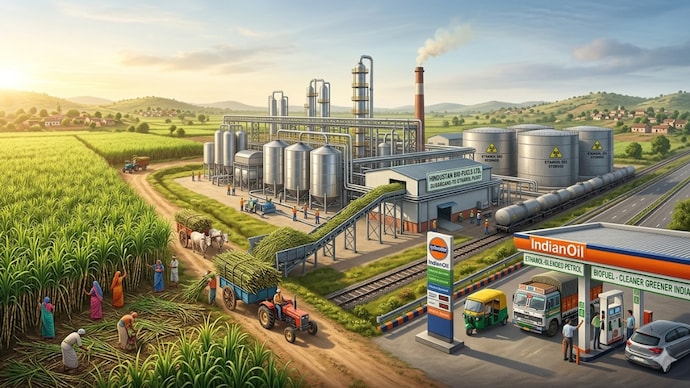
India's ethanol blending programme has emerged as one of the country's most ambitious energy initiatives. Ethanol, a biofuel derived from agricultural feedstocks such as sugarcane, is increasingly being mixed with petrol to reduce dependence on imported crude oil, support farmers, and lower carbon emissions.
Also read: What is Ethanol? Where is it produced in India? Key cities and industrial hubs
But how does a sugarcane stalk growing in a field eventually make its way into a vehicle's fuel tank? The journey involves multiple stages, from harvesting and crushing to fermentation and blending.
STEP 1
The process begins in sugarcane-growing regions across states such as Uttar Pradesh, Maharashtra, and Karnataka. Once mature, sugarcane is harvested and transported to sugar mills and distilleries for processing.
STEP 2
At the sugar mill, harvested cane passes through crushing machines that squeeze out sweet sugarcane juice. This juice forms the base material for producing sugar and ethanol.
STEP 3
The extracted juice is processed to manufacture sugar. During this stage, a thick, dark syrup known as molasses is generated as a by-product. Molasses has traditionally been one of India's most important raw materials for ethanol production.
STEP 4
Modern ethanol plants can produce ethanol from both molasses and sugarcane juice. These feedstocks are transported or channelled to distillation facilities where biofuel production begins.
STEP 5
Yeast is added to the feedstock mixture. The microorganisms consume sugars and convert them into alcohol through a natural fermentation process. This stage can take several hours to a few days depending on production methods.
STEP 6
The fermented liquid contains alcohol, water, and other compounds. Through distillation, alcohol is separated and concentrated. The resulting product is ethanol with a high level of purity.
STEP 7
Fuel-grade ethanol requires very low water content. Additional dehydration processes remove residual moisture, creating anhydrous ethanol suitable for blending with petrol.
STEP 8
Before leaving the plant, ethanol undergoes strict quality checks. Producers test purity levels, chemical composition, and compliance with fuel standards to ensure the product meets government specifications.
STEP 9
Once approved, ethanol is transported via tankers and storage systems to oil marketing company depots. These facilities handle the blending process before fuel reaches consumers.
STEP 10
At the final stage, ethanol is mixed with petrol according to approved blending ratios. The blended fuel is then distributed to petrol pumps across the country, completing the journey from farm to fuel tank.
WHY INDIA IS PUSHING ETHANOL
India imports a significant portion of its crude oil requirements, making the country vulnerable to global price fluctuations. Ethanol blending helps reduce this dependence by partially replacing fossil fuels with domestically produced biofuel.
The programme also creates an additional revenue stream for sugar mills and farmers, particularly in major sugarcane-producing regions.
BENEFITS OF ETHANOL PRODUCTION
REDUCES OIL IMPORTS
Higher ethanol blending can help lower India's reliance on imported crude oil and improve energy security.
SUPPORTS FARMERS
Demand for sugarcane and other ethanol feedstocks creates new income opportunities for farmers.
LOWERS EMISSIONS
As a renewable biofuel, ethanol can contribute to lower greenhouse gas emissions compared to conventional fossil fuels.
STRENGTHENS RURAL ECONOMIES
Distilleries, storage facilities, and associated industries generate employment and investment in rural areas.
CHALLENGES THAT REMAIN
Despite rapid progress, ethanol production faces challenges including water consumption, feedstock availability, and balancing food and fuel needs. Experts continue to debate how India can expand production sustainably while protecting agricultural resources.
From a sugarcane field to a fuel pump, ethanol passes through a complex chain of harvesting, crushing, fermentation, distillation, testing, and blending. As India seeks cleaner and more secure energy sources, this farm-to-fuel journey is becoming an increasingly important part of the country's energy landscape
India's ethanol blending programme has emerged as one of the country's most ambitious energy initiatives. Ethanol, a biofuel derived from agricultural feedstocks such as sugarcane, is increasingly being mixed with petrol to reduce dependence on imported crude oil, support farmers, and lower carbon emissions.
Also read: What is Ethanol? Where is it produced in India? Key cities and industrial hubs
But how does a sugarcane stalk growing in a field eventually make its way into a vehicle's fuel tank? The journey involves multiple stages, from harvesting and crushing to fermentation and blending.
STEP 1
The process begins in sugarcane-growing regions across states such as Uttar Pradesh, Maharashtra, and Karnataka. Once mature, sugarcane is harvested and transported to sugar mills and distilleries for processing.
STEP 2
At the sugar mill, harvested cane passes through crushing machines that squeeze out sweet sugarcane juice. This juice forms the base material for producing sugar and ethanol.
STEP 3
The extracted juice is processed to manufacture sugar. During this stage, a thick, dark syrup known as molasses is generated as a by-product. Molasses has traditionally been one of India's most important raw materials for ethanol production.
STEP 4
Modern ethanol plants can produce ethanol from both molasses and sugarcane juice. These feedstocks are transported or channelled to distillation facilities where biofuel production begins.
STEP 5
Yeast is added to the feedstock mixture. The microorganisms consume sugars and convert them into alcohol through a natural fermentation process. This stage can take several hours to a few days depending on production methods.
STEP 6
The fermented liquid contains alcohol, water, and other compounds. Through distillation, alcohol is separated and concentrated. The resulting product is ethanol with a high level of purity.
STEP 7
Fuel-grade ethanol requires very low water content. Additional dehydration processes remove residual moisture, creating anhydrous ethanol suitable for blending with petrol.
STEP 8
Before leaving the plant, ethanol undergoes strict quality checks. Producers test purity levels, chemical composition, and compliance with fuel standards to ensure the product meets government specifications.
STEP 9
Once approved, ethanol is transported via tankers and storage systems to oil marketing company depots. These facilities handle the blending process before fuel reaches consumers.
STEP 10
At the final stage, ethanol is mixed with petrol according to approved blending ratios. The blended fuel is then distributed to petrol pumps across the country, completing the journey from farm to fuel tank.
WHY INDIA IS PUSHING ETHANOL
India imports a significant portion of its crude oil requirements, making the country vulnerable to global price fluctuations. Ethanol blending helps reduce this dependence by partially replacing fossil fuels with domestically produced biofuel.
The programme also creates an additional revenue stream for sugar mills and farmers, particularly in major sugarcane-producing regions.
BENEFITS OF ETHANOL PRODUCTION
REDUCES OIL IMPORTS
Higher ethanol blending can help lower India's reliance on imported crude oil and improve energy security.
SUPPORTS FARMERS
Demand for sugarcane and other ethanol feedstocks creates new income opportunities for farmers.
LOWERS EMISSIONS
As a renewable biofuel, ethanol can contribute to lower greenhouse gas emissions compared to conventional fossil fuels.
STRENGTHENS RURAL ECONOMIES
Distilleries, storage facilities, and associated industries generate employment and investment in rural areas.
CHALLENGES THAT REMAIN
Despite rapid progress, ethanol production faces challenges including water consumption, feedstock availability, and balancing food and fuel needs. Experts continue to debate how India can expand production sustainably while protecting agricultural resources.
From a sugarcane field to a fuel pump, ethanol passes through a complex chain of harvesting, crushing, fermentation, distillation, testing, and blending. As India seeks cleaner and more secure energy sources, this farm-to-fuel journey is becoming an increasingly important part of the country's energy landscape

