LPG cylinder rules change from May 1? Booking, OTP delivery and prices explained
LPG gas cylinder booking rules may change from May 1 with updates in booking interval, OTP delivery, eKYC and possible price hike. Here's what consumers need to know.
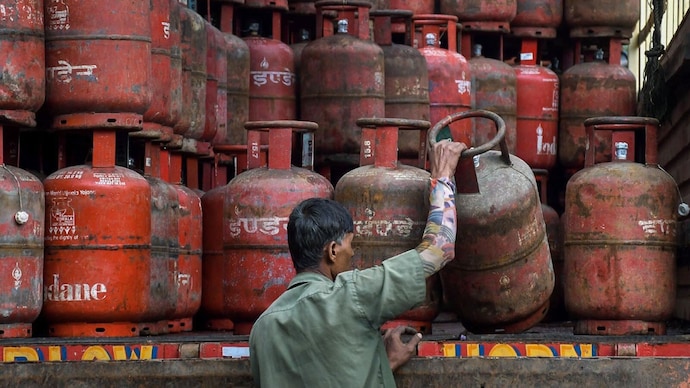
The month of May is approaching, and expectations are rising around potential revisions in LPG cylinder prices. Prices have already surged notably since the onset of the US-Israel-Iran conflict. The sharpest increases have been observed in 19 kg cylinders, while the 14.2 kg domestic cylinders have seen relatively smaller hikes.
Ongoing tensions in the Middle East, especially around the Strait of Hormuz, continue to keep the energy market under pressure. Against this backdrop, it remains to be seen whether oil marketing companies (OMCs) in India will reduce prices or introduce another round of hikes.
LPG CYLINDER PRICE CHANGES FROM MAY 1?
It is important to note that Indian OMCs such as HPCL, Indian Oil, and BPCL determine the pricing of LPG cylinders for domestic, commercial, and industrial use. Indian Oil markets LPG under the Indane brand, BPCL under Bharat Gas, and HPCL under HP Gas.
At the beginning of every month, these companies revise LPG prices. Due to economic uncertainty and geopolitical instability, OMCs are facing significant financial pressure as they absorb losses linked to the West Asia conflict. Some of this burden is transferred to consumers through price hikes.
For example, between March and April 2026, the price of 19 kg LPG cylinders was increased three times. The first hike, ranging from Rs 28 to Rs 31, was implemented on March 1. This was followed by a sharp increase of Rs 114.5 on March 7 after tensions escalated and the Strait of Hormuz faced disruptions. In April, prices were further raised by Rs 196 to Rs 218 across major metro cities.
In comparison, 14.2 kg cylinders have seen a more moderate rise. Since the start of the conflict, their prices have increased only once, by 60 per cylinder. However, there is speculation that another hike in 19 kg cylinder prices could be announced in May.
According to market insights, disruptions in crude oil, natural gas, and LPG supplies have underscored India’s heavy reliance on imported energy. While a potential reopening of the Strait of Hormuz may ease supply concerns in the coming months, the situation highlights the need for India to reduce dependence on imports and diversify its energy sources due to ongoing geopolitical risks.
INDIAN OIL CORPORATION (IOCL) - INDANE 14.2 KG NON-SUBSIDISED PREVIOUS PRICES
CAN WE EXPECT CHANGES IN LPG BOOKING RULES FROM MAY
Apart from pricing, changes in LPG booking rules may also come into effect in May. Reports suggest that the current 25-day gap between bookings could be revised. Additionally, the OTP-based delivery system is likely to be made permanent.
Despite the global situation, the government has stated that it is maintaining full supply of domestic LPG, PNG, and CNG. HPCL reported that between April 1 and April 27, 2026, it delivered over 335 lakh LPG cylinders across the country, demonstrating its ability to ensure uninterrupted supply. During the same period, the company also supplied over 7.17 lakh 5 kg cylinders and more than 26,000 2 kg cylinders, aimed at supporting migrant workers, small businesses, and households with varying energy needs.
CURRENT LPG PRICES IN INDIA
14.2 KG LPG CYLINDER PRICES
For April 2026, prices of 14.2 kg LPG cylinders remain unchanged after last month’s increase of 60 — the first such hike since April 2025. Current prices are Rs 913 per cylinder in Delhi, Rs 939 in Kolkata, Rs 912.5 in Mumbai, and Rs 928.5 in Chennai.
19 KG LPG CYLINDER PRICES
In April, 19 kg LPG cylinders witnessed the highest increase in Kolkata at 218, followed by 203 in Chennai. Mumbai and Delhi saw hikes of Rs 196 and Rs 195.5 respectively. At present, prices stand at Rs 2078.50 in Delhi, Rs 2208 in Kolkata, Rs 2031 in Mumbai, and Rs 2246.50 in Chennai.
LPG BOOKING INTERVAL RULES: 45 DAYS AND 25 DAYS
As per the Ministry of Petroleum and Natural Gas, several rationalisation measures have already been implemented to manage supply and demand. These include increasing refinery output and extending the booking interval from 21 days to 25 days in urban areas and up to 45 days in rural regions, along with prioritising LPG supply across sectors.
The month of May is approaching, and expectations are rising around potential revisions in LPG cylinder prices. Prices have already surged notably since the onset of the US-Israel-Iran conflict. The sharpest increases have been observed in 19 kg cylinders, while the 14.2 kg domestic cylinders have seen relatively smaller hikes.
Ongoing tensions in the Middle East, especially around the Strait of Hormuz, continue to keep the energy market under pressure. Against this backdrop, it remains to be seen whether oil marketing companies (OMCs) in India will reduce prices or introduce another round of hikes.
LPG CYLINDER PRICE CHANGES FROM MAY 1?
It is important to note that Indian OMCs such as HPCL, Indian Oil, and BPCL determine the pricing of LPG cylinders for domestic, commercial, and industrial use. Indian Oil markets LPG under the Indane brand, BPCL under Bharat Gas, and HPCL under HP Gas.
At the beginning of every month, these companies revise LPG prices. Due to economic uncertainty and geopolitical instability, OMCs are facing significant financial pressure as they absorb losses linked to the West Asia conflict. Some of this burden is transferred to consumers through price hikes.
For example, between March and April 2026, the price of 19 kg LPG cylinders was increased three times. The first hike, ranging from Rs 28 to Rs 31, was implemented on March 1. This was followed by a sharp increase of Rs 114.5 on March 7 after tensions escalated and the Strait of Hormuz faced disruptions. In April, prices were further raised by Rs 196 to Rs 218 across major metro cities.
In comparison, 14.2 kg cylinders have seen a more moderate rise. Since the start of the conflict, their prices have increased only once, by 60 per cylinder. However, there is speculation that another hike in 19 kg cylinder prices could be announced in May.
According to market insights, disruptions in crude oil, natural gas, and LPG supplies have underscored India’s heavy reliance on imported energy. While a potential reopening of the Strait of Hormuz may ease supply concerns in the coming months, the situation highlights the need for India to reduce dependence on imports and diversify its energy sources due to ongoing geopolitical risks.
INDIAN OIL CORPORATION (IOCL) - INDANE 14.2 KG NON-SUBSIDISED PREVIOUS PRICES
CAN WE EXPECT CHANGES IN LPG BOOKING RULES FROM MAY
Apart from pricing, changes in LPG booking rules may also come into effect in May. Reports suggest that the current 25-day gap between bookings could be revised. Additionally, the OTP-based delivery system is likely to be made permanent.
Despite the global situation, the government has stated that it is maintaining full supply of domestic LPG, PNG, and CNG. HPCL reported that between April 1 and April 27, 2026, it delivered over 335 lakh LPG cylinders across the country, demonstrating its ability to ensure uninterrupted supply. During the same period, the company also supplied over 7.17 lakh 5 kg cylinders and more than 26,000 2 kg cylinders, aimed at supporting migrant workers, small businesses, and households with varying energy needs.
CURRENT LPG PRICES IN INDIA
14.2 KG LPG CYLINDER PRICES
For April 2026, prices of 14.2 kg LPG cylinders remain unchanged after last month’s increase of 60 — the first such hike since April 2025. Current prices are Rs 913 per cylinder in Delhi, Rs 939 in Kolkata, Rs 912.5 in Mumbai, and Rs 928.5 in Chennai.
19 KG LPG CYLINDER PRICES
In April, 19 kg LPG cylinders witnessed the highest increase in Kolkata at 218, followed by 203 in Chennai. Mumbai and Delhi saw hikes of Rs 196 and Rs 195.5 respectively. At present, prices stand at Rs 2078.50 in Delhi, Rs 2208 in Kolkata, Rs 2031 in Mumbai, and Rs 2246.50 in Chennai.
LPG BOOKING INTERVAL RULES: 45 DAYS AND 25 DAYS
As per the Ministry of Petroleum and Natural Gas, several rationalisation measures have already been implemented to manage supply and demand. These include increasing refinery output and extending the booking interval from 21 days to 25 days in urban areas and up to 45 days in rural regions, along with prioritising LPG supply across sectors.

