How to keep kitchen spices dry in humid weather
Monsoon humidity can quickly turn kitchen spices damp, clumpy and stale. Simple storage steps can help preserve their flavour, aroma and shelf life.
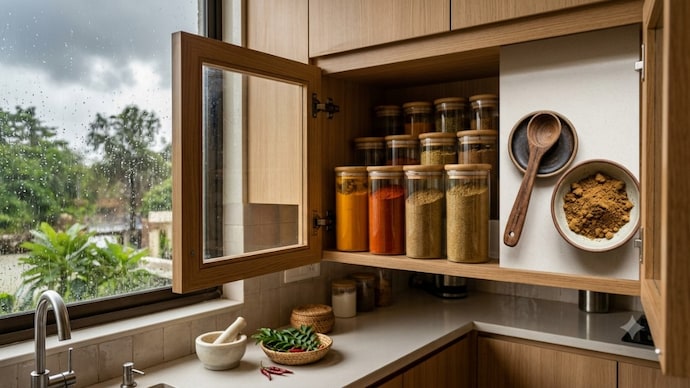
The monsoon season brings much-needed relief from the heat, but it also creates the perfect environment for moisture to creep into your kitchen. One of the biggest casualties of high humidity is your spice collection. Clumpy chilli powder, damp salt, mouldy masalas, and stale herbs are common problems during this time of the year.
Fortunately, a few simple storage habits can help keep your spices fresh, dry, and flavourful throughout the rainy season.
Also read: Why clothes smell musty during monsoon and how to fix it
WHY SPICES ABSORB MOISTURE SO EASILY
Ground spices and dried herbs naturally absorb moisture from the air. During humid weather, water vapour enters spice containers every time they are opened, causing the powders to clump together and lose their aroma. In severe cases, excess moisture can even lead to mould growth.
STORE SPICES IN AIRTIGHT CONTAINERS
The easiest way to protect spices is by storing them in airtight glass or food-grade plastic containers.
Tightly sealed containers prevent humid air from entering and help preserve the flavour, colour, and aroma of spices for longer.
KEEP THEM AWAY FROM THE STOVE
Many people store spice boxes right next to the cooking area for convenience. However, the heat and steam released during cooking expose spices to constant moisture.
Instead, keep your spices in a cool, dry cupboard away from direct heat and sunlight.
NEVER USE A WET SPOON
Even a few drops of water can spoil an entire jar of spice powder.
Always use a clean, dry spoon when scooping spices, and avoid sprinkling them directly over steaming pots, as steam can enter the container.
BUY SMALLER QUANTITIES
Large quantities of spices remain exposed for longer periods, increasing the risk of moisture damage.
Buying smaller packs that can be used within a few months helps ensure your spices stay fresher and more aromatic.
ADD NATURAL MOISTURE ABSORBERS
A few simple kitchen ingredients can help keep moisture under control.
You can place:
A few grains of uncooked rice in the salt container.
Food-safe silica gel packets (if provided with packaged spices) in storage cabinets but never let them come into direct contact with the spices.
Dry bay leaves in cupboards to discourage insects.
AVOID REFRIGERATING MOST SPICES
Although refrigeration may seem like a good idea, moving spices in and out of the fridge can create condensation, exposing them to even more moisture.
Most whole and ground spices stay best in a cool, dry cupboard.
CHECK FOR SIGNS OF SPOILAGE
Inspect your spices regularly. Discard them if you notice:
Visible mould
An unusual smell
Persistent clumping caused by moisture
Loss of colour and aroma
Signs of insects
- advertisement
Using spoiled spices can affect both the taste and quality of your food.
LABEL CONTAINERS WITH PURCHASE DATES
Spices don't spoil overnight, but they gradually lose their potency.
Labelling containers with the purchase date helps you rotate your stock and use older spices first.
DON'T SHAKE SPICES DIRECTLY OVER HOT FOOD
Shaking spice containers directly over boiling curries or soups allows steam to enter the jar. Over time, this trapped moisture causes the spices to become damp and clumpy.
Instead, pour the required amount into a dry spoon or small bowl before adding it to your dish.
Humidity can quickly rob spices of their flavour, aroma, and freshness during the monsoon. Storing them in airtight containers, keeping them away from heat and steam, using only dry utensils, and buying smaller quantities can go a long way in preventing moisture damage. With a little extra care, your spices will stay fresh and ready to add flavour to every meal, no matter how wet the weather gets.
The monsoon season brings much-needed relief from the heat, but it also creates the perfect environment for moisture to creep into your kitchen. One of the biggest casualties of high humidity is your spice collection. Clumpy chilli powder, damp salt, mouldy masalas, and stale herbs are common problems during this time of the year.
Fortunately, a few simple storage habits can help keep your spices fresh, dry, and flavourful throughout the rainy season.
Also read: Why clothes smell musty during monsoon and how to fix it
WHY SPICES ABSORB MOISTURE SO EASILY
Ground spices and dried herbs naturally absorb moisture from the air. During humid weather, water vapour enters spice containers every time they are opened, causing the powders to clump together and lose their aroma. In severe cases, excess moisture can even lead to mould growth.
STORE SPICES IN AIRTIGHT CONTAINERS
The easiest way to protect spices is by storing them in airtight glass or food-grade plastic containers.
Tightly sealed containers prevent humid air from entering and help preserve the flavour, colour, and aroma of spices for longer.
KEEP THEM AWAY FROM THE STOVE
Many people store spice boxes right next to the cooking area for convenience. However, the heat and steam released during cooking expose spices to constant moisture.
Instead, keep your spices in a cool, dry cupboard away from direct heat and sunlight.
NEVER USE A WET SPOON
Even a few drops of water can spoil an entire jar of spice powder.
Always use a clean, dry spoon when scooping spices, and avoid sprinkling them directly over steaming pots, as steam can enter the container.
BUY SMALLER QUANTITIES
Large quantities of spices remain exposed for longer periods, increasing the risk of moisture damage.
Buying smaller packs that can be used within a few months helps ensure your spices stay fresher and more aromatic.
ADD NATURAL MOISTURE ABSORBERS
A few simple kitchen ingredients can help keep moisture under control.
You can place:
A few grains of uncooked rice in the salt container.
Food-safe silica gel packets (if provided with packaged spices) in storage cabinets but never let them come into direct contact with the spices.
Dry bay leaves in cupboards to discourage insects.
AVOID REFRIGERATING MOST SPICES
Although refrigeration may seem like a good idea, moving spices in and out of the fridge can create condensation, exposing them to even more moisture.
Most whole and ground spices stay best in a cool, dry cupboard.
CHECK FOR SIGNS OF SPOILAGE
Inspect your spices regularly. Discard them if you notice:
Visible mould
An unusual smell
Persistent clumping caused by moisture
Loss of colour and aroma
Signs of insects
Using spoiled spices can affect both the taste and quality of your food.
LABEL CONTAINERS WITH PURCHASE DATES
Spices don't spoil overnight, but they gradually lose their potency.
Labelling containers with the purchase date helps you rotate your stock and use older spices first.
DON'T SHAKE SPICES DIRECTLY OVER HOT FOOD
Shaking spice containers directly over boiling curries or soups allows steam to enter the jar. Over time, this trapped moisture causes the spices to become damp and clumpy.
Instead, pour the required amount into a dry spoon or small bowl before adding it to your dish.
Humidity can quickly rob spices of their flavour, aroma, and freshness during the monsoon. Storing them in airtight containers, keeping them away from heat and steam, using only dry utensils, and buying smaller quantities can go a long way in preventing moisture damage. With a little extra care, your spices will stay fresh and ready to add flavour to every meal, no matter how wet the weather gets.

