Noida, Greater Noida get new electric bus links to Jewar Airport
Jewar Airport connectivity gets a major push as Chief Minister Yogi Adityanath flags off 45 electric buses for Noida, Greater Noida and YEIDA areas. The move aims to provide greener, safer and more convenient public transport for travellers.
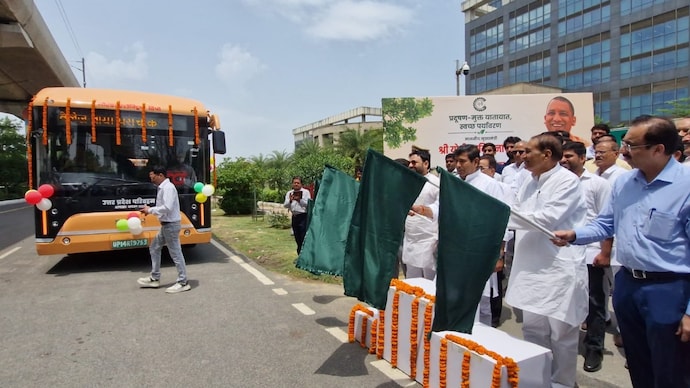
Chief Minister Yogi Adityanath has flagged off 45 new electric buses to improve Jewar Airport connectivity and strengthen public transport across Noida, Greater Noida and the Yamuna Expressway Industrial Development Authority (YEIDA) region.
The initiative is aimed at providing travellers with a safer, cleaner and more convenient commuting option while supporting green mobility goals.
Alongside the launch of the electric buses, the Chief Minister also inaugurated the new Noida bus depot, adding fresh capacity to the region’s transport network.
The move comes as Uttar Pradesh continues to expand its infrastructure and transport facilities ahead of the opening of the upcoming Jewar Airport.
"EV buses will start by June 15, and we have a target of 500 EV buses as per the demand for post-flight services at Jewer Noida international airport," said CM Yogi Adityanath.
He also mentioned that the 2 electric bus manufacturing plants (Tata Motors and Ashoka Leyland) have been installed for bus-making in Uttar Pradesh only.
He extended that 3 Hydrogen buses will also be provided by the Yamuna Authority.
The launch of the new electric bus fleet marks a major step in improving public transport across Noida, Greater Noida and Greater Noida West. According to local officials, 100 electric buses, including 10 double-decker buses, have been deployed and are ready for operations from the Sector-90 bus depot.
The buses are equipped to support intercity travel and are expected to improve connectivity to key residential, commercial and transport hubs, including the upcoming Noida International Airport at Jewar.
To support the fleet, a modern charging facility has been set up at the Sector-90 depot. High-speed charging stations can fully charge the buses in around two hours, helping ensure smooth operations throughout the day.
Apart from offering a cleaner mode of transport, the electric buses are also expected to reduce fuel costs and contribute to lower emissions in one of the NCR's fastest-growing urban regions. The service will be jointly operated by the Noida Authority and the Uttar Pradesh State Road Transport Corporation (UPSRTC).
The new service is likely to be particularly beneficial for residents of Greater Noida West, an area that has long struggled with limited public transport options. With fares expected to range between Rs 10 and Rs 30, the buses offer an affordable travel alternative for office-goers, students and daily commuters. Improved connectivity to Jewar Airport, Noida and other key destinations is also expected to reduce dependence on private vehicles and ease traffic congestion across the region.
BETTER CONNECTIVITY FOR JEWAR AIRPORT
The newly launched electric buses will operate between Noida, Greater Noida, YEIDA areas and Jewar Airport. The service is expected to make airport access easier for residents, workers and future passengers travelling through the region.
With the addition of these buses, commuters will have access to an environmentally friendly transport option that also supports efforts to reduce vehicular emissions.
NOIDA BUS DEPOT OPENS
During the programme, Chief Minister Yogi Adityanath also inaugurated the Noida bus depot. The facility is expected to strengthen public transport operations and support the growing demand for connectivity in the region.
The government says the new depot and electric bus fleet will help improve the overall travel experience while supporting future transport needs linked to Jewar Airport and surrounding urban centres.
ALSO READ: Inside Jewar airport: What facilities will passengers get
UP'S INFRASTRUCTURE PUSH CONTINUES
Speaking about the state's development journey, the Chief Minister said Uttar Pradesh has seen major changes in road and transport infrastructure over the past nine years.
According to the government, before 2017 the state faced challenges including poor road conditions, law and order concerns and limited investment opportunities.
Today, Uttar Pradesh is known for its expanding road and air connectivity network.
The Chief Minister stated that the state now has a road network of around 4 lakh kilometres, describing it as a result of sustained infrastructure development over the last nine years under the double-engine government model.
With projects such as Jewar Airport, new transport facilities and expanding connectivity, Uttar Pradesh is positioning itself as a key infrastructure and mobility hub in India.
Chief Minister Yogi Adityanath has flagged off 45 new electric buses to improve Jewar Airport connectivity and strengthen public transport across Noida, Greater Noida and the Yamuna Expressway Industrial Development Authority (YEIDA) region.
The initiative is aimed at providing travellers with a safer, cleaner and more convenient commuting option while supporting green mobility goals.
Alongside the launch of the electric buses, the Chief Minister also inaugurated the new Noida bus depot, adding fresh capacity to the region’s transport network.
The move comes as Uttar Pradesh continues to expand its infrastructure and transport facilities ahead of the opening of the upcoming Jewar Airport.
"EV buses will start by June 15, and we have a target of 500 EV buses as per the demand for post-flight services at Jewer Noida international airport," said CM Yogi Adityanath.
He also mentioned that the 2 electric bus manufacturing plants (Tata Motors and Ashoka Leyland) have been installed for bus-making in Uttar Pradesh only.
He extended that 3 Hydrogen buses will also be provided by the Yamuna Authority.
The launch of the new electric bus fleet marks a major step in improving public transport across Noida, Greater Noida and Greater Noida West. According to local officials, 100 electric buses, including 10 double-decker buses, have been deployed and are ready for operations from the Sector-90 bus depot.
The buses are equipped to support intercity travel and are expected to improve connectivity to key residential, commercial and transport hubs, including the upcoming Noida International Airport at Jewar.
To support the fleet, a modern charging facility has been set up at the Sector-90 depot. High-speed charging stations can fully charge the buses in around two hours, helping ensure smooth operations throughout the day.
Apart from offering a cleaner mode of transport, the electric buses are also expected to reduce fuel costs and contribute to lower emissions in one of the NCR's fastest-growing urban regions. The service will be jointly operated by the Noida Authority and the Uttar Pradesh State Road Transport Corporation (UPSRTC).
The new service is likely to be particularly beneficial for residents of Greater Noida West, an area that has long struggled with limited public transport options. With fares expected to range between Rs 10 and Rs 30, the buses offer an affordable travel alternative for office-goers, students and daily commuters. Improved connectivity to Jewar Airport, Noida and other key destinations is also expected to reduce dependence on private vehicles and ease traffic congestion across the region.
BETTER CONNECTIVITY FOR JEWAR AIRPORT
The newly launched electric buses will operate between Noida, Greater Noida, YEIDA areas and Jewar Airport. The service is expected to make airport access easier for residents, workers and future passengers travelling through the region.
With the addition of these buses, commuters will have access to an environmentally friendly transport option that also supports efforts to reduce vehicular emissions.
NOIDA BUS DEPOT OPENS
During the programme, Chief Minister Yogi Adityanath also inaugurated the Noida bus depot. The facility is expected to strengthen public transport operations and support the growing demand for connectivity in the region.
The government says the new depot and electric bus fleet will help improve the overall travel experience while supporting future transport needs linked to Jewar Airport and surrounding urban centres.
ALSO READ: Inside Jewar airport: What facilities will passengers get
UP'S INFRASTRUCTURE PUSH CONTINUES
Speaking about the state's development journey, the Chief Minister said Uttar Pradesh has seen major changes in road and transport infrastructure over the past nine years.
According to the government, before 2017 the state faced challenges including poor road conditions, law and order concerns and limited investment opportunities.
Today, Uttar Pradesh is known for its expanding road and air connectivity network.
The Chief Minister stated that the state now has a road network of around 4 lakh kilometres, describing it as a result of sustained infrastructure development over the last nine years under the double-engine government model.
With projects such as Jewar Airport, new transport facilities and expanding connectivity, Uttar Pradesh is positioning itself as a key infrastructure and mobility hub in India.

