Overnight oats vs traditional Indian breakfast: Which wins?
A comparison between overnight oats and traditional Indian breakfasts shows both can be nutritious choices. The better option depends on convenience, digestion, protein planning and everyday lifestyle needs.
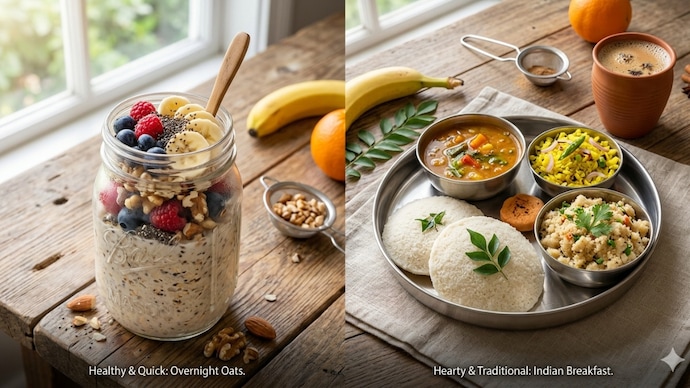
Breakfast is often called the most important meal of the day, but what you choose to eat in the morning can make a big difference to your energy, digestion, and overall health. In recent years, overnight oats have become a popular breakfast trend, especially among fitness enthusiasts and busy professionals. At the same time, traditional Indian breakfasts such as poha, idli, upma, paratha, and dosa continue to remain household favourites.
So, when it comes to nutrition, convenience, and health benefits, which breakfast option comes out on top? The answer depends on your lifestyle, dietary needs, and personal preferences.
WHAT ARE OVERNIGHT OATS?
Overnight oats are made by soaking rolled oats in milk, yogurt, or a plant-based alternative overnight. They are typically topped with fruits, nuts, seeds, and natural sweeteners.
Because they require no cooking, overnight oats have become a go-to option for people looking for a quick and nutritious breakfast.
THE NUTRITIONAL ADVANTAGES OF OVERNIGHT OATS
Overnight oats are rich in fibre, particularly beta-glucan, which can help support heart health and keep you feeling full for longer. They also provide complex carbohydrates that release energy slowly throughout the day.
Adding ingredients such as chia seeds, almonds, walnuts, and fruits can further boost protein, healthy fats, vitamins, and minerals.
For those aiming to manage weight or improve gut health, overnight oats can be a nutritious and filling choice.
WHY TRADITIONAL INDIAN BREAKFASTS STILL STAND STRONG
Indian breakfasts vary widely across regions and often offer a balanced combination of carbohydrates, protein, and healthy fats.
For example:
Idli and sambar provide fermented foods and protein.
Poha contains iron and can be enriched with vegetables and peanuts.
Upma offers fibre and essential nutrients when prepared with vegetables.
Stuffed parathas paired with curd provide energy and satiety.
Many traditional breakfast dishes are also deeply connected to local ingredients and cultural eating habits, making them both nourishing and comforting.
WHICH OPTION IS BETTER FOR DIGESTION?
Both choices can support good digestion when prepared thoughtfully.
Overnight oats contain soluble fibre that promotes healthy bowel movements and supports gut bacteria. Meanwhile, fermented Indian foods such as idli and dosa naturally contain beneficial bacteria that aid digestion.
People with sensitive stomachs may find lightly cooked traditional breakfasts easier to digest than raw soaked oats.
When it comes to saving time, overnight oats have a clear advantage. They can be prepared the night before and require little effort in the morning.
Traditional Indian breakfasts often involve cooking, although options like poha and upma can also be prepared relatively quickly.
For busy professionals and students, overnight oats may offer a practical solution during hectic weekdays.
PROTEIN CONTENT MATTERS
A common criticism of both overnight oats and traditional Indian breakfasts is that they may be low in protein unless carefully planned.
Overnight oats can be upgraded with Greek yogurt, protein powder, nuts, and seeds. Similarly, Indian breakfasts can include paneer, sprouts, eggs, curd, or sambar to improve protein intake.
Nutrition experts increasingly recommend prioritising protein at breakfast to support muscle health and long-lasting energy.
WHAT ABOUT WEIGHT MANAGEMENT?
Neither option guarantees weight loss on its own. Portion sizes, ingredients, and overall eating habits matter more.
Overnight oats can help control hunger due to their fibre content. Traditional Indian breakfasts can also support weight management when they are prepared with minimal oil and include vegetables and protein-rich sides.
The healthiest breakfast is one that keeps you satisfied without leading to overeating later in the day.
There is no single winner in the battle between overnight oats and traditional Indian breakfasts. Both can be healthy, nutritious, and satisfying when prepared correctly.
If convenience and fibre are your priorities, overnight oats may have the edge. If you value variety, cultural familiarity, and freshly cooked meals, traditional Indian breakfasts remain an excellent choice.
Ultimately, the best breakfast is one that fits your lifestyle, meets your nutritional needs, and helps you start the day feeling energised and satisfied
Breakfast is often called the most important meal of the day, but what you choose to eat in the morning can make a big difference to your energy, digestion, and overall health. In recent years, overnight oats have become a popular breakfast trend, especially among fitness enthusiasts and busy professionals. At the same time, traditional Indian breakfasts such as poha, idli, upma, paratha, and dosa continue to remain household favourites.
So, when it comes to nutrition, convenience, and health benefits, which breakfast option comes out on top? The answer depends on your lifestyle, dietary needs, and personal preferences.
WHAT ARE OVERNIGHT OATS?
Overnight oats are made by soaking rolled oats in milk, yogurt, or a plant-based alternative overnight. They are typically topped with fruits, nuts, seeds, and natural sweeteners.
Because they require no cooking, overnight oats have become a go-to option for people looking for a quick and nutritious breakfast.
THE NUTRITIONAL ADVANTAGES OF OVERNIGHT OATS
Overnight oats are rich in fibre, particularly beta-glucan, which can help support heart health and keep you feeling full for longer. They also provide complex carbohydrates that release energy slowly throughout the day.
Adding ingredients such as chia seeds, almonds, walnuts, and fruits can further boost protein, healthy fats, vitamins, and minerals.
For those aiming to manage weight or improve gut health, overnight oats can be a nutritious and filling choice.
WHY TRADITIONAL INDIAN BREAKFASTS STILL STAND STRONG
Indian breakfasts vary widely across regions and often offer a balanced combination of carbohydrates, protein, and healthy fats.
For example:
Idli and sambar provide fermented foods and protein.
Poha contains iron and can be enriched with vegetables and peanuts.
Upma offers fibre and essential nutrients when prepared with vegetables.
Stuffed parathas paired with curd provide energy and satiety.
Many traditional breakfast dishes are also deeply connected to local ingredients and cultural eating habits, making them both nourishing and comforting.
WHICH OPTION IS BETTER FOR DIGESTION?
Both choices can support good digestion when prepared thoughtfully.
Overnight oats contain soluble fibre that promotes healthy bowel movements and supports gut bacteria. Meanwhile, fermented Indian foods such as idli and dosa naturally contain beneficial bacteria that aid digestion.
People with sensitive stomachs may find lightly cooked traditional breakfasts easier to digest than raw soaked oats.
When it comes to saving time, overnight oats have a clear advantage. They can be prepared the night before and require little effort in the morning.
Traditional Indian breakfasts often involve cooking, although options like poha and upma can also be prepared relatively quickly.
For busy professionals and students, overnight oats may offer a practical solution during hectic weekdays.
PROTEIN CONTENT MATTERS
A common criticism of both overnight oats and traditional Indian breakfasts is that they may be low in protein unless carefully planned.
Overnight oats can be upgraded with Greek yogurt, protein powder, nuts, and seeds. Similarly, Indian breakfasts can include paneer, sprouts, eggs, curd, or sambar to improve protein intake.
Nutrition experts increasingly recommend prioritising protein at breakfast to support muscle health and long-lasting energy.
WHAT ABOUT WEIGHT MANAGEMENT?
Neither option guarantees weight loss on its own. Portion sizes, ingredients, and overall eating habits matter more.
Overnight oats can help control hunger due to their fibre content. Traditional Indian breakfasts can also support weight management when they are prepared with minimal oil and include vegetables and protein-rich sides.
The healthiest breakfast is one that keeps you satisfied without leading to overeating later in the day.
There is no single winner in the battle between overnight oats and traditional Indian breakfasts. Both can be healthy, nutritious, and satisfying when prepared correctly.
If convenience and fibre are your priorities, overnight oats may have the edge. If you value variety, cultural familiarity, and freshly cooked meals, traditional Indian breakfasts remain an excellent choice.
Ultimately, the best breakfast is one that fits your lifestyle, meets your nutritional needs, and helps you start the day feeling energised and satisfied

