8 foods you should never reheat: What you need to know
A food safety guide explains which common leftovers need extra care before reheating. It says prompt refrigeration and thorough heating matter more than avoiding particular foods.
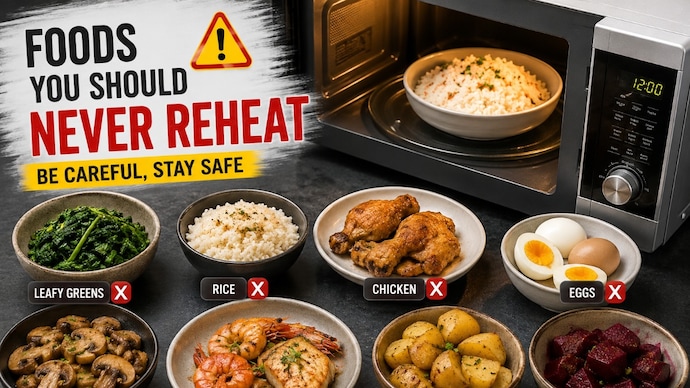
Reheating leftovers is a common way to reduce food waste and save time. However, not every food handles reheating well. While reheating itself doesn't always make food dangerous, improper storage or uneven heating can allow bacteria to grow or affect the food's taste, texture, and nutritional value. Here's a look at some foods that deserve extra caution.
Also read: Greek yogurt vs curd: What's the difference?
RICE
Cooked rice is one of the most commonly misunderstood leftovers. The main risk isn't reheating it's leaving cooked rice at room temperature for too long. Rice can contain spores of bacteria that survive cooking and multiply if the rice isn't refrigerated promptly. If you reheat rice, make sure it has been stored in the fridge within two hours of cooking and is heated until steaming hot.
CHICKEN
Chicken can be safely reheated if it has been stored correctly in the refrigerator. However, it should be reheated thoroughly so the centre reaches a safe temperature. Uneven heating can leave cold spots where bacteria may survive. Reheated chicken may also become dry due to its high protein content.
EGGS
Cooked eggs, whether boiled, scrambled or in dishes like omelettes, can be reheated safely if they have been refrigerated properly. Avoid reheating them multiple times, as repeated heating can affect their texture and quality. Ensure they are heated evenly before eating.
MUSHROOMS
Mushrooms are best eaten fresh after cooking because reheating can make them rubbery and change their flavour. If you do reheat them, make sure they were refrigerated soon after cooking and are heated only once.
SEAFOOD
Fish and shellfish can dry out and develop a strong smell when reheated. More importantly, seafood should be refrigerated promptly after cooking and reheated only once. If it has been left out for several hours, it's safer to discard it.
LEAFY GREENS
Spinach and other leafy greens can be reheated safely if handled correctly, but they are often best eaten fresh or cold. The bigger concern is improper storage rather than reheating itself. Avoid leaving cooked greens at room temperature for extended periods.
POTATOES
Cooked potatoes should be refrigerated soon after cooking. If left out at room temperature for too long, they can support the growth of harmful bacteria. Reheat refrigerated potatoes until they are piping hot throughout.
BEETROOT
Beetroot may lose some of its texture and flavour after reheating. While it isn't generally unsafe to reheat, many people prefer to eat leftover beetroot cold in salads or lightly warmed.
THE BIGGER ISSUE IS FOOD STORAGE
In many cases, food poisoning is caused not by reheating but by poor storage. Leftovers should be refrigerated within two hours of cooking (or within one hour in very hot weather), stored in airtight containers, and consumed within three to four days.
Rather than avoiding specific foods altogether, focus on safe food handling. Cool leftovers quickly, refrigerate them promptly, reheat only the portion you plan to eat, and make sure the food is steaming hot all the way through. If you're unsure how long a leftover has been sitting out, it's better to throw it away than risk foodborne illness
Reheating leftovers is a common way to reduce food waste and save time. However, not every food handles reheating well. While reheating itself doesn't always make food dangerous, improper storage or uneven heating can allow bacteria to grow or affect the food's taste, texture, and nutritional value. Here's a look at some foods that deserve extra caution.
Also read: Greek yogurt vs curd: What's the difference?
RICE
Cooked rice is one of the most commonly misunderstood leftovers. The main risk isn't reheating it's leaving cooked rice at room temperature for too long. Rice can contain spores of bacteria that survive cooking and multiply if the rice isn't refrigerated promptly. If you reheat rice, make sure it has been stored in the fridge within two hours of cooking and is heated until steaming hot.
CHICKEN
Chicken can be safely reheated if it has been stored correctly in the refrigerator. However, it should be reheated thoroughly so the centre reaches a safe temperature. Uneven heating can leave cold spots where bacteria may survive. Reheated chicken may also become dry due to its high protein content.
EGGS
Cooked eggs, whether boiled, scrambled or in dishes like omelettes, can be reheated safely if they have been refrigerated properly. Avoid reheating them multiple times, as repeated heating can affect their texture and quality. Ensure they are heated evenly before eating.
MUSHROOMS
Mushrooms are best eaten fresh after cooking because reheating can make them rubbery and change their flavour. If you do reheat them, make sure they were refrigerated soon after cooking and are heated only once.
SEAFOOD
Fish and shellfish can dry out and develop a strong smell when reheated. More importantly, seafood should be refrigerated promptly after cooking and reheated only once. If it has been left out for several hours, it's safer to discard it.
LEAFY GREENS
Spinach and other leafy greens can be reheated safely if handled correctly, but they are often best eaten fresh or cold. The bigger concern is improper storage rather than reheating itself. Avoid leaving cooked greens at room temperature for extended periods.
POTATOES
Cooked potatoes should be refrigerated soon after cooking. If left out at room temperature for too long, they can support the growth of harmful bacteria. Reheat refrigerated potatoes until they are piping hot throughout.
BEETROOT
Beetroot may lose some of its texture and flavour after reheating. While it isn't generally unsafe to reheat, many people prefer to eat leftover beetroot cold in salads or lightly warmed.
THE BIGGER ISSUE IS FOOD STORAGE
In many cases, food poisoning is caused not by reheating but by poor storage. Leftovers should be refrigerated within two hours of cooking (or within one hour in very hot weather), stored in airtight containers, and consumed within three to four days.
Rather than avoiding specific foods altogether, focus on safe food handling. Cool leftovers quickly, refrigerate them promptly, reheat only the portion you plan to eat, and make sure the food is steaming hot all the way through. If you're unsure how long a leftover has been sitting out, it's better to throw it away than risk foodborne illness

