Rice vinegar vs regular vinegar: What's the difference?
Rice vinegar and white vinegar differ in flavour, acidity and kitchen use. The choice can affect taste, texture and whether a recipe suits pickling or Asian cooking.
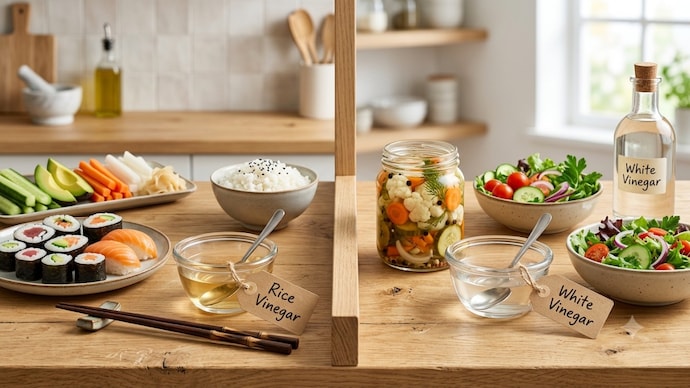
Vinegar is a staple ingredient in kitchens around the world, but not all vinegars are the same. While rice vinegar and regular vinegar may look similar, they differ in taste, production, acidity and culinary uses. Knowing the difference can help you choose the right one for your recipes and avoid altering the flavour of a dish.
WHAT IS RICE VINEGAR?
Rice vinegar is made by fermenting rice or rice wine. Popular in East Asian cuisines, particularly Chinese, Japanese and Korean cooking, it has a mild, slightly sweet flavour and lower acidity than many other vinegars.
Its subtle taste makes it ideal for dishes where vinegar should enhance rather than overpower the other ingredients.
WHAT IS REGULAR VINEGAR?
The term "regulanr vinegar" usually refers to wte distilled vinegr. It is made by fermenting distilled alcohol and as a sharp, clean and highly acidic taste.
White vinegar is widely used in cooking, pickling, baking and even household cleaning because of its strong acidity.
TASTE IS THE BIGGEST DIFFERENCE
The most noticeable difference between the two is flavour.
Rice vinegar has a delicate, mildly sweet taste that blends well with sauces, dressings and marinades.
White vinegar, on the other hand, has a bold, tangy flavour that can dominate a dish if used in large quantities.
ACIDITY LEVELS VARY
Rice vinegar generally contains around 4–5 percent acetic acid, while white distilled vinegar often contains about 5 percent acidity or more, depending on the variety.
Although the difference may seem small, it can significantly affect both the taste and texture of a recipe.
BEST USES FOR RICE VINEGAR
Rice vinegar works well in:
Sushi rice, salad dressings Stir-fry sauces Dipping sauce Asian marinades Pickled vegetables
Its mild flavour complements ingredients without overpowering them.
BEST USES FOR REGULAR VINEGAR
White vinegar is commonly used for:
Pickling, baking, chutneys, cleaning fruits and vegetables Household cleaning, cleaning preserving foods
Its stronger acidity makes it suitable for both culinary and non-culinary purposes.
CAN YOU SUBSTITUTE ONE FOR THE OTHER?
Yes, but with caution.
If a recipe calls for rice vinegar and you only have white vinegar, use a smaller quantity and consider adding a pinch of sugar to mimic rice vinegar's mild sweetness.
Similarly, replacing white vinegar with rice vinegar may produce a less tangy result, especially in pickling recipes.
Both rice vinegar and white vinegar are low in calories and contain very little fat or sugar. Neither offers significant amounts of vitamins or minerals.
Some studies suggest that vinegar, in general, may help support blood sugar management when consumed as part of a balanced diet. However, no single type of vinegar should be viewed as a health remedy.
WHICH SHOULD YOU KEEP IN YOUR KITCHEN?
The answer depends on what you cook.
If you frequently prepare Asian dishes, rice vinegar is an essential pantry ingredient because of its gentle flavour.
For everyday cooking, pickling and household use, white vinegar remains a versatile option.
Rice vinegar and regular vinegar may belong to the same family, but they serve different purposes in the kitchen. Rice vinegar is mild, slightly sweet and ideal for Asian recipes, while white vinegar is sharper, more acidic and better suited for pickling, preserving and general cooking. Understanding their differences ensures you get the best flavour and results every time you cook.
Vinegar is a staple ingredient in kitchens around the world, but not all vinegars are the same. While rice vinegar and regular vinegar may look similar, they differ in taste, production, acidity and culinary uses. Knowing the difference can help you choose the right one for your recipes and avoid altering the flavour of a dish.
WHAT IS RICE VINEGAR?
Rice vinegar is made by fermenting rice or rice wine. Popular in East Asian cuisines, particularly Chinese, Japanese and Korean cooking, it has a mild, slightly sweet flavour and lower acidity than many other vinegars.
Its subtle taste makes it ideal for dishes where vinegar should enhance rather than overpower the other ingredients.
WHAT IS REGULAR VINEGAR?
The term "regulanr vinegar" usually refers to wte distilled vinegr. It is made by fermenting distilled alcohol and as a sharp, clean and highly acidic taste.
White vinegar is widely used in cooking, pickling, baking and even household cleaning because of its strong acidity.
TASTE IS THE BIGGEST DIFFERENCE
The most noticeable difference between the two is flavour.
Rice vinegar has a delicate, mildly sweet taste that blends well with sauces, dressings and marinades.
White vinegar, on the other hand, has a bold, tangy flavour that can dominate a dish if used in large quantities.
ACIDITY LEVELS VARY
Rice vinegar generally contains around 4–5 percent acetic acid, while white distilled vinegar often contains about 5 percent acidity or more, depending on the variety.
Although the difference may seem small, it can significantly affect both the taste and texture of a recipe.
BEST USES FOR RICE VINEGAR
Rice vinegar works well in:
Sushi rice, salad dressings Stir-fry sauces Dipping sauce Asian marinades Pickled vegetables
Its mild flavour complements ingredients without overpowering them.
BEST USES FOR REGULAR VINEGAR
White vinegar is commonly used for:
Pickling, baking, chutneys, cleaning fruits and vegetables Household cleaning, cleaning preserving foods
Its stronger acidity makes it suitable for both culinary and non-culinary purposes.
CAN YOU SUBSTITUTE ONE FOR THE OTHER?
Yes, but with caution.
If a recipe calls for rice vinegar and you only have white vinegar, use a smaller quantity and consider adding a pinch of sugar to mimic rice vinegar's mild sweetness.
Similarly, replacing white vinegar with rice vinegar may produce a less tangy result, especially in pickling recipes.
Both rice vinegar and white vinegar are low in calories and contain very little fat or sugar. Neither offers significant amounts of vitamins or minerals.
Some studies suggest that vinegar, in general, may help support blood sugar management when consumed as part of a balanced diet. However, no single type of vinegar should be viewed as a health remedy.
WHICH SHOULD YOU KEEP IN YOUR KITCHEN?
The answer depends on what you cook.
If you frequently prepare Asian dishes, rice vinegar is an essential pantry ingredient because of its gentle flavour.
For everyday cooking, pickling and household use, white vinegar remains a versatile option.
Rice vinegar and regular vinegar may belong to the same family, but they serve different purposes in the kitchen. Rice vinegar is mild, slightly sweet and ideal for Asian recipes, while white vinegar is sharper, more acidic and better suited for pickling, preserving and general cooking. Understanding their differences ensures you get the best flavour and results every time you cook.

