Salt vs rock salt: Difference and which to use in cooking
From everyday meals to fasting recipes, both salt and rock salt have different uses. Here's what sets them apart.
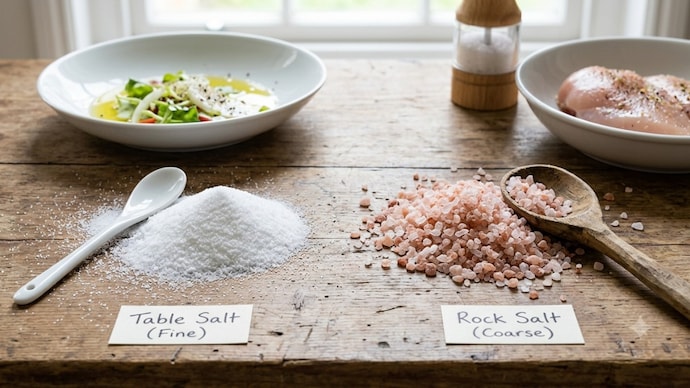
Salt is one of the most basic ingredients in every kitchen, but many people often wonder whether table salt or rock salt is the better choice. While both add the same salty taste to food, they differ in how they are produced, their texture and the way they are commonly used.
Rock salt has become especially popular during fasting and among health-conscious consumers, but does it really offer more benefits?
Here's what you need to know before choosing between the two.
WHAT IS TABLE SALT?
Table salt is refined salt that is processed to remove impurities. It usually contains added iodine, an important nutrient that helps support normal thyroid function.
Its fine texture makes it easy to dissolve and is suitable for everyday cooking, baking and seasoning.
WHAT IS ROCK SALT?
Rock salt, also known as sendha namak in India, is mined from natural salt deposits. It is generally less processed than table salt and often comes in larger crystals.
It may contain small amounts of naturally occurring minerals, which can slightly change its colour and taste.
WHAT IS THE MAIN DIFFERENCE?
The biggest difference lies in processing. Table salt is refined and commonly fortified with iodine, while rock salt is usually sold in a more natural form.
Rock salt has a milder flavour and a coarser texture, whereas table salt mixes quickly into food because of its finer grains.
WHICH ONE SHOULD YOU USE?
For daily cooking, table salt remains a practical choice, especially because it provides iodine. Rock salt is commonly used in fasting meals, spice blends and recipes where a mild mineral taste is preferred.
If a recipe specifically asks for rock salt, it is best to use it because the texture and flavour may slightly affect the final dish. For most everyday recipes, however, both salts can be used with small adjustments in quantity.
ALSO READ: Sourdough bread vs regular bread: What's the difference?
IS ROCK SALT HEALTHIER?
Rock salt is often promoted as a healthier option because it is less processed. However, health experts say both salts mainly contain sodium, and consuming too much of either can increase the risk of high blood pressure.
The healthier choice depends more on the amount of salt you eat than on the type of salt you choose.
The best approach is to use salt in moderation and maintain a balanced diet. Whether you prefer table salt or rock salt, keeping your overall sodium intake under control is what matters most.
Salt is one of the most basic ingredients in every kitchen, but many people often wonder whether table salt or rock salt is the better choice. While both add the same salty taste to food, they differ in how they are produced, their texture and the way they are commonly used.
Rock salt has become especially popular during fasting and among health-conscious consumers, but does it really offer more benefits?
Here's what you need to know before choosing between the two.
WHAT IS TABLE SALT?
Table salt is refined salt that is processed to remove impurities. It usually contains added iodine, an important nutrient that helps support normal thyroid function.
Its fine texture makes it easy to dissolve and is suitable for everyday cooking, baking and seasoning.
WHAT IS ROCK SALT?
Rock salt, also known as sendha namak in India, is mined from natural salt deposits. It is generally less processed than table salt and often comes in larger crystals.
It may contain small amounts of naturally occurring minerals, which can slightly change its colour and taste.
WHAT IS THE MAIN DIFFERENCE?
The biggest difference lies in processing. Table salt is refined and commonly fortified with iodine, while rock salt is usually sold in a more natural form.
Rock salt has a milder flavour and a coarser texture, whereas table salt mixes quickly into food because of its finer grains.
WHICH ONE SHOULD YOU USE?
For daily cooking, table salt remains a practical choice, especially because it provides iodine. Rock salt is commonly used in fasting meals, spice blends and recipes where a mild mineral taste is preferred.
If a recipe specifically asks for rock salt, it is best to use it because the texture and flavour may slightly affect the final dish. For most everyday recipes, however, both salts can be used with small adjustments in quantity.
ALSO READ: Sourdough bread vs regular bread: What's the difference?
IS ROCK SALT HEALTHIER?
Rock salt is often promoted as a healthier option because it is less processed. However, health experts say both salts mainly contain sodium, and consuming too much of either can increase the risk of high blood pressure.
The healthier choice depends more on the amount of salt you eat than on the type of salt you choose.
The best approach is to use salt in moderation and maintain a balanced diet. Whether you prefer table salt or rock salt, keeping your overall sodium intake under control is what matters most.

