Inside Venezuela's earthquake history: The strongest quakes that hit since 2016
Venezuela was struck by twin powerful earthquakes measuring 7.1 and 7.5, among the strongest in over a century. Though the country experiences frequent tremors, major destructive earthquakes remain rare. Recent strong quakes include the 2018, 2024, and 2025 events.
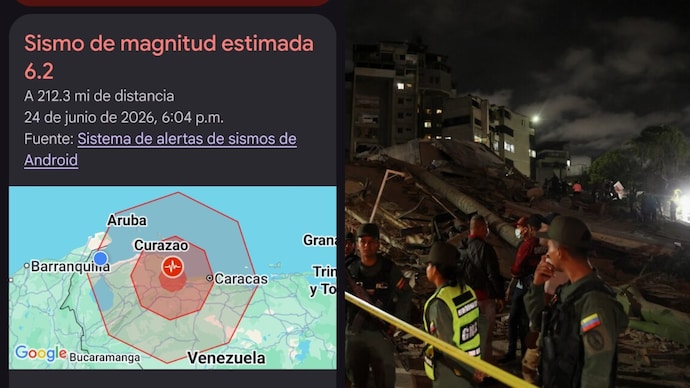
Venezuela was hit by not one but two monstrous earthquakes.
Back-to-back powerful earthquakes struck Venezuela in the early hours of Thursday (Indian Standard Time), causing widespread damage and collapsing buildings in the capital, Caracas, according to officials and monitoring agencies. The twin earthquakes, measuring 7.1 and 7.5 in magnitude, became some of the strongest quakes to hit the Latin American country in more than a century.
The US Geological Survey (USGS) said the first earthquake measured magnitude 7.1, with its epicentre located west of Moron, a coastal community along Venezuela’s Caribbean shoreline, around 168 km west of Caracas. The earthquake struck at a shallow depth of 13 km, increasing the possibility of stronger surface-level shaking.
However, this was not the first time Venezuela had witnessed a major earthquake. Over the last decade, the country has experienced several earthquakes, though none matched the intensity of the latest twin tremors.
FREQUENT TREMORS, RARE MEGAQUAKES
Venezuela has experienced significant seismic activity over the past decade. According to earthquakelist.org, 959 earthquakes of magnitude 4 or above were recorded within 300 km (186 miles) of the country in the last 10 years. This averages around 95 earthquakes every year, or nearly seven tremors every month.
However, most of these earthquakes were moderate and caused little to no damage. Extremely powerful earthquakes, like the recent magnitude 7+ events, remain rare in Venezuela.
Despite being located near multiple fault lines, Venezuela does not experience major destructive earthquakes as frequently as some other parts of Latin America. The country lies close to the boundary of the South American and Caribbean tectonic plates, but its geological setting makes it less earthquake-prone compared with regions located along highly active tectonic zones, according to AP.
In contrast, countries along the Pacific coast, such as Mexico and Chile, experience frequent powerful earthquakes because they sit along the Pacific Ring of Fire, a highly active tectonic belt responsible for around 90% of the world’s earthquakes, according to the USGS, as reported by The Guardian.
STRONG EARTHQUAKES THAT HIT VENEZUELA SINCE 2016
In the last decade (roughly 2016–2026), Venezuela has experienced several earthquakes, but only a few have been considered strong, measuring magnitude 6.0 or higher.
Some of the major earthquakes recorded near Venezuela include:
- August 21, 2018: Magnitude 7.3 Location: Near Carpano, eastern Venezuela. One of the strongest earthquakes recorded in the country in recent years.
- June 22, 2024: Magnitude 6.0 Location: Near the Carpano region. A strong earthquake was felt across parts of eastern Venezuela.
- September 24, 2025: Magnitude 6.2 and 6.3 Location: Near the Valera/western Venezuela region. Two significant tremors that added to the country’s recent seismic activity.
- June 24, 2026: Magnitude 7.2 and 7.5 Location: Northern Venezuela near the Caracas region The twin earthquakes were among the strongest recorded in Venezuela in more than a century.
A LOOK AT HISTORY
The deadliest earthquake in Venezuela’s history occurred on March 26, 1812, along the Bocono fault system. The earthquake caused widespread destruction in cities including Mrida and Caracas and killed an estimated 30,000 people. Another major event occurred on July 29, 1967, when a magnitude 6.3 earthquake struck northern Venezuela and the Caracas Valley. The quake caused extensive damage to the capital and claimed numerous lives, according to the United States Geological Survey (USGS).
Following the 1967 earthquake, the Venezuelan Government established a Presidential Earthquake Commission to coordinate research efforts and study the impact of the disaster.
While Venezuela does not experience earthquakes as frequently as countries located along the Pacific Ring of Fire, its history shows that powerful tremors can still occur, sometimes after decades of relative calm.
Venezuela was hit by not one but two monstrous earthquakes.
Back-to-back powerful earthquakes struck Venezuela in the early hours of Thursday (Indian Standard Time), causing widespread damage and collapsing buildings in the capital, Caracas, according to officials and monitoring agencies. The twin earthquakes, measuring 7.1 and 7.5 in magnitude, became some of the strongest quakes to hit the Latin American country in more than a century.
The US Geological Survey (USGS) said the first earthquake measured magnitude 7.1, with its epicentre located west of Moron, a coastal community along Venezuela’s Caribbean shoreline, around 168 km west of Caracas. The earthquake struck at a shallow depth of 13 km, increasing the possibility of stronger surface-level shaking.
However, this was not the first time Venezuela had witnessed a major earthquake. Over the last decade, the country has experienced several earthquakes, though none matched the intensity of the latest twin tremors.
FREQUENT TREMORS, RARE MEGAQUAKES
Venezuela has experienced significant seismic activity over the past decade. According to earthquakelist.org, 959 earthquakes of magnitude 4 or above were recorded within 300 km (186 miles) of the country in the last 10 years. This averages around 95 earthquakes every year, or nearly seven tremors every month.
However, most of these earthquakes were moderate and caused little to no damage. Extremely powerful earthquakes, like the recent magnitude 7+ events, remain rare in Venezuela.
Despite being located near multiple fault lines, Venezuela does not experience major destructive earthquakes as frequently as some other parts of Latin America. The country lies close to the boundary of the South American and Caribbean tectonic plates, but its geological setting makes it less earthquake-prone compared with regions located along highly active tectonic zones, according to AP.
In contrast, countries along the Pacific coast, such as Mexico and Chile, experience frequent powerful earthquakes because they sit along the Pacific Ring of Fire, a highly active tectonic belt responsible for around 90% of the world’s earthquakes, according to the USGS, as reported by The Guardian.
STRONG EARTHQUAKES THAT HIT VENEZUELA SINCE 2016
In the last decade (roughly 2016–2026), Venezuela has experienced several earthquakes, but only a few have been considered strong, measuring magnitude 6.0 or higher.
Some of the major earthquakes recorded near Venezuela include:
- August 21, 2018: Magnitude 7.3 Location: Near Carpano, eastern Venezuela. One of the strongest earthquakes recorded in the country in recent years.
- June 22, 2024: Magnitude 6.0 Location: Near the Carpano region. A strong earthquake was felt across parts of eastern Venezuela.
- September 24, 2025: Magnitude 6.2 and 6.3 Location: Near the Valera/western Venezuela region. Two significant tremors that added to the country’s recent seismic activity.
- June 24, 2026: Magnitude 7.2 and 7.5 Location: Northern Venezuela near the Caracas region The twin earthquakes were among the strongest recorded in Venezuela in more than a century.
A LOOK AT HISTORY
The deadliest earthquake in Venezuela’s history occurred on March 26, 1812, along the Bocono fault system. The earthquake caused widespread destruction in cities including Mrida and Caracas and killed an estimated 30,000 people. Another major event occurred on July 29, 1967, when a magnitude 6.3 earthquake struck northern Venezuela and the Caracas Valley. The quake caused extensive damage to the capital and claimed numerous lives, according to the United States Geological Survey (USGS).
Following the 1967 earthquake, the Venezuelan Government established a Presidential Earthquake Commission to coordinate research efforts and study the impact of the disaster.
While Venezuela does not experience earthquakes as frequently as countries located along the Pacific Ring of Fire, its history shows that powerful tremors can still occur, sometimes after decades of relative calm.

