Will you join us for a drink: Is Gen Z changing concept of respect at workplace?
Gen Z is changing workplace dynamics by challenging traditional ideas of hierarchy and respect. Instead of valuing titles and seniority, many young professionals focus on authenticity, openness, and individual behaviour, raising questions about the future of office culture.
Picture this: You have been working in an office for years. You hold a respectable position, your colleagues value your experience, and you have always believed in showing respect to your seniors. When a senior walks in, you stand up, greet them, and maintain a certain level of formality.
Then comes a Gen Z employee. They are talented, hardworking, and respected for their skills. But the way they interact with seniors feels different. They do not always follow the traditional rules of workplace etiquette. They might casually address a manager, share an opinion openly, or even invite a CEO for a drink.
At first glance, it may seem like a lack of respect. But is it really? Or is the Gen Z workforce changing the very idea of what ‘respect’ means at work?
HIERARCHY MEETS THE NEW GENERATION
A recent incident shared by a Noida-based CEO sparked a conversation around this changing workplace dynamic. Nitin Verma took to LinkedIn to share an interaction with a Gen Z employee that made him rethink how different generations view authority and relationships at work.
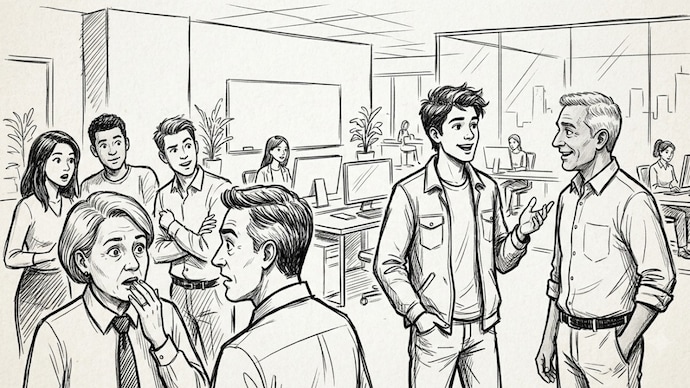
According to Verma, one of his team members casually asked him, “Hey Nitin, will you join us for a drink?” The question itself was not what surprised him. It was the reaction from others in the team.
“The rest of the team gave him a look. Like he had committed a crime,” Verma wrote.
While Verma declined the invitation that evening, the moment stayed with him. He realised that the young employee was not looking at him through the lens of his designation.
“He did not see a CEO. He saw a person. Someone he could casually invite for a drink, the same way he would invite a friend,” he wrote.
For others in the room, however, the interaction represented a boundary being crossed. “They saw a hierarchy. A title. A position. A line that should not be crossed,” Verma explained.
Traditionally, workplace respect has often been associated with distance ; using formal language, maintaining professional boundaries, and showing deference to seniority. But Gen Z appears to be approaching workplace relationships differently.
For many young professionals, respect is less about a person’s designation and more about their behaviour.
“They do not respect titles. They respect individuals. If you are kind, real, and approachable, you get invited for a drink,” Verma wrote.
The incident raises a larger question: Is Gen Z becoming less respectful, or are they simply redefining what respect looks like in the modern workplace?
IS THIS A LACK OF PROFESSIONALISM OR A WAVE OF CHANGE?
The changing workplace behaviour of Gen Z has sparked an important debate: Are young employees becoming less professional, or are they simply challenging outdated ideas of workplace hierarchy?
For decades, professionalism was often linked to formality, addressing seniors by title, maintaining a certain distance, and following unwritten rules of authority. But Gen Z is entering workplaces with a different mindset, where open communication and authenticity often matter more than traditional expressions of respect.
For many young professionals, being comfortable around seniors does not mean disrespecting them. Instead, it reflects a belief that workplaces should be more human and less defined by titles.
They are more likely to question decisions, share opinions openly, and interact with leaders as individuals rather than just people holding a designation. This shift can sometimes appear unusual to older generations who grew up in more structured work environments.
However, this does not mean professionalism is disappearing. The definition of professionalism itself may be evolving.
While experience, seniority, and authority continue to matter, the new generation seems to be asking a different question: Can respect exist without fear or distance? Perhaps the future workplace will not be about choosing between hierarchy and equality, but about finding a balance between the two.
Picture this: You have been working in an office for years. You hold a respectable position, your colleagues value your experience, and you have always believed in showing respect to your seniors. When a senior walks in, you stand up, greet them, and maintain a certain level of formality.
Then comes a Gen Z employee. They are talented, hardworking, and respected for their skills. But the way they interact with seniors feels different. They do not always follow the traditional rules of workplace etiquette. They might casually address a manager, share an opinion openly, or even invite a CEO for a drink.
At first glance, it may seem like a lack of respect. But is it really? Or is the Gen Z workforce changing the very idea of what ‘respect’ means at work?
HIERARCHY MEETS THE NEW GENERATION
A recent incident shared by a Noida-based CEO sparked a conversation around this changing workplace dynamic. Nitin Verma took to LinkedIn to share an interaction with a Gen Z employee that made him rethink how different generations view authority and relationships at work.
According to Verma, one of his team members casually asked him, “Hey Nitin, will you join us for a drink?” The question itself was not what surprised him. It was the reaction from others in the team.
“The rest of the team gave him a look. Like he had committed a crime,” Verma wrote.
While Verma declined the invitation that evening, the moment stayed with him. He realised that the young employee was not looking at him through the lens of his designation.
“He did not see a CEO. He saw a person. Someone he could casually invite for a drink, the same way he would invite a friend,” he wrote.
For others in the room, however, the interaction represented a boundary being crossed. “They saw a hierarchy. A title. A position. A line that should not be crossed,” Verma explained.
Traditionally, workplace respect has often been associated with distance ; using formal language, maintaining professional boundaries, and showing deference to seniority. But Gen Z appears to be approaching workplace relationships differently.
For many young professionals, respect is less about a person’s designation and more about their behaviour.
“They do not respect titles. They respect individuals. If you are kind, real, and approachable, you get invited for a drink,” Verma wrote.
The incident raises a larger question: Is Gen Z becoming less respectful, or are they simply redefining what respect looks like in the modern workplace?
IS THIS A LACK OF PROFESSIONALISM OR A WAVE OF CHANGE?
The changing workplace behaviour of Gen Z has sparked an important debate: Are young employees becoming less professional, or are they simply challenging outdated ideas of workplace hierarchy?
For decades, professionalism was often linked to formality, addressing seniors by title, maintaining a certain distance, and following unwritten rules of authority. But Gen Z is entering workplaces with a different mindset, where open communication and authenticity often matter more than traditional expressions of respect.
For many young professionals, being comfortable around seniors does not mean disrespecting them. Instead, it reflects a belief that workplaces should be more human and less defined by titles.
They are more likely to question decisions, share opinions openly, and interact with leaders as individuals rather than just people holding a designation. This shift can sometimes appear unusual to older generations who grew up in more structured work environments.
However, this does not mean professionalism is disappearing. The definition of professionalism itself may be evolving.
While experience, seniority, and authority continue to matter, the new generation seems to be asking a different question: Can respect exist without fear or distance? Perhaps the future workplace will not be about choosing between hierarchy and equality, but about finding a balance between the two.

