What if we all stopped saying 'Hope this email finds you well'?
What if the world's most overused email greeting simply disappeared? This light-hearted feature explores how retiring "Hope this email finds you well" could make workplace communication feel fresher, more personal and less robotic, proving that professionalism doesn't have to come at the cost of personality.
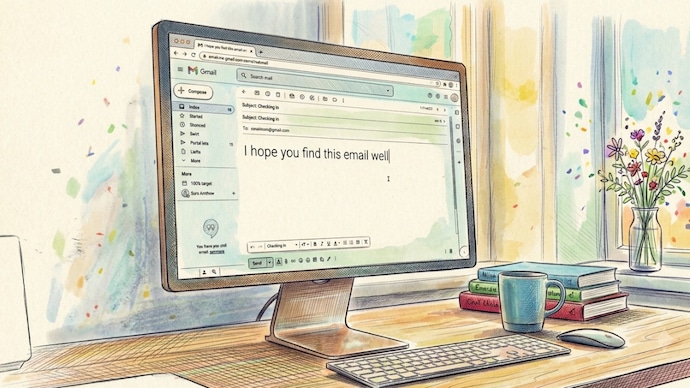
Some things in office life seem impossible to escape: Monday meetings, "Reply All" disasters, and that one sentence that has somehow become the official passport to every professional email: "Hope this email finds you well."
Whether you're emailing your boss, a recruiter, a client, or even the colleague you've already spoken to three times that morning, chances are you've typed those six words more times than you can count. It's polite, it's safe, and it's become so routine that most of us write it without even thinking.
But here's a fun thought experiment: What if, starting tomorrow, the entire world collectively retired it? Would anyone panic? Probably not. Would anyone notice? Oh, absolutely.
Imagine opening your inbox on a Monday morning and finding emails that simply begin with, "Morning! Here's the report," or "Quick question about tomorrow's meeting." Suddenly, your inbox will feel a little less like it was written by the same person wearing different email signatures. Better still, we'd all save ourselves from reading and writing the same opening line hundreds of times a year.
Who knows? Our emails might even start sounding a little more like conversations and a little less like corporate copy-paste.
IS IT THE EMAIL EQUIVALENT OF SAYING 'HOW ARE YOU?'
Let's be honest: most of us don't consciously decide to type "Hope this email finds you well." Our fingers simply know the way. Somewhere between "Dear" and the actual reason for the email, the phrase appears almost by instinct.
It's the corporate version of asking, "How are you?" while already walking past the person. Nobody expects a detailed health update; it's simply what polite people do.
Over the years, the greeting has become less of a heartfelt wish and more of an unwritten workplace ritual. Before asking for a favour, sharing a report, or chasing a deadline, we instinctively add those familiar six words because they feel safe, professional, and universally acceptable.
Ironically, that's also why they've lost much of their charm. When every email begins the same way, the greeting stops feeling personal and starts blending into the background.
WHAT IF OUR INBOXES HAD PERSONALITIES?
Now imagine an alternate reality where "Hope this email finds you well" quietly disappears from every inbox. No replacement memo, no office-wide announcement, it simply vanishes.
People would have to improvise.
One colleague might open with, "Hope your Monday has been kind to you." Another might write, "I'll keep this short, I know your inbox is overflowing." Someone with a sense of humour could even begin with, "If you're reading this before your second coffee, I'm sorry." And, of course, there would be the wonderfully direct people who'd skip the pleasantries altogether and jump straight to, "Here's the report."
The result? Emails might finally start sounding like the people who wrote them instead of everyone copying from the same invisible handbook.
Instead of reading the same introduction over and over again, you'd catch little glimpses of personality. A manager might slip in a joke before assigning work. A colleague could congratulate you for surviving yet another Monday. Even a plain old "Good afternoon" would suddenly feel refreshingly original.
BEING POLITE DOESN'T REQUIRE BEING PREDICTABLE
None of this means workplace emails need to become blunt or robotic. Good manners aren't going out of fashion anytime soon. In fact, they're probably more important than ever, considering so much of our communication now happens through screens.
But politeness doesn't have to come wrapped in the same six words every single time.
A thoughtful "Hope you had a relaxing weekend," a cheerful "Good morning," or even "Thanks for taking the time to read this" often feels sincerer because it's connected to the situation rather than copied from muscle memory. Sometimes the smallest personal touch says far more than the most familiar greeting.
IS THE INBOX DUE FOR A MAKEOVER?
Workplace communication has changed dramatically over the past decade. We send Slack messages instead of emails, react with emojis in office chats, hop onto five-minute video calls instead of hour-long meetings, and increasingly let AI draft our emails.
Yet somehow, one sentence has remained untouched by all this innovation.
Maybe that's because it's safe. It's professional. It's difficult to misinterpret. Or maybe we've simply become so used to it that nobody has questioned whether it still serves a purpose.
But perhaps our inboxes are ready for a tiny upgrade, not a complete rewrite of email etiquette, just a little more originality.
If "Hope this email finds you well" disappeared tomorrow, work wouldn't come to a standstill. Deadlines would still be met, meetings would still happen, and people would still ask for updates five minutes before they're due.
The only real difference is that we'd probably think a little harder about how we begin our emails. Some openings would be warmer, some funnier, some wonderfully concise, and every once in a while, one might actually make the recipient smile before they get to the real point.
So, no, you don't have to banish the phrase forever. It's polite, familiar, and has served the corporate world well for decades. But the next time your fingers automatically start typing those six famous words, pause for just a second.
Your email doesn't always have to "find someone well." Sometimes, it just has to sound like you.
Some things in office life seem impossible to escape: Monday meetings, "Reply All" disasters, and that one sentence that has somehow become the official passport to every professional email: "Hope this email finds you well."
Whether you're emailing your boss, a recruiter, a client, or even the colleague you've already spoken to three times that morning, chances are you've typed those six words more times than you can count. It's polite, it's safe, and it's become so routine that most of us write it without even thinking.
But here's a fun thought experiment: What if, starting tomorrow, the entire world collectively retired it? Would anyone panic? Probably not. Would anyone notice? Oh, absolutely.
Imagine opening your inbox on a Monday morning and finding emails that simply begin with, "Morning! Here's the report," or "Quick question about tomorrow's meeting." Suddenly, your inbox will feel a little less like it was written by the same person wearing different email signatures. Better still, we'd all save ourselves from reading and writing the same opening line hundreds of times a year.
Who knows? Our emails might even start sounding a little more like conversations and a little less like corporate copy-paste.
IS IT THE EMAIL EQUIVALENT OF SAYING 'HOW ARE YOU?'
Let's be honest: most of us don't consciously decide to type "Hope this email finds you well." Our fingers simply know the way. Somewhere between "Dear" and the actual reason for the email, the phrase appears almost by instinct.
It's the corporate version of asking, "How are you?" while already walking past the person. Nobody expects a detailed health update; it's simply what polite people do.
Over the years, the greeting has become less of a heartfelt wish and more of an unwritten workplace ritual. Before asking for a favour, sharing a report, or chasing a deadline, we instinctively add those familiar six words because they feel safe, professional, and universally acceptable.
Ironically, that's also why they've lost much of their charm. When every email begins the same way, the greeting stops feeling personal and starts blending into the background.
WHAT IF OUR INBOXES HAD PERSONALITIES?
Now imagine an alternate reality where "Hope this email finds you well" quietly disappears from every inbox. No replacement memo, no office-wide announcement, it simply vanishes.
People would have to improvise.
One colleague might open with, "Hope your Monday has been kind to you." Another might write, "I'll keep this short, I know your inbox is overflowing." Someone with a sense of humour could even begin with, "If you're reading this before your second coffee, I'm sorry." And, of course, there would be the wonderfully direct people who'd skip the pleasantries altogether and jump straight to, "Here's the report."
The result? Emails might finally start sounding like the people who wrote them instead of everyone copying from the same invisible handbook.
Instead of reading the same introduction over and over again, you'd catch little glimpses of personality. A manager might slip in a joke before assigning work. A colleague could congratulate you for surviving yet another Monday. Even a plain old "Good afternoon" would suddenly feel refreshingly original.
BEING POLITE DOESN'T REQUIRE BEING PREDICTABLE
None of this means workplace emails need to become blunt or robotic. Good manners aren't going out of fashion anytime soon. In fact, they're probably more important than ever, considering so much of our communication now happens through screens.
But politeness doesn't have to come wrapped in the same six words every single time.
A thoughtful "Hope you had a relaxing weekend," a cheerful "Good morning," or even "Thanks for taking the time to read this" often feels sincerer because it's connected to the situation rather than copied from muscle memory. Sometimes the smallest personal touch says far more than the most familiar greeting.
IS THE INBOX DUE FOR A MAKEOVER?
Workplace communication has changed dramatically over the past decade. We send Slack messages instead of emails, react with emojis in office chats, hop onto five-minute video calls instead of hour-long meetings, and increasingly let AI draft our emails.
Yet somehow, one sentence has remained untouched by all this innovation.
Maybe that's because it's safe. It's professional. It's difficult to misinterpret. Or maybe we've simply become so used to it that nobody has questioned whether it still serves a purpose.
But perhaps our inboxes are ready for a tiny upgrade, not a complete rewrite of email etiquette, just a little more originality.
If "Hope this email finds you well" disappeared tomorrow, work wouldn't come to a standstill. Deadlines would still be met, meetings would still happen, and people would still ask for updates five minutes before they're due.
The only real difference is that we'd probably think a little harder about how we begin our emails. Some openings would be warmer, some funnier, some wonderfully concise, and every once in a while, one might actually make the recipient smile before they get to the real point.
So, no, you don't have to banish the phrase forever. It's polite, familiar, and has served the corporate world well for decades. But the next time your fingers automatically start typing those six famous words, pause for just a second.
Your email doesn't always have to "find someone well." Sometimes, it just has to sound like you.

