Has Delhi's Sarojini Nagar lost its charm or did it just get better?
The short answer is no - Sarojini Nagar has not lost its charm despite what several Instagram videos suggest. Read on to know why we say so after a Sunday visit to the market.
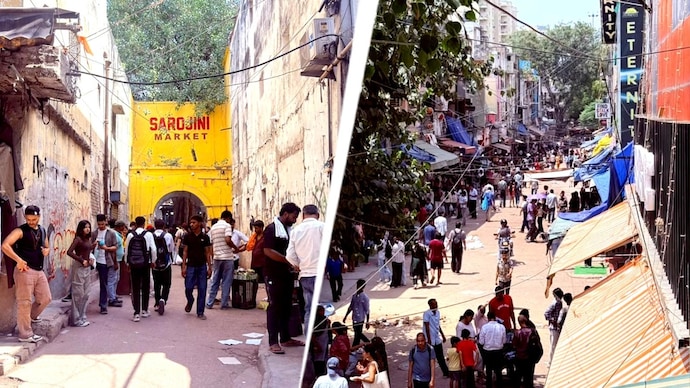
Any Sarojini regular knows that weekends are the worst possible time to shop at Delhi’s most sought-after fashion hub. The crowd is overwhelming, you're pushed from all sides, booking an auto or cab becomes a challenge, and even taking the metro means spending a long time in serpentine queues.
Yet when I visited the Sarojini Nagar Market this Sunday, the scenes were nowhere close to what we had expected. I got a hint of it in the parking lot itself when I overheard a mother-daughter duo talking.
“Sahi hai na, ab kam se kam chalne ki jagah toh hai,” one of them said. (“It's good, isn't it? At least there's space to walk now.”)
Intrigued, I entered the market. My first thought: Is it really Sunday today? Then came a flood of questions: Has Sarojini really lost its charm? Are people no longer coming here? Were those viral reels claiming that the market has become empty actually true?
Has the crowd really vanished? Not really
The market seemed unusually empty for a weekend. But a closer look made it clear that the crowd wasn't actually missing. The roads just looked wider because shopkeepers were no longer putting their goods outside their stores.
As part of an anti-encroachment drive by NDMC, shopkeepers have been strictly instructed not to place clothes, display racks, or other items beyond their allotted shop space. The change is hard to miss. Streets that were once lined with clothing racks and piles of budget fashion finds now have far more room for people to walk. And I am not exaggerating when I say this - the walking space seems to have doubled.
The wider roads, however, do not tell the whole story. Several vendors and shopkeepers said footfall and sales have declined since the crackdown began, with some customers assuming the market had shut down after seeing viral posts online about the anti-encroachment drive.
Yet, despite the concerns, the market was far from empty on the Sunday we visited. Popular lanes remained busy, shoppers crowded around bargain racks, and the hunt for deals continued much as before.
It has been over a month since the anti-encroachment drive came into strict effect. For many shoppers, especially regular visitors, the change has been a welcome one.
Wider streets, less suffocation
“This way, it is so much better. Earlier, it used to feel very crowded and suffocating,” said Shalini, a 28-year-old who has been visiting the market regularly since 2010.
“I hate it when my wife asks me to accompany her to Sarojini,” said another shopper, holding several shopping bags in his hands. “I don't enjoy shopping here, but I still have to put up with the crazy rush. This time, though, it feels different. For the first time, I'm not dreading it as much, thanks to the wider streets.”
But not all customers are convinced. “The heart of Sarojini is its street vendors. Many of them are now gone,” said another shopper, a college student.
Similar complaints have surfaced across social media, with many viral posts claiming that the “vibe is gone”, street vendors have disappeared, and the variety is no longer the same. But what we saw was quite different.
Many vendors who once lined the streets with clothing racks, earrings, sunglasses, and other bargain finds have now moved inside shops. They haven't left the market - just shifted indoors. In other words, you can still find Rs 50 tops, Rs 100 jeans, jewellery and sunglasses.
But one sight stood out and made the market feel incomplete: the empty graffiti lane.
For years, this lane - lined with clothes hanging from both sides - has been one of Sarojini Nagar's most recognisable sights. Now, vendors are no longer allowed to hang clothes along the lane or on its walls. As a result, the space stands largely empty, with many vendors having moved into nearby shops by renting space inside them.
When we spoke to street vendors, the picture was far more mixed. While some were happy to have moved inside shops, others were considering shifting to different markets altogether.
One T-shirt vendor said the change had brought him some relief, as he no longer had to worry about NDMC teams confiscating goods displayed outside the designated shop area.
Not everyone shared that optimism, however.
“There is so much uncertainty in this market. I’m just waiting for my stock to sell out, and then I’ll move back to my village,” said a second-generation street vendor in this market.
Why Sarojini streets needed space
Sarojini Nagar Market has been through considerable turmoil in recent times. Last year, a JCB demolition drive dismantled several unauthorised street vendor stalls as well as the awnings of authorised shops. In May this year, there was a major protest by shopkeepers against the NDMC after the civic body issued a plan to place 514 vendors in front of shops.
Following the protest, the NDMC has maintained a strict watch on encroachment issues. Shopkeepers, meanwhile, appear far more supportive of the crackdown.
“Sarojini Nagar was never just a patri bazaar; it was always a family-oriented market. Over the years, it developed a reputation for bargaining and cheap clothing. Earlier, these aspects were simply a part of the market’s character, but in the last few decades, bargaining and inexpensive apparel became its defining identity. Footfall has reduced slightly now, but we do not have a problem with that,” a shopkeeper told India Today.
Another added that cases of pickpocketing have significantly reduced ever since the streets became less congested.
Congestion has long been one of the market's biggest challenges. One doesn't have to go too far back to recall the stampede-like scenes that made global headlines during the Omicron wave of the Covid-19 pandemic.
In 2023, a fire broke out in one corner of the market in the early hours of the morning, raising concerns about goods being left unattended on the streets overnight. The market has also witnessed tragedy before. In 2005, it was among the sites targeted in a series of blasts that claimed dozens of lives.
In a way, Sarojini Nagar Market needed this cleanup, and shoppers deserved the extra space. The charm hasn't been lost; it has simply shifted indoors. To find the best fashion picks now, shoppers may have to step inside the shops instead of limiting their hunt to the streets. Footfall and sales may have dipped slightly - vendors estimate by around 20 per cent - but they insist the decline has more to do with Delhi's unforgiving summer heat than the anti-encroachment drive.
Any Sarojini regular knows that weekends are the worst possible time to shop at Delhi’s most sought-after fashion hub. The crowd is overwhelming, you're pushed from all sides, booking an auto or cab becomes a challenge, and even taking the metro means spending a long time in serpentine queues.
Yet when I visited the Sarojini Nagar Market this Sunday, the scenes were nowhere close to what we had expected. I got a hint of it in the parking lot itself when I overheard a mother-daughter duo talking.
“Sahi hai na, ab kam se kam chalne ki jagah toh hai,” one of them said. (“It's good, isn't it? At least there's space to walk now.”)
Intrigued, I entered the market. My first thought: Is it really Sunday today? Then came a flood of questions: Has Sarojini really lost its charm? Are people no longer coming here? Were those viral reels claiming that the market has become empty actually true?
Has the crowd really vanished? Not really
The market seemed unusually empty for a weekend. But a closer look made it clear that the crowd wasn't actually missing. The roads just looked wider because shopkeepers were no longer putting their goods outside their stores.
As part of an anti-encroachment drive by NDMC, shopkeepers have been strictly instructed not to place clothes, display racks, or other items beyond their allotted shop space. The change is hard to miss. Streets that were once lined with clothing racks and piles of budget fashion finds now have far more room for people to walk. And I am not exaggerating when I say this - the walking space seems to have doubled.
The wider roads, however, do not tell the whole story. Several vendors and shopkeepers said footfall and sales have declined since the crackdown began, with some customers assuming the market had shut down after seeing viral posts online about the anti-encroachment drive.
Yet, despite the concerns, the market was far from empty on the Sunday we visited. Popular lanes remained busy, shoppers crowded around bargain racks, and the hunt for deals continued much as before.
It has been over a month since the anti-encroachment drive came into strict effect. For many shoppers, especially regular visitors, the change has been a welcome one.
Wider streets, less suffocation
“This way, it is so much better. Earlier, it used to feel very crowded and suffocating,” said Shalini, a 28-year-old who has been visiting the market regularly since 2010.
“I hate it when my wife asks me to accompany her to Sarojini,” said another shopper, holding several shopping bags in his hands. “I don't enjoy shopping here, but I still have to put up with the crazy rush. This time, though, it feels different. For the first time, I'm not dreading it as much, thanks to the wider streets.”
But not all customers are convinced. “The heart of Sarojini is its street vendors. Many of them are now gone,” said another shopper, a college student.
Similar complaints have surfaced across social media, with many viral posts claiming that the “vibe is gone”, street vendors have disappeared, and the variety is no longer the same. But what we saw was quite different.
Many vendors who once lined the streets with clothing racks, earrings, sunglasses, and other bargain finds have now moved inside shops. They haven't left the market - just shifted indoors. In other words, you can still find Rs 50 tops, Rs 100 jeans, jewellery and sunglasses.
But one sight stood out and made the market feel incomplete: the empty graffiti lane.
For years, this lane - lined with clothes hanging from both sides - has been one of Sarojini Nagar's most recognisable sights. Now, vendors are no longer allowed to hang clothes along the lane or on its walls. As a result, the space stands largely empty, with many vendors having moved into nearby shops by renting space inside them.
When we spoke to street vendors, the picture was far more mixed. While some were happy to have moved inside shops, others were considering shifting to different markets altogether.
One T-shirt vendor said the change had brought him some relief, as he no longer had to worry about NDMC teams confiscating goods displayed outside the designated shop area.
Not everyone shared that optimism, however.
“There is so much uncertainty in this market. I’m just waiting for my stock to sell out, and then I’ll move back to my village,” said a second-generation street vendor in this market.
Why Sarojini streets needed space
Sarojini Nagar Market has been through considerable turmoil in recent times. Last year, a JCB demolition drive dismantled several unauthorised street vendor stalls as well as the awnings of authorised shops. In May this year, there was a major protest by shopkeepers against the NDMC after the civic body issued a plan to place 514 vendors in front of shops.
Following the protest, the NDMC has maintained a strict watch on encroachment issues. Shopkeepers, meanwhile, appear far more supportive of the crackdown.
“Sarojini Nagar was never just a patri bazaar; it was always a family-oriented market. Over the years, it developed a reputation for bargaining and cheap clothing. Earlier, these aspects were simply a part of the market’s character, but in the last few decades, bargaining and inexpensive apparel became its defining identity. Footfall has reduced slightly now, but we do not have a problem with that,” a shopkeeper told India Today.
Another added that cases of pickpocketing have significantly reduced ever since the streets became less congested.
Congestion has long been one of the market's biggest challenges. One doesn't have to go too far back to recall the stampede-like scenes that made global headlines during the Omicron wave of the Covid-19 pandemic.
In 2023, a fire broke out in one corner of the market in the early hours of the morning, raising concerns about goods being left unattended on the streets overnight. The market has also witnessed tragedy before. In 2005, it was among the sites targeted in a series of blasts that claimed dozens of lives.
In a way, Sarojini Nagar Market needed this cleanup, and shoppers deserved the extra space. The charm hasn't been lost; it has simply shifted indoors. To find the best fashion picks now, shoppers may have to step inside the shops instead of limiting their hunt to the streets. Footfall and sales may have dipped slightly - vendors estimate by around 20 per cent - but they insist the decline has more to do with Delhi's unforgiving summer heat than the anti-encroachment drive.

