Can India guarantee the right to walk without taking away someone's right to earn?
The Supreme Court's footpath ruling has revived a conflict between pedestrians seeking safe pavements and vendors dependent on them for work.
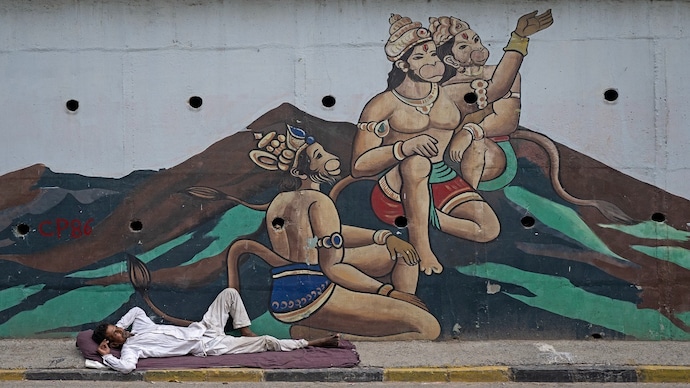
There’s an irony hidden in Supreme Court’s landmark judgement. Yes, that very judgement that declares pedestrians the right to walk on safe, demarcated footpaths a fundamental right under Articles 19 and 21 of the Constitution. If a road exists, the Court said, the authorities have a corresponding duty to provide and maintain footpaths. The judgment was widely welcomed. It was also overdue.
But on India's pavements, another question immediately surfaced. Can the right to walk be guaranteed without taking away someone's right to earn? That question isn't theoretical.
When India Today recently walked across ten locations in Delhi to assess the state of the city's footpaths after the Supreme Court ruling, the obstacles were familiar: garbage dumped on pavements, broken walkways, cars parked on footpaths, trees with oversized cut-outs that forced pedestrians onto the road, and, in several places, street vendors occupying public space.
Yet one conversation in Mukherjee Nagar complicated what initially appeared to be a straightforward issue. A shopkeeper, who requested anonymity, insisted that he had not simply occupied the footpath overnight.
"The MCD itself allowed us to set up here," he said. "If they demolish these shops now, we'll be ruined."
His statement cannot be independently verified. But it reflects a reality visible across Indian cities: for years, governments have often looked the other way, selectively enforced rules or tolerated encroachments until they became part of the urban landscape.
The result is a conflict that pits two vulnerable groups against each other.
On one side are pedestrians, including senior citizens, children and persons with disabilities, forced to walk on busy roads because pavements have become unusable. On the other are vendors whose livelihoods depend on the same public spaces.
The irony is that Indian law already recognises both.
The law was never meant to choose one over the other
Long before the Supreme Court recognised the right to walk, Parliament had enacted the Street Vendors (Protection of Livelihood and Regulation of Street Vending) Act, 2014. Contrary to popular perception, the law does not legalise indiscriminate occupation of pavements. The Street Vendors Act aims to balance pedestrian rights and vendor livelihoods, but its enforcement remains uneven.
It asks cities to regulate street vending through Town Vending Committees, conduct surveys, identify vending and non-vending zones, issue certificates of vending and ensure that vendors are not evicted arbitrarily without following due process. In principle, the law seeks to balance two equally legitimate public interests: the pedestrian's right to use public spaces and the vendor's right to livelihood.
The problem is that implementation has often lagged far behind legislation.
Kolkata is confronting the same dilemma
Few cities illustrate this contradiction better than Kolkata, at least at this point.
Over the past few weeks, eviction drives at Howrah and Sealdah stations removed hundreds of hawkers and demolished scores of stalls as authorities launched a crackdown on encroachments. The drives triggered protests, including demonstrations by affected vendors, who argued that they were being removed without adequate rehabilitation.
The issue has since widened beyond railway premises. The Kolkata Municipal Corporation had announced plans to clear encroachments from civic markets, beginning with New Market, while also discussing the matter through its Town Vending Committee.
The debate has become increasingly polarised.
One side argues that pavements belong to pedestrians and must be reclaimed. The other asks a question that is harder to dismiss. Where are the vendors expected to go?
For thousands of families, a pavement stall is not merely an encroachment. It is a business built over years, sometimes decades, often with the tacit acceptance of local authorities. Their life depends on it. They aren’t big establishments; they are enough (or sometimes not even enough) to sustain a small family.
However, that acceptance does not make the occupation legal. But it does raise uncomfortable questions about administrative accountability.
If governments permitted, ignored or informally accommodated these settlements for years, can the burden of correction fall entirely on those who earned their living there?
The failure is one of planning, not just enforcement
Indian cities often treat hawkers as a law-and-order problem. Rarely are they treated as an urban planning issue. That is despite evidence that street vending is an integral part of India's informal economy and despite the existence of a law that requires municipalities to plan for it.
Urban planner Vijay Risbud argues that the problem stems as much from planning failures as from governance. He points out that the Delhi Master Plan 2021 already contains provisions for integrating the informal sector and street vendors into commercial centres, residential neighbourhoods and other land-use zones. The challenge, he says, lies in implementation.
"Every block has different requirements. We have to examine, block by block, where hawkers are needed, how they should be located, and accordingly make provisions for them in the plan," Risbud says. Where no such provision exists, cities should identify alternative spaces instead of allowing informal markets to emerge haphazardly.
Instead of identifying viable vending zones before removing vendors, many cities have historically allowed informal markets to grow unchecked until public pressure, court intervention or political circumstances trigger sudden eviction drives.
Risbud says Indian cities have also normalised a range of encroachments on footpaths—from ramps, steps and even kitchen gardens to informal trade—turning what should be pedestrian infrastructure into contested public space. "It is an urban planning issue," he says. "It has to be dealt with through both physical planning and governance."
Reclaiming footpaths cannot mean replacing one injustice with another
The Supreme Court was right to describe the absence of walkable footpaths as a civilisational problem. A city that forces people onto roads because pavements have disappeared has failed one of the most basic tests of urban governance.
But reclaiming those pavements cannot simply become a story of bulldozers. Illegal encroachments must go. That much is clear.
Yet due process, adequate notice, rehabilitation where required under law, and properly planned vending zones cannot become optional simply because the objective is desirable.
The State created today's conflict through decades of inconsistent enforcement and poor planning.
Pedestrians should not continue paying that price. Neither should street vendors become the only ones asked to.
The Supreme Court has settled one constitutional question. Walking is a fundamental right. The harder challenge now lies: can they build cities where the right to walk and the right to earn no longer have to compete for the same few feet of pavement?
There’s an irony hidden in Supreme Court’s landmark judgement. Yes, that very judgement that declares pedestrians the right to walk on safe, demarcated footpaths a fundamental right under Articles 19 and 21 of the Constitution. If a road exists, the Court said, the authorities have a corresponding duty to provide and maintain footpaths. The judgment was widely welcomed. It was also overdue.
But on India's pavements, another question immediately surfaced. Can the right to walk be guaranteed without taking away someone's right to earn? That question isn't theoretical.
When India Today recently walked across ten locations in Delhi to assess the state of the city's footpaths after the Supreme Court ruling, the obstacles were familiar: garbage dumped on pavements, broken walkways, cars parked on footpaths, trees with oversized cut-outs that forced pedestrians onto the road, and, in several places, street vendors occupying public space.
Yet one conversation in Mukherjee Nagar complicated what initially appeared to be a straightforward issue. A shopkeeper, who requested anonymity, insisted that he had not simply occupied the footpath overnight.
"The MCD itself allowed us to set up here," he said. "If they demolish these shops now, we'll be ruined."
His statement cannot be independently verified. But it reflects a reality visible across Indian cities: for years, governments have often looked the other way, selectively enforced rules or tolerated encroachments until they became part of the urban landscape.
The result is a conflict that pits two vulnerable groups against each other.
On one side are pedestrians, including senior citizens, children and persons with disabilities, forced to walk on busy roads because pavements have become unusable. On the other are vendors whose livelihoods depend on the same public spaces.
The irony is that Indian law already recognises both.
The law was never meant to choose one over the other
Long before the Supreme Court recognised the right to walk, Parliament had enacted the Street Vendors (Protection of Livelihood and Regulation of Street Vending) Act, 2014. Contrary to popular perception, the law does not legalise indiscriminate occupation of pavements. The Street Vendors Act aims to balance pedestrian rights and vendor livelihoods, but its enforcement remains uneven.
It asks cities to regulate street vending through Town Vending Committees, conduct surveys, identify vending and non-vending zones, issue certificates of vending and ensure that vendors are not evicted arbitrarily without following due process. In principle, the law seeks to balance two equally legitimate public interests: the pedestrian's right to use public spaces and the vendor's right to livelihood.
The problem is that implementation has often lagged far behind legislation.
Kolkata is confronting the same dilemma
Few cities illustrate this contradiction better than Kolkata, at least at this point.
Over the past few weeks, eviction drives at Howrah and Sealdah stations removed hundreds of hawkers and demolished scores of stalls as authorities launched a crackdown on encroachments. The drives triggered protests, including demonstrations by affected vendors, who argued that they were being removed without adequate rehabilitation.
The issue has since widened beyond railway premises. The Kolkata Municipal Corporation had announced plans to clear encroachments from civic markets, beginning with New Market, while also discussing the matter through its Town Vending Committee.
The debate has become increasingly polarised.
One side argues that pavements belong to pedestrians and must be reclaimed. The other asks a question that is harder to dismiss. Where are the vendors expected to go?
For thousands of families, a pavement stall is not merely an encroachment. It is a business built over years, sometimes decades, often with the tacit acceptance of local authorities. Their life depends on it. They aren’t big establishments; they are enough (or sometimes not even enough) to sustain a small family.
However, that acceptance does not make the occupation legal. But it does raise uncomfortable questions about administrative accountability.
If governments permitted, ignored or informally accommodated these settlements for years, can the burden of correction fall entirely on those who earned their living there?
The failure is one of planning, not just enforcement
Indian cities often treat hawkers as a law-and-order problem. Rarely are they treated as an urban planning issue. That is despite evidence that street vending is an integral part of India's informal economy and despite the existence of a law that requires municipalities to plan for it.
Urban planner Vijay Risbud argues that the problem stems as much from planning failures as from governance. He points out that the Delhi Master Plan 2021 already contains provisions for integrating the informal sector and street vendors into commercial centres, residential neighbourhoods and other land-use zones. The challenge, he says, lies in implementation.
"Every block has different requirements. We have to examine, block by block, where hawkers are needed, how they should be located, and accordingly make provisions for them in the plan," Risbud says. Where no such provision exists, cities should identify alternative spaces instead of allowing informal markets to emerge haphazardly.
Instead of identifying viable vending zones before removing vendors, many cities have historically allowed informal markets to grow unchecked until public pressure, court intervention or political circumstances trigger sudden eviction drives.
Risbud says Indian cities have also normalised a range of encroachments on footpaths—from ramps, steps and even kitchen gardens to informal trade—turning what should be pedestrian infrastructure into contested public space. "It is an urban planning issue," he says. "It has to be dealt with through both physical planning and governance."
Reclaiming footpaths cannot mean replacing one injustice with another
The Supreme Court was right to describe the absence of walkable footpaths as a civilisational problem. A city that forces people onto roads because pavements have disappeared has failed one of the most basic tests of urban governance.
But reclaiming those pavements cannot simply become a story of bulldozers. Illegal encroachments must go. That much is clear.
Yet due process, adequate notice, rehabilitation where required under law, and properly planned vending zones cannot become optional simply because the objective is desirable.
The State created today's conflict through decades of inconsistent enforcement and poor planning.
Pedestrians should not continue paying that price. Neither should street vendors become the only ones asked to.
The Supreme Court has settled one constitutional question. Walking is a fundamental right. The harder challenge now lies: can they build cities where the right to walk and the right to earn no longer have to compete for the same few feet of pavement?

