Himanshu Jangra's boss, the only sane voice in the Rs 370 biryani remark insanity
Himanshu Jangra faced immense backlash after describing the 'Rs 370 biryani saga' at Pranit More's show. While his boss Vivek Vishwakarma sacked him, he also mentioned that accountability should still leave room for reflection and change.
Let's establish one thing at the very beginning: nothing here is a defence of Himanshu Jangra. In fact, "disgusting" is perhaps the most charitable word for what transpired at comedian Pranit More's show.
The backlash against them did not emerge from thin air. It was earned.
Jangra, 23, stood before a crowd and proudly narrated how, after spending Rs 370 on a biryani for a woman, he started looking for ways to "vasool" that money. In his mind, paying for a meal had somehow created an expectation, not of another date or even a conversation, but of physical access to her.
That alone should have alarmed everyone in the room. Instead, it became content. It was met with claps, giggles, hooting and eager curiosity about what happened next. And what happened next only made the story worse. You can read about the blood-boiling account here.
Comedian Pranit More, who later apologised for his poor judgement, did not stop Jangra or challenge what he was saying. Instead, he listened with interest, encouraged him to continue, and ultimately rewarded him.
What should have been met with discomfort, disgust and criticism was, for those few minutes, met with applause and validation. That, as much as the story itself, is what explains the scale of the backlash that followed.
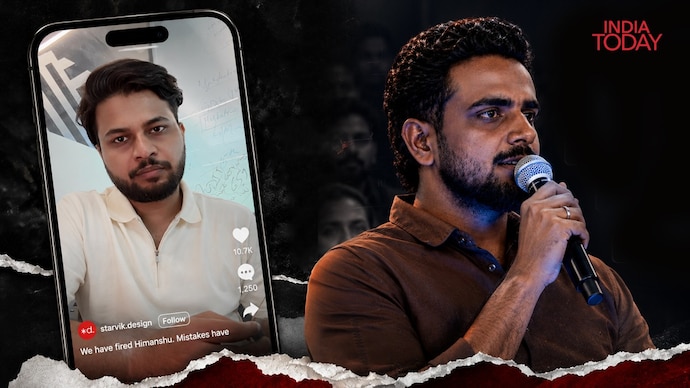
But amid the noise, outrage, and public pile-on, one person managed to say something that sounded rational, responsible and mature. That person is Vivek Vishwakarma, Jangra’s boss who fired him after the controversy.
“I came across the clips that have been circulating online. Let me be very clear, the statements shown in those clips are offensive. They are not something I agree with. They're not something our company stands for, and they certainly should not be influencing young minds,” Vishwakarma, the young founder of Gurugram-based Starvik Design, said in the beginning of the clip.
He called the remarks offensive. He said they were not something he agreed with. He stated clearly that they did not represent the values of his company. He acknowledged that such statements should not influence young minds. In other words, he did not minimise the issue.
What Vishwakarma did next, however, is what separates leadership from mob mentality.
Instead of reacting emotionally to social media pressure, Vivek Vishwakarma did what any responsible employer should do. He reviewed the matter internally. He spoke to employees. He consulted women team members. He examined Himanshu Jangra's conduct inside the workplace.
The result, surprisingly, didn't align with the narrative that had been created around Jangra. The company found no complaints against him. In fact, the 23-year-old - according to his colleagues, including women - was “professional, respectful, hardworking and well-behaved” at work.
And his boss, Vishwakarma, chose to say it out aloud.
In moments like these, there is often immense pressure to flatten a person into a single incident and treat that as a complete description of who they are. The easiest thing Vishwakarma could have done was simply join the outrage and declare that Jangra's behaviour seen on stage reflected everything about him as a person and as an employee. Many would have applauded him for it.
But he investigated. He spoke to employees, sought feedback from women colleagues and reviewed Jangra's conduct inside the workplace. When that process produced no complaints and no evidence of inappropriate behaviour at work, he said so publicly. And yet, he also fired Jangra.
This is where his statement displayed balance and clarity.
He condemned Jangra's remarks and his behaviour at More's show, acknowledging that actions outside the workplace had consequences. As an employer, he recognised that the controversy had begun affecting the company, its employees and its wider environment, and acted accordingly.
An important part of his statement came at the end of the video message.
"A person can be wrong. A person can make a terrible mistake. A person should face consequences. But I hope we never become a society that believes people cannot learn, reflect, apologise, or change."
“Social media trolling is not a joke, and that too for a '22-year-old' mind. His future from here will already carry the consequences of this moment for a very long time. Again, that does not make a statement right. My hope is that Himanshu reflects on this chapter of his life. My hope is that he learns from it. And while we hold people accountable, let us also leave room for reflection, for growth and positive transformation. That is the kind of society we hope to build here,” Vishwakarma added.
That final part is where much of the internet appears to have lost the plot. The moment Vishwakarma spoke about reflection, learning and the possibility of change, many interpreted it as sympathy. It wasn't. At no point did he argue that Jangra should have escaped the consequences. In fact, his actions suggested the exact opposite.
Jangra lost his job. He faced a nationwide backlash. He was subjected to intense criticism from every corner of the internet. An FIR, too, was filed. The National Commission for Women also took note of the incident and issued summons.
These are examples of a society signalling that such remarks cannot be normalised, celebrated or brushed aside as harmless humour.
And that is precisely why the conversation cannot end with outrage alone. What next after all the rage? If the goal is merely to watch a man get crucified online (even though justifiably, most would argue) forcing him to go into social media exile, and eventually lose his job, then the controversy will eventually fade like countless others before it. The clips will stop circulating. People will move on until the next outrage cycle arrives.
But if the goal is to ensure that no room ever again normalises such conversations, then something deeper is required. The real victory is ensuring that no man thinks spending money on a woman entitles him to access to her body. The real victory is ensuring that audiences stop treating stories about violated boundaries as entertainment. The real victory is ensuring that comedians, hosts and crowds recognise such moments for what they are instead of rewarding them with applause. The real victory is changing the mentality that made that room laugh in the first place.
And that is why Vivek Vishwakarma's statement, which talks about learning, reflection, apology and change, is uncomfortable but matters.
Let's establish one thing at the very beginning: nothing here is a defence of Himanshu Jangra. In fact, "disgusting" is perhaps the most charitable word for what transpired at comedian Pranit More's show.
The backlash against them did not emerge from thin air. It was earned.
Jangra, 23, stood before a crowd and proudly narrated how, after spending Rs 370 on a biryani for a woman, he started looking for ways to "vasool" that money. In his mind, paying for a meal had somehow created an expectation, not of another date or even a conversation, but of physical access to her.
That alone should have alarmed everyone in the room. Instead, it became content. It was met with claps, giggles, hooting and eager curiosity about what happened next. And what happened next only made the story worse. You can read about the blood-boiling account here.
Comedian Pranit More, who later apologised for his poor judgement, did not stop Jangra or challenge what he was saying. Instead, he listened with interest, encouraged him to continue, and ultimately rewarded him.
What should have been met with discomfort, disgust and criticism was, for those few minutes, met with applause and validation. That, as much as the story itself, is what explains the scale of the backlash that followed.
But amid the noise, outrage, and public pile-on, one person managed to say something that sounded rational, responsible and mature. That person is Vivek Vishwakarma, Jangra’s boss who fired him after the controversy.
“I came across the clips that have been circulating online. Let me be very clear, the statements shown in those clips are offensive. They are not something I agree with. They're not something our company stands for, and they certainly should not be influencing young minds,” Vishwakarma, the young founder of Gurugram-based Starvik Design, said in the beginning of the clip.
He called the remarks offensive. He said they were not something he agreed with. He stated clearly that they did not represent the values of his company. He acknowledged that such statements should not influence young minds. In other words, he did not minimise the issue.
What Vishwakarma did next, however, is what separates leadership from mob mentality.
Instead of reacting emotionally to social media pressure, Vivek Vishwakarma did what any responsible employer should do. He reviewed the matter internally. He spoke to employees. He consulted women team members. He examined Himanshu Jangra's conduct inside the workplace.
The result, surprisingly, didn't align with the narrative that had been created around Jangra. The company found no complaints against him. In fact, the 23-year-old - according to his colleagues, including women - was “professional, respectful, hardworking and well-behaved” at work.
And his boss, Vishwakarma, chose to say it out aloud.
In moments like these, there is often immense pressure to flatten a person into a single incident and treat that as a complete description of who they are. The easiest thing Vishwakarma could have done was simply join the outrage and declare that Jangra's behaviour seen on stage reflected everything about him as a person and as an employee. Many would have applauded him for it.
But he investigated. He spoke to employees, sought feedback from women colleagues and reviewed Jangra's conduct inside the workplace. When that process produced no complaints and no evidence of inappropriate behaviour at work, he said so publicly. And yet, he also fired Jangra.
This is where his statement displayed balance and clarity.
He condemned Jangra's remarks and his behaviour at More's show, acknowledging that actions outside the workplace had consequences. As an employer, he recognised that the controversy had begun affecting the company, its employees and its wider environment, and acted accordingly.
An important part of his statement came at the end of the video message.
"A person can be wrong. A person can make a terrible mistake. A person should face consequences. But I hope we never become a society that believes people cannot learn, reflect, apologise, or change."
“Social media trolling is not a joke, and that too for a '22-year-old' mind. His future from here will already carry the consequences of this moment for a very long time. Again, that does not make a statement right. My hope is that Himanshu reflects on this chapter of his life. My hope is that he learns from it. And while we hold people accountable, let us also leave room for reflection, for growth and positive transformation. That is the kind of society we hope to build here,” Vishwakarma added.
That final part is where much of the internet appears to have lost the plot. The moment Vishwakarma spoke about reflection, learning and the possibility of change, many interpreted it as sympathy. It wasn't. At no point did he argue that Jangra should have escaped the consequences. In fact, his actions suggested the exact opposite.
Jangra lost his job. He faced a nationwide backlash. He was subjected to intense criticism from every corner of the internet. An FIR, too, was filed. The National Commission for Women also took note of the incident and issued summons.
These are examples of a society signalling that such remarks cannot be normalised, celebrated or brushed aside as harmless humour.
And that is precisely why the conversation cannot end with outrage alone. What next after all the rage? If the goal is merely to watch a man get crucified online (even though justifiably, most would argue) forcing him to go into social media exile, and eventually lose his job, then the controversy will eventually fade like countless others before it. The clips will stop circulating. People will move on until the next outrage cycle arrives.
But if the goal is to ensure that no room ever again normalises such conversations, then something deeper is required. The real victory is ensuring that no man thinks spending money on a woman entitles him to access to her body. The real victory is ensuring that audiences stop treating stories about violated boundaries as entertainment. The real victory is ensuring that comedians, hosts and crowds recognise such moments for what they are instead of rewarding them with applause. The real victory is changing the mentality that made that room laugh in the first place.
And that is why Vivek Vishwakarma's statement, which talks about learning, reflection, apology and change, is uncomfortable but matters.

