Loneliness is booming and so is the business around it
Loneliness is no longer just a feeling. It's becoming content, community and commerce. As creators build audiences around solitary lives and businesses promise connection, is modern loneliness finally being seen?
A person films themself eating dinner alone on a Friday night. Puts it on Instagram.
Another spends the weekend visiting a museum, alone. Shares on Instagram and captions: "You live alone and have no friends, are child-free, so your nights look like this."
Collectively, they've been watched millions of times. The internet calls them "loneliness influencers." Yes, you read that right.
Documenting and consuming a carefully aestheticised solitary lifestyle has become a content genre of its own. The comments section brims with responses like, "This is me," and "I've never felt so seen."
It's well established how loneliness is a rising health concern. What's happening rapidly now is that people have realised it is also a problem worth solving offline, and it's more than proper therapy.
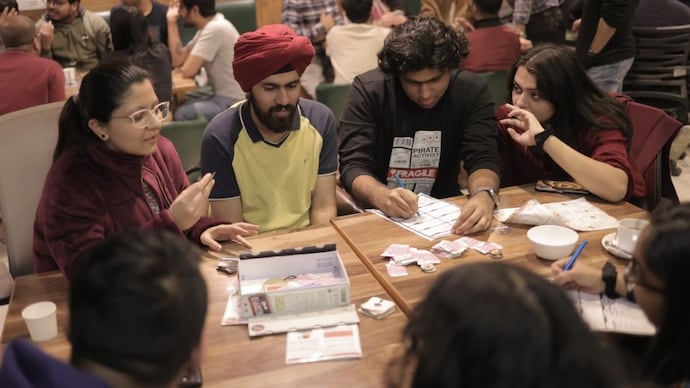
While one end of the spectrum is turning loneliness into content and identity, the other is building businesses around the growing need for connection. Across India, supper clubs, curated social experiences and community platforms are bringing strangers together through jamming sessions, dinners and shared activities, all with the promise of helping people find their 'tribe'.
Interestingly, there are paid services that allow people to hire companion - to accompany them for a hospital visit, go grocery shopping, or simply be there to listen. No expectations, no demands. You can even pay to play nostalgia-driven games like kho-kho and pitthu with people.
From 'loneliness influencers' to companion-for-hire apps, a new economy is emerging around our need to belong.
Documenting loneliness
While these influencers champion solo living and enjoying one's own company, documenting it can also reinforce labels like "friendless" or "living alone" as identities. Namrata Jain, a Mumbai-based psychotherapist, says this is where the problem begins.
"When you repeatedly document your loneliness online, you are rehearsing that emotional state. Algorithms then feed you similar content, and slowly they normalise and reinforce your isolation," she says.
"When an emotion transforms into an identity, it activates confirmation bias. Your brain starts looking for evidence to prove the label true—like seeing a friend's late reply or a quiet weekend as proof of permanent isolation rather than an ordinary event. Before you know it, a temporary feeling becomes a core character trait."
Loneliness already carries stigma and shame. When people begin to see it as part of who they are, they become less likely to recognise it and that only deepens the cycle.
Cashing in on loneliness (where's the problem)
In this fragmented social world, everyone is looking for a real connection (We are not talking about dating). Before making any judgements about "capitalising on loneliness" and stuff, it's important to comprehend where it stems from.
Social isolation
Shashwat Narhatiyar, co-founder of Misfits started this community with his friends. Sharing his story, he says, "We used to feel socially isolated and didn't have a lot of friends here. So, we started doing these gatherings at our own place, and we opened them up to anyone and everyone. We started seeing a lot of people coming in and looking for a vibe, for friends, to socialise. As our WhatsApp members kept growing, we realised that people really wanted something like this and what if we could scale it up and help others."
Samya Gupta, experience curator and founder of At Sams' Club, has a similar story. She wanted to create a space for people to find company because she is a big believer in friendships.
"I genuinely feel I was able to get through everything because I had a great support system around me. That made me realise that everyone deserves to have that kind of friendship and support system. We're not meant to live life alone. We're all social beings by the very virtue of evolution, and I believe the quality of life is much better when you have a community to belong to."
Believe it or not, there's data that points to 'friendship recession'.
According to a Harvard study, the proportion of U.S. adults with no close friends has quadrupled since 1990, while the time spent with friends has shrunk from 6.5 hours a week to just four. And it's not just internet chatter about the difficulty of making and maintaining adult friendships.
Who is in attendance?
According to a report by the World Health Organisation (WHO), loneliness is most prevalent among young people aged 13 to 29 globally. And that's the dominant audience for these businesses as well.
For Narhatiyar and Gupta, the majority of the attendees are between 20 and 35 years of age. They are mostly corporate professionals and migrants. But it's not just a Gen Z or millennial thing.
Gupta was pleasantly surprised by the curiosity among people in their 40s and 50s.
In her experience, there are two broad buckets—people who come for the activity and want to experience the curated or themed night, and people who come for the people.
While it is difficult to understand exactly why people might join, Gupta believes loneliness is not the only driver. "It's become an urban culture. Everyone is doing it because everyone is doing it. They want 'exciting' weekend plans."
"People want to talk without being judged. For older users, it is often about routine companionship—reading, conversation, board games, doctor visits, airport pick-ups, or just having someone spend time with them. They just want another human being to be present, listen properly, and not make them feel weak for needing company," Shradha Chaturvedi, founder and CEO of Get Companion, an app-based platform where people can hire companions.
"One of the most interesting things about our customer behaviour is that our peak hours are between 9 pm and 2 am. Discussions during that time mostly relate to work stress, infidelity, not being able to meet family expectations, and emotional struggles. Most of our users fall between the ages of 24 and 42, proving how work-life stress is taking a toll on people's mental health," says Chaturvedi.
There's a common thread here. It's all happening largely in urban centres like Delhi, Mumbai, Bengaluru, Gurugram and others.
The changing urban landscape
For generations, people were surrounded by family and lived in tight-knit residential communities, fostering a sense of belonging. But with the rise of nuclear families, the desire for greater freedom and privacy, and a digital-first culture, the default social infrastructure seems to be collapsing with every passing year. As a result, there is now a need to outsource what used to happen organically.
Narhatiyar believes there are two major reasons for this: decline of joint family structures and the disappearance of mohalla culture, where neighbours naturally became one's social circle.
"Impact of relatives was way larger in previous generations than ours. Earlier, we used to have a gully or a mohalla that dictated your social circle. Especially for people in their 20s and early 30s, this has reduced a lot."
People have been moving to cities for work forever. But there's definitely been an increase in the number of aspirants now. Today, people increasingly live in bachelor pads, probably don't even know the names of their neighbours, and their social circle doesn't go beyond a few good office colleagues. For some, there's not even that.
"Organised friendship may be a stretch, but hobby clubs and shared activities make it much easier to meet like-minded people—and friendships often follow naturally," adds the Misfits founder. It's this shift that has fuelled the demand for curated spaces to connect.
In Chaturvedi's opinion, "Urban life has created privacy, freedom and opportunity, but it has also reduced everyday human presence. That is where organised companionship becomes relevant. It is not replacing family. It is filling the gap that modern life has created."
Where there is a problem, there is a market
Sounds harsh? It really isn't. Industry experts agree it's just practical.
"Of course, if a problem exists at such a large scale, a market will naturally form around it. For us, success is when someone who felt alone feels a little more supported," says Chaturvedi.
"We are not capitalising on people's problems. I think the way markets work is that if you can solve a problem for someone, the solution gets 'product-market fit.' We are trying to solve a social problem by giving people a space for real-world interactions," adds Narhatiyar.
"I wouldn't say we're making a lot of money. The incentive structure exists because leading a community takes real effort. Our club leaders have been doing this for over two years, and I don't think that would be possible without some form of compensation."
He explains how showing up every week, making people feel welcome and building a community is hard work. "The 20–25 per cent we charge is about making the model sustainable so we can take community-building to more cities and more people. I don't see this as capitalising on loneliness. I genuinely believe we're solving a social problem by helping thousands of people build friend circles, find communities and lead more fulfilling social lives."
So, where does this leave us?
The rise of loneliness influencers and businesses like hobby clubs has undoubtedly made conversations around loneliness more visible, helping strip away some of the stigma and shame that surround it. Experts say the answer isn't to avoid talking about loneliness, but to avoid turning it into an identity. The first step is acknowledging it for what it is, a feeling, not a personality trait.
Jain explains the duality of this "loneliness economy." She cautions that these businesses can become a way to temporarily escape loneliness without addressing its deeper roots. At the same time, she believes they are a necessary first step in filling a gap created by modern urban life.
Without nurturing genuine relationships beyond the app or the event, people risk a "loneliness hangover" once the novelty wears off. Belonging still cannot be outsourced. These platforms definitely open the doors for real-world connection, but they can't do the work of sustaining it. That one is still on us.
A person films themself eating dinner alone on a Friday night. Puts it on Instagram.
Another spends the weekend visiting a museum, alone. Shares on Instagram and captions: "You live alone and have no friends, are child-free, so your nights look like this."
Collectively, they've been watched millions of times. The internet calls them "loneliness influencers." Yes, you read that right.
Documenting and consuming a carefully aestheticised solitary lifestyle has become a content genre of its own. The comments section brims with responses like, "This is me," and "I've never felt so seen."
It's well established how loneliness is a rising health concern. What's happening rapidly now is that people have realised it is also a problem worth solving offline, and it's more than proper therapy.
While one end of the spectrum is turning loneliness into content and identity, the other is building businesses around the growing need for connection. Across India, supper clubs, curated social experiences and community platforms are bringing strangers together through jamming sessions, dinners and shared activities, all with the promise of helping people find their 'tribe'.
Interestingly, there are paid services that allow people to hire companion - to accompany them for a hospital visit, go grocery shopping, or simply be there to listen. No expectations, no demands. You can even pay to play nostalgia-driven games like kho-kho and pitthu with people.
From 'loneliness influencers' to companion-for-hire apps, a new economy is emerging around our need to belong.
Documenting loneliness
While these influencers champion solo living and enjoying one's own company, documenting it can also reinforce labels like "friendless" or "living alone" as identities. Namrata Jain, a Mumbai-based psychotherapist, says this is where the problem begins.
"When you repeatedly document your loneliness online, you are rehearsing that emotional state. Algorithms then feed you similar content, and slowly they normalise and reinforce your isolation," she says.
"When an emotion transforms into an identity, it activates confirmation bias. Your brain starts looking for evidence to prove the label true—like seeing a friend's late reply or a quiet weekend as proof of permanent isolation rather than an ordinary event. Before you know it, a temporary feeling becomes a core character trait."
Loneliness already carries stigma and shame. When people begin to see it as part of who they are, they become less likely to recognise it and that only deepens the cycle.
Cashing in on loneliness (where's the problem)
In this fragmented social world, everyone is looking for a real connection (We are not talking about dating). Before making any judgements about "capitalising on loneliness" and stuff, it's important to comprehend where it stems from.
Social isolation
Shashwat Narhatiyar, co-founder of Misfits started this community with his friends. Sharing his story, he says, "We used to feel socially isolated and didn't have a lot of friends here. So, we started doing these gatherings at our own place, and we opened them up to anyone and everyone. We started seeing a lot of people coming in and looking for a vibe, for friends, to socialise. As our WhatsApp members kept growing, we realised that people really wanted something like this and what if we could scale it up and help others."
Samya Gupta, experience curator and founder of At Sams' Club, has a similar story. She wanted to create a space for people to find company because she is a big believer in friendships.
"I genuinely feel I was able to get through everything because I had a great support system around me. That made me realise that everyone deserves to have that kind of friendship and support system. We're not meant to live life alone. We're all social beings by the very virtue of evolution, and I believe the quality of life is much better when you have a community to belong to."
Believe it or not, there's data that points to 'friendship recession'.
According to a Harvard study, the proportion of U.S. adults with no close friends has quadrupled since 1990, while the time spent with friends has shrunk from 6.5 hours a week to just four. And it's not just internet chatter about the difficulty of making and maintaining adult friendships.
Who is in attendance?
According to a report by the World Health Organisation (WHO), loneliness is most prevalent among young people aged 13 to 29 globally. And that's the dominant audience for these businesses as well.
For Narhatiyar and Gupta, the majority of the attendees are between 20 and 35 years of age. They are mostly corporate professionals and migrants. But it's not just a Gen Z or millennial thing.
Gupta was pleasantly surprised by the curiosity among people in their 40s and 50s.
In her experience, there are two broad buckets—people who come for the activity and want to experience the curated or themed night, and people who come for the people.
While it is difficult to understand exactly why people might join, Gupta believes loneliness is not the only driver. "It's become an urban culture. Everyone is doing it because everyone is doing it. They want 'exciting' weekend plans."
"People want to talk without being judged. For older users, it is often about routine companionship—reading, conversation, board games, doctor visits, airport pick-ups, or just having someone spend time with them. They just want another human being to be present, listen properly, and not make them feel weak for needing company," Shradha Chaturvedi, founder and CEO of Get Companion, an app-based platform where people can hire companions.
"One of the most interesting things about our customer behaviour is that our peak hours are between 9 pm and 2 am. Discussions during that time mostly relate to work stress, infidelity, not being able to meet family expectations, and emotional struggles. Most of our users fall between the ages of 24 and 42, proving how work-life stress is taking a toll on people's mental health," says Chaturvedi.
There's a common thread here. It's all happening largely in urban centres like Delhi, Mumbai, Bengaluru, Gurugram and others.
The changing urban landscape
For generations, people were surrounded by family and lived in tight-knit residential communities, fostering a sense of belonging. But with the rise of nuclear families, the desire for greater freedom and privacy, and a digital-first culture, the default social infrastructure seems to be collapsing with every passing year. As a result, there is now a need to outsource what used to happen organically.
Narhatiyar believes there are two major reasons for this: decline of joint family structures and the disappearance of mohalla culture, where neighbours naturally became one's social circle.
"Impact of relatives was way larger in previous generations than ours. Earlier, we used to have a gully or a mohalla that dictated your social circle. Especially for people in their 20s and early 30s, this has reduced a lot."
People have been moving to cities for work forever. But there's definitely been an increase in the number of aspirants now. Today, people increasingly live in bachelor pads, probably don't even know the names of their neighbours, and their social circle doesn't go beyond a few good office colleagues. For some, there's not even that.
"Organised friendship may be a stretch, but hobby clubs and shared activities make it much easier to meet like-minded people—and friendships often follow naturally," adds the Misfits founder. It's this shift that has fuelled the demand for curated spaces to connect.
In Chaturvedi's opinion, "Urban life has created privacy, freedom and opportunity, but it has also reduced everyday human presence. That is where organised companionship becomes relevant. It is not replacing family. It is filling the gap that modern life has created."
Where there is a problem, there is a market
Sounds harsh? It really isn't. Industry experts agree it's just practical.
"Of course, if a problem exists at such a large scale, a market will naturally form around it. For us, success is when someone who felt alone feels a little more supported," says Chaturvedi.
"We are not capitalising on people's problems. I think the way markets work is that if you can solve a problem for someone, the solution gets 'product-market fit.' We are trying to solve a social problem by giving people a space for real-world interactions," adds Narhatiyar.
"I wouldn't say we're making a lot of money. The incentive structure exists because leading a community takes real effort. Our club leaders have been doing this for over two years, and I don't think that would be possible without some form of compensation."
He explains how showing up every week, making people feel welcome and building a community is hard work. "The 20–25 per cent we charge is about making the model sustainable so we can take community-building to more cities and more people. I don't see this as capitalising on loneliness. I genuinely believe we're solving a social problem by helping thousands of people build friend circles, find communities and lead more fulfilling social lives."
So, where does this leave us?
The rise of loneliness influencers and businesses like hobby clubs has undoubtedly made conversations around loneliness more visible, helping strip away some of the stigma and shame that surround it. Experts say the answer isn't to avoid talking about loneliness, but to avoid turning it into an identity. The first step is acknowledging it for what it is, a feeling, not a personality trait.
Jain explains the duality of this "loneliness economy." She cautions that these businesses can become a way to temporarily escape loneliness without addressing its deeper roots. At the same time, she believes they are a necessary first step in filling a gap created by modern urban life.
Without nurturing genuine relationships beyond the app or the event, people risk a "loneliness hangover" once the novelty wears off. Belonging still cannot be outsourced. These platforms definitely open the doors for real-world connection, but they can't do the work of sustaining it. That one is still on us.

