Gen Z's cyberdecking trend is cool but not practical for everyone
Gen Z is reviving cyberdecking by building quirky DIY computers from everyday objects. Behind this lies a push for slower, more personal tech that feels a bit humane in this AI-driven world.
Every few months, the internet finds a new way to romanticise the past.
First, it was digital cameras. Then flip phones. Then wired headphones. Now, Gen Z has rediscovered cyberdecking — a niche trend that involves building custom-made computers called cyberdecks. Yes, it's all DIY (Do It Yourself), and that's exactly the point.
And let's be honest, DIY is having a moment. People are willing to invest time, effort, and even adult money into things that feel aesthetic, a little nostalgic, and refreshingly hands-on all in pursuit of a more analogue way of life.
But cyberdecks? They're not completely analogue. They still involve devices and screens.
The trend is being celebrated as an antidote to today's sleek, AI-powered and increasingly uniform technology.
But while cyberdecking is undoubtedly creative, it also raises an interesting question: is this the future of personal tech, or just another internet obsession that looks cooler than it is practical?
What is cyberdecking?
It's not new. The idea has been around for a few decades now.
The term traces back to William Gibson's 1984 novel Neuromancer, where cyberdecks were actually portable computers used by hackers.
The concept later became a staple of cyberpunk culture, which celebrated technology that was customised, gritty and deeply personal. Over time, enthusiasts began bringing that vision to life, building their own devices from spare electronic parts, screens and miniature computers such as Raspberry Pi.
Kind of tech-heavy, right?
And now, it's back being a trend, again.
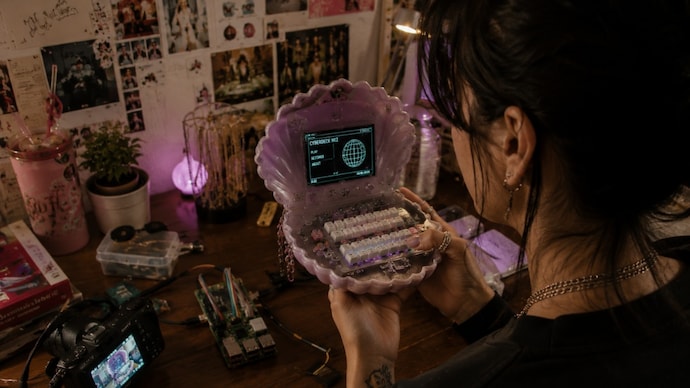
People are turning old bags, boxes, mint tins, or pretty much anything they can get their hands on into gadgets. These creations often feature miniature screens, chunky keyboards, exposed wires, and a distinctly retro-futuristic aesthetic. It's all a little more expressive and a little more playful.
Today, cyberdecking has found a whole new fanbase online — the internet's punk-tech girlies. Creators like Annika Tan and Trushita Narla are making DIY computers look cool, inspiring viewers to add personality to their own little innovations.
Hyderabad-born, New York-based creator Trushita Narla went viral for a Tamagotchi (90's popular virtual pet toy in Japan) inspired gadget that monitors her houseplant's soil moisture and displays an animated character that reacts to the plant's condition.
Mini computers inside a purse to digital cameras, people are making anything and everything.
Now, why are people cyberdecking? Part of the appeal is that almost all gadgets today look similar, and the colours are not always as vibrant as one may approve of. And because these devices are handmade, they carry your creative expression. They feel more human. They're unique. They're yours.
Another reason people are embracing cyberdecks is the sense of control they offer in an increasingly anxious AI-driven world.
At a time when AI fatigue is building up, algorithms track behaviour, predict preferences, and push information users never asked for, building your own computer, e-reader, or custom device feels empowering—a way to take ownership of technology rather than simply consume it.
But does it make sense?
For tech enthusiasts, building a cyberdeck is part of the fun. For everyone else, the barriers are harder to ignore.
There is also a contradiction at the heart of the movement. Cyberdecking may be anti-algorithm in spirit, but it owes much of its visibility to the very digital ecosystem it claims to resist.
Also, it's not everyone's cup of tea. While people may be equally tired of everything AI, and might be intrigued by these colourful, nostalgic devices, building one is not exactly easy even with the array of tutorial videos.
Which is why cyberdecking works best as a hobby rather than a revolution. It's a trend but not for the masses unless you are that driven.
So no, cyberdecking may not be the future of computing. But as a creative response to an increasingly automated world, it offers a glimpse into what many young people seem to be craving right now — not less technology, but technology with a little more personality.
Every few months, the internet finds a new way to romanticise the past.
First, it was digital cameras. Then flip phones. Then wired headphones. Now, Gen Z has rediscovered cyberdecking — a niche trend that involves building custom-made computers called cyberdecks. Yes, it's all DIY (Do It Yourself), and that's exactly the point.
And let's be honest, DIY is having a moment. People are willing to invest time, effort, and even adult money into things that feel aesthetic, a little nostalgic, and refreshingly hands-on all in pursuit of a more analogue way of life.
But cyberdecks? They're not completely analogue. They still involve devices and screens.
The trend is being celebrated as an antidote to today's sleek, AI-powered and increasingly uniform technology.
But while cyberdecking is undoubtedly creative, it also raises an interesting question: is this the future of personal tech, or just another internet obsession that looks cooler than it is practical?
What is cyberdecking?
It's not new. The idea has been around for a few decades now.
The term traces back to William Gibson's 1984 novel Neuromancer, where cyberdecks were actually portable computers used by hackers.
The concept later became a staple of cyberpunk culture, which celebrated technology that was customised, gritty and deeply personal. Over time, enthusiasts began bringing that vision to life, building their own devices from spare electronic parts, screens and miniature computers such as Raspberry Pi.
Kind of tech-heavy, right?
And now, it's back being a trend, again.
People are turning old bags, boxes, mint tins, or pretty much anything they can get their hands on into gadgets. These creations often feature miniature screens, chunky keyboards, exposed wires, and a distinctly retro-futuristic aesthetic. It's all a little more expressive and a little more playful.
Today, cyberdecking has found a whole new fanbase online — the internet's punk-tech girlies. Creators like Annika Tan and Trushita Narla are making DIY computers look cool, inspiring viewers to add personality to their own little innovations.
Hyderabad-born, New York-based creator Trushita Narla went viral for a Tamagotchi (90's popular virtual pet toy in Japan) inspired gadget that monitors her houseplant's soil moisture and displays an animated character that reacts to the plant's condition.
Mini computers inside a purse to digital cameras, people are making anything and everything.
Now, why are people cyberdecking? Part of the appeal is that almost all gadgets today look similar, and the colours are not always as vibrant as one may approve of. And because these devices are handmade, they carry your creative expression. They feel more human. They're unique. They're yours.
Another reason people are embracing cyberdecks is the sense of control they offer in an increasingly anxious AI-driven world.
At a time when AI fatigue is building up, algorithms track behaviour, predict preferences, and push information users never asked for, building your own computer, e-reader, or custom device feels empowering—a way to take ownership of technology rather than simply consume it.
But does it make sense?
For tech enthusiasts, building a cyberdeck is part of the fun. For everyone else, the barriers are harder to ignore.
There is also a contradiction at the heart of the movement. Cyberdecking may be anti-algorithm in spirit, but it owes much of its visibility to the very digital ecosystem it claims to resist.
Also, it's not everyone's cup of tea. While people may be equally tired of everything AI, and might be intrigued by these colourful, nostalgic devices, building one is not exactly easy even with the array of tutorial videos.
Which is why cyberdecking works best as a hobby rather than a revolution. It's a trend but not for the masses unless you are that driven.
So no, cyberdecking may not be the future of computing. But as a creative response to an increasingly automated world, it offers a glimpse into what many young people seem to be craving right now — not less technology, but technology with a little more personality.

