Why the Brazil rope jump is a death trap, even with a rope attached
Not attaching the rope was not the only issue at the popular rope-jumping spot in Brazil where a 21-year-old woman lost her life.
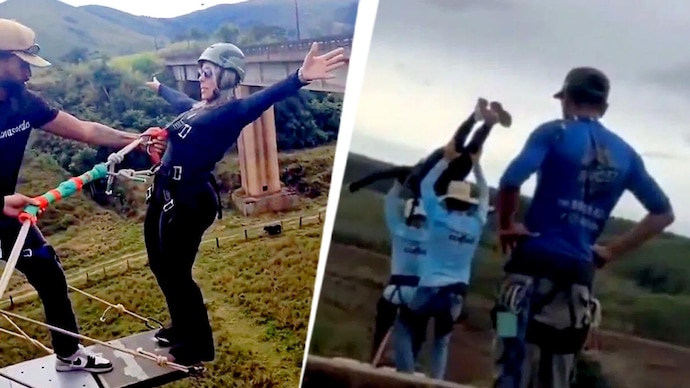
The world is still trying to make sense of the death of a 21-year-old woman during a rope-jumping activity in Sao Paulo, Brazil, after she was launched from a bridge without a safety rope. Viral videos from multiple angles show three men holding the woman in a "Superman" position before pushing her off the bridge, as people at the site can be heard screaming, "the rope, people, the rope."
The incident occurred at a structure known as Ponte do Esqueleto (Skeleton Bridge) in a rural area near Limeira, a city in Sao Paulo state, Brazil on June 13.
After the shocking footage of Maria Eduarda Rodrigues de Freitas's death went viral, several other videos of people rope-jumping from the same spot are now circulating online, and they all point to the same conclusion: even if the rope had been attached, the setup was still dangerously unsafe. It was more like a death trap than an adventure attraction.
Firstly, Maria did not lose her life during bungee jumping, as was widely reported. It was rope jumping.
Rope jumping is a highly dangerous sport that requires extensive technical knowledge, careful planning, and thorough preparation to be conducted safely.
Unlike bungee jumping which uses elastic cords, rope jumping uses low-stretch, nylon cord. If the jump goes wrong or is conducted by an untrained professional, a person is likely to suffer a violent jerk. This sudden jolt can put enormous strain on the neck, spine, and cause severe injuries.
There are a lot of technicalities involved to avoid this jerk risk. In rope jumping, the rope is usually anchored off to one side of the jump point instead of directly above it. This causes the person to swing in a wide arc like a pendulum after the rope tightens.
Additionally, if the equipment is old, damaged, or poorly maintained, the risk of an accident increases significantly. According to international bungee specialist Oliver Headon, the equipment shown in the footage of the recent tragic incident appeared to be quite old.
The large concrete pillars beneath the bridge made the already risky rope jumping activity even more dangerous.
Ideally, a properly designed system should ensure that jumpers stay well clear of these structures throughout the swing. Unlike a bungee-like straight drop, rope jumping involves a swinging motion, which means both vertical and sideways movement must be taken into account. If these movements are not calculated properly, there is a risk of the jumper colliding with the bridge or its pillars.
That’s where the understanding of factors like rope length, anchor position, jumper weight, fall distance and rope properties comes into the picture. They all must be aligned to keep the swing path safe and controlled. The team must also know how different weather conditions can impact safety.
“Proper staff training, clear operating procedures, regular risk checks, third-party safety audits, insurance, correct safety margins, and proper equipment logs are all essential to ensure rope jumping is run safely,” explained Oliver Headon.
But without SOPs and trained operators, you are essentially putting your life at serious and unnecessary risk. That was evidently the case at the accident spot.
Oh, by the way, there was no formal or regulated company behind the event, but rather an independent group. The organisers even deleted their online profiles after the tragic death of the 21-year-old woman.
Another major red flag was the location itself.
The incident took place at the Ponte do Esqueleto, an unfinished bridge that was never completed for traffic and has been abandoned for roughly 30 years. Despite lacking proper infrastructure, maintenance, and safety oversight, it had become an informal extreme sports attraction where commercial operators were selling jumping experiences. The site had also seen multiple serious accidents in recent years, including a fatal fall and other severe injuries.
Local authorities had reportedly raised concerns about the site's dangers and called for greater access control, describing it as a location with known risks that had existed for years. When an activity involving a 40-meter freefall is being conducted from an abandoned structure with a history of fatal and serious accidents, that alone should have been a major warning sign.
Forgetting to attach the rope was the catastrophic final error. But the deeper problem was a system that already appeared unsafe: questionable equipment, lack of SOPs, and a site with a known history of accidents. The tragedy was not caused by a single error - it was a death trap to begin with.
The world is still trying to make sense of the death of a 21-year-old woman during a rope-jumping activity in Sao Paulo, Brazil, after she was launched from a bridge without a safety rope. Viral videos from multiple angles show three men holding the woman in a "Superman" position before pushing her off the bridge, as people at the site can be heard screaming, "the rope, people, the rope."
The incident occurred at a structure known as Ponte do Esqueleto (Skeleton Bridge) in a rural area near Limeira, a city in Sao Paulo state, Brazil on June 13.
After the shocking footage of Maria Eduarda Rodrigues de Freitas's death went viral, several other videos of people rope-jumping from the same spot are now circulating online, and they all point to the same conclusion: even if the rope had been attached, the setup was still dangerously unsafe. It was more like a death trap than an adventure attraction.
Firstly, Maria did not lose her life during bungee jumping, as was widely reported. It was rope jumping.
Rope jumping is a highly dangerous sport that requires extensive technical knowledge, careful planning, and thorough preparation to be conducted safely.
Unlike bungee jumping which uses elastic cords, rope jumping uses low-stretch, nylon cord. If the jump goes wrong or is conducted by an untrained professional, a person is likely to suffer a violent jerk. This sudden jolt can put enormous strain on the neck, spine, and cause severe injuries.
There are a lot of technicalities involved to avoid this jerk risk. In rope jumping, the rope is usually anchored off to one side of the jump point instead of directly above it. This causes the person to swing in a wide arc like a pendulum after the rope tightens.
Additionally, if the equipment is old, damaged, or poorly maintained, the risk of an accident increases significantly. According to international bungee specialist Oliver Headon, the equipment shown in the footage of the recent tragic incident appeared to be quite old.
The large concrete pillars beneath the bridge made the already risky rope jumping activity even more dangerous.
Ideally, a properly designed system should ensure that jumpers stay well clear of these structures throughout the swing. Unlike a bungee-like straight drop, rope jumping involves a swinging motion, which means both vertical and sideways movement must be taken into account. If these movements are not calculated properly, there is a risk of the jumper colliding with the bridge or its pillars.
That’s where the understanding of factors like rope length, anchor position, jumper weight, fall distance and rope properties comes into the picture. They all must be aligned to keep the swing path safe and controlled. The team must also know how different weather conditions can impact safety.
“Proper staff training, clear operating procedures, regular risk checks, third-party safety audits, insurance, correct safety margins, and proper equipment logs are all essential to ensure rope jumping is run safely,” explained Oliver Headon.
But without SOPs and trained operators, you are essentially putting your life at serious and unnecessary risk. That was evidently the case at the accident spot.
Oh, by the way, there was no formal or regulated company behind the event, but rather an independent group. The organisers even deleted their online profiles after the tragic death of the 21-year-old woman.
Another major red flag was the location itself.
The incident took place at the Ponte do Esqueleto, an unfinished bridge that was never completed for traffic and has been abandoned for roughly 30 years. Despite lacking proper infrastructure, maintenance, and safety oversight, it had become an informal extreme sports attraction where commercial operators were selling jumping experiences. The site had also seen multiple serious accidents in recent years, including a fatal fall and other severe injuries.
Local authorities had reportedly raised concerns about the site's dangers and called for greater access control, describing it as a location with known risks that had existed for years. When an activity involving a 40-meter freefall is being conducted from an abandoned structure with a history of fatal and serious accidents, that alone should have been a major warning sign.
Forgetting to attach the rope was the catastrophic final error. But the deeper problem was a system that already appeared unsafe: questionable equipment, lack of SOPs, and a site with a known history of accidents. The tragedy was not caused by a single error - it was a death trap to begin with.

