Austerity | Brace for the worst
As the oil shocks threaten India's economy, Prime Minister Narendra Modi calls for prudent spending. What lies ahead
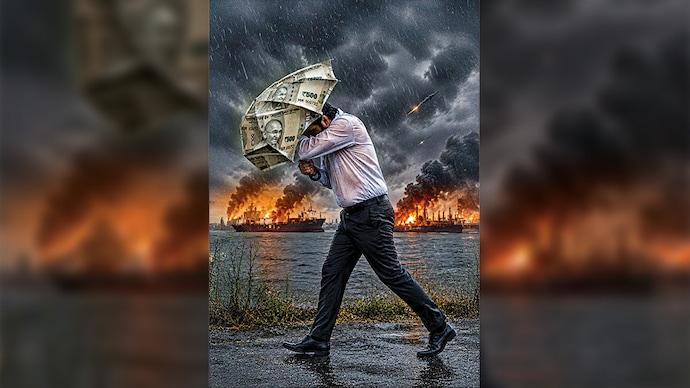


Prime Minister Narendra Modi’s invocation of the COVID years at a public meeting in Secunderabad on May 10 was not empty remembrance of tough times. It was a warning. During the pandemic, Indians had made their peace with work-from-home arrangements, online meetings and curtailed consumption. Now, Modi suggested, we may need to revert to some of those habits—not because of a virus, but because of an economic storm gathering over India.
Prime Minister Narendra Modi’s invocation of the COVID years at a public meeting in Secunderabad on May 10 was not empty remembrance of tough times. It was a warning. During the pandemic, Indians had made their peace with work-from-home arrangements, online meetings and curtailed consumption. Now, Modi suggested, we may need to revert to some of those habits—not because of a virus, but because of an economic storm gathering over India.
The trigger lies thousands of miles away—in West Asia. The widening conflict, involving the US, Israel and Iran, has disrupted energy markets, pushed up crude prices, hit remittances from the Gulf and exposed vulnerabilities in India’s external finances. For a government that has just emerged victorious in three out of five assembly elections, the timing of Modi’s message was significant. The prime minister was preparing citizens for hardship ahead and urging them to voluntarily adopt austerity. He advocated not buying gold for a year, cutting foreign travel and destination weddings, working from home wherever possible, reducing fertiliser and edible oil use, using public transport and carpooling, and opting for swadeshi goods. “During the corona period, we adopted work from home, online meetings, video conferences and developed many such systems,” Modi said. “Today, the need of the hour is that we restart those practices.”
Behind the appeal lies the worrying rise in India’s current account deficit (CAD)—the gap between foreign currency inflows and outflows—primarily on account of the sharp rise in energy costs. Brent crude prices have climbed to around $110 (Rs 10,500) a barrel from $70 (Rs 6,700) before the US-Israel strikes on Iran in February, over 60 per cent higher than last July. India’s oil refiners were estimated to be losing roughly Rs 1,000 crore a day before fuel price hikes were announced. As a result, the trade deficit, the largest component of the CAD, rose from $148 billion (Rs 14.2 lakh crore) in 2013-14 to nearly $300 billion (Rs 28.8 lakh crore) in FY26.
The rise in the value of gold imports, from $34.6 billion (Rs 3.3 lakh crore) in FY21 to $72 billion (Rs 6.9 lakh crore) in FY26, compounded the pressure. Foreign portfolio investors, too, have sold Rs 2.2 lakh crore worth of equities already this year, compared with Rs 1.7 lakh crore in all of 2025. Net foreign direct investment had been in the red for six consecutive months till February. Modi reinforced his concerns during a speech at The Hague. “This is turning into a decade of disasters for the world,” he said, citing the pandemic, wars and energy shocks. Unless conditions change, he warned, “achievements of the past many decades would be washed away.”
THE COMING STORM
Not all of India’s economic problems stem from the West Asia crisis. Weak manufacturing, sluggish merchandise exports, low private investment and persistent job concerns predate the crisis. Geopolitical shocks have only intensified these. Congress leader Rahul Gandhi seized on Modi’s remarks to warn of deeper trouble. Speaking in Raebareli, he said: “An economic storm is on the way. Their Adani-Ambani structure will not last much longer; it will collapse. What is unfortunate is that the common man will suffer.” The debate intensified after banker Uday Kotak issued a stark warning at a Confederation of Indian Industry event in New Delhi. “The shock is coming and it’s coming big,” he said. Countries, he argued, should avoid “living beyond their means” and prepare for difficult times before the crisis fully arrives.
The pressure is already telling on the rupee. India’s widening external deficit has pushed the currency to around 96 against the dollar, with analysts warning it may breach the psychological barrier of Rs 100 if the West Asia crisis continues. The Reserve Bank of India has intervened by selling dollars. But that comes at a cost—foreign exchange reserves declined from $728 billion (Rs 69.9 lakh crore) in February to $697 billion (Rs 66.9 lakh crore) in May. Mercifully, India is nowhere near the crisis conditions of 1991 and has enough forex reserves to cover roughly 10 months of imports. However, economists worry over the trend lines moving in the wrong direction. “Exports are growing at a negative rate, and we have this war and shipping disruptions,” says Madan Sabnavis, chief economist at the Bank of Baroda. “Remittances are falling because many come from Gulf countries. In FDI, too, companies are repatriating profits rather than reinvesting. The PM’s message seems aimed at saving $5-10 billion (Rs 48,000–96,000 crore) through self-restraint alone.” Trade expert Biswajit Dhar is even more blunt. “There is plenty to worry about. The external sector is in a bad shape,” he says. Experts believe that a combination of these factors will slow economic growth—the RBI predicts a 0.8 per cent hit; other agencies estimate a direr 1 per cent impact, dragging down India’s growth to around 6.5 per cent in FY27.
Many have taken serious heed of the PM’s call for austerity. Vibha Dhawan, director-general, The Energy and Resources Institute (TERI), New Delhi, has got her solar cooker out, to reduce fuel consumption. The family has also decided to forgo its travel plans for this year in favour of a staycation in Delhi-NCR. Jay Motghare, managing director of Nagpur-based air treatment company Nirmitee Robotics, has decided to switch investments from gold to mutual funds this year.
THE PAIN POINTS
The immediate pain point for consumers, however, will be fuel. India imports nearly 8 of its crude oil needs and is the world’s third-largest oil consumer after the US and China. Every $10 (Rs 960) increase in crude prices inflates India’s annual import bill by an estimated $13-18 billion (Rs 1.2-1.7 lakh crore) and increases inflation by 35-60 basis points. In India, petrol and diesel prices were increased twice in May after remaining unchanged for four years. CNG prices have also gone up. The aviation industry is preparing for a similar blow. Maharashtra and Delhi slashed value-added tax on aviation turbine fuel (ATF) in May. It is only a matter of time before the ATF price increase is passed on to airlines.
Higher fuel prices eventually filter through the economy, affecting the cost of logistics, manufacturing and everything from packaged goods to food. FMCG companies have already begun passing on costs. Amul raised milk prices by Rs 2 per litre. Dabur and Hindustan Unilever have announced price increases of 2-5 per cent. Sabnavis warns that inflation could exceed 5 per cent by year-end. “At the household level, perception is about what is hurting purchasing capacity,” he says.
That perception is already shifting. RBI’s Inflation Expectations Survey found households estimating current inflation at 7.2 per cent and expecting it to rise to 8.5 per cent over the next three months. Such expectations matter because they shape consumer behaviour. As household budgets tighten, discretionary spending is often the first to fall. According to Soumyajit Niyogi, director, India Ratings, affluent consumers will continue spending, but middle-income and lower-income households may trade down to cheaper products. Future income uncertainty, AI-related disruptions and weaker corporate earnings could further weigh on spending. There are fiscal worries, too. Fuel tax cuts have already cost the government some Rs 1.5 lakh crore. If revenues weaken and expenditure pressures rise, the Centre may struggle to sustain capital expenditure targets.
A GOLDEN DILEMMA
If oil has become India’s biggest external vulnerability, gold and fertilisers reveal how deeply global shocks penetrate everyday economic life. One reflects India’s cultural obsession, the other its food security challenge. Both now sit at the heart of the government’s austerity push. Gold is India’s second-largest import item after crude oil. Import duties on the yellow metal and silver were raised from 6 per cent to 15 per cent—comprising a 10 per cent basic customs duty and a 5 per cent Agriculture Infrastructure and Development Cess—to curb the widening CAD. The policymakers hope higher duties will suppress demand. World Gold Council estimates suggest every 1 per cent rise in import duty reduces demand by roughly 6.4 tonnes. A 9 per cent rise, therefore, could cut annual consumption by nearly 60 tonnes, close to a month of India’s yearly demand of about 700 tonnes. “Historically, duty hikes affect demand in the short term, but eventually consumers return,” says Dr Renisha Chainani, head of research at gold trading platform Augmont.
But the market is already showing distortions. Rajesh Rokde, chairman of the All India Gem and Jewellery Domestic Council, says jewellery sales in northern and western India have already fallen by around 30 per cent. “Customers who are coming in are panic-buying because they think more restrictions may be imposed,” he says. Higher duties have also revived the old problem of smuggling. Rokde says parallel pricing has emerged in the market, with significant gaps between invoiced and unofficial transactions. The government’s next move may be to revive the Gold Monetisation Scheme. Indian households are estimated to hold nearly 30,000 tonnes of idle gold. Even bringing 1 per cent of that stock into circulation could reduce import dependence.
Silver has become another concern. India is now the world’s largest importer of refined silver, with imports touching $9.2 billion (Rs 88,300 crore) in 2025—a 44 per cent increase, driven by electronics, solar and EV demand, alongside rising ETF investments. “This combination—high volumes, rising values and investment-led demand immobilising metal—is precisely what alarmed policymakers,” says Chainani.
THE FERTILISER FAULT LINE
If gold represents consumer behaviour, fertiliser exposes India’s structural dependence. The West Asia conflict has triggered a severe disruption in global fertiliser markets. Tanker movement through the Strait of Hormuz—the passage for nearly one-third of global fertiliser trade—collapsed by over 90 per cent during the crisis. Global urea prices surged from about $510 (Rs 48,960) a tonne in February to nearly $950 (Rs 91,200) by April. Diammonium phosphate (DAP), India’s second-most used fertiliser, rose sharply too.
India’s challenge is threefold: import dependence, forex exposure and subsidy pressure. The numbers are stark. We import nearly all our potash, over 90 per cent of phosphate rock and 55-60 per cent of DAP requirements. Fertiliser imports frequently cost $10-20 billion (Rs 96,000 crore to Rs 1.9 lakh crore) annually. And when global prices spike, subsidy costs explode. For FY27, fertiliser support is projected to exceed Rs 2 lakh crore once again.
The Hormuz crisis exposed just how vulnerable the system remains. More than 60 per cent of India’s urea imports and nearly 80 per cent of ammonia and sulphur imports come from Gulf countries. Even domestic production depends on imported energy: nearly half of India’s LNG supply is from the Gulf, while natural gas accounts for almost 80 per cent of urea production costs. In effect, even Indian-made fertiliser remains tied to imported energy.
Sensing the threat, the government had adopted a multi-pronged approach soon after hostilities escalated. First came aggressive stockpiling. Indian Potash Limited issued tenders for 2.5 million tonnes of urea to secure supplies before the sowing season. Import timelines were relaxed to accommodate delayed vessels. Then came a diversification drive. India rerouted imports through Russia and Morocco via the Cape of Good Hope and expanded sourcing to newer countries, including Algeria, Egypt, Indonesia, Malaysia and Canada.
Meanwhile, the Union Cabinet approved a 10-21 per cent rise in support rates for non-urea fertilisers for kharif 2026, costing the exchequer another Rs 41,534 crore. The measures worked—at least in the short term. By March, fertiliser stocks had reached record levels and India appears unlikely to face shortages during the kharif season. But the solution has come at an enormous cost, and reform remains politically difficult. Urea pricing is effectively untouchable, even if heavy subsidies distort usage patterns, encouraging over-application.
HEAT FROM EDIBLE OIL
Edible oil is emerging as another area of massive concern. Every year, India spends roughly Rs 1.61 lakh crore overseas to buy edible oil it cannot grow at home, exposing a structural weakness despite years of policy intervention. India consumed 27.8 million tonnes of edible oil last fiscal, driven by rising incomes, changing diets and the expansion of processed food and restaurant consumption. Per capita consumption stood at 19.7 kg annually and is projected by NITI Aayog to rise to 25.3 kg by 2028. Against that appetite, domestic production remains deeply inadequate. India produced just 12.18 million tonnes in 2023-24, meeting barely 44 per cent of demand. The remaining 56 per cent came from imports, and have shown little sign of reversing despite successive policy interventions.
The composition of imports reveals the scale of vulnerability. Palm oil accounts for nearly 55-57 per cent of imports, sourced mainly from Indonesia and Malaysia. Soybean oil comes largely from Argentina and Brazil, while sunflower oil is dominated by supplies from Russia and Ukraine. In the first six months of the current oil year alone, imports touched Rs 87,000 crore, up 19 per cent year-on-year. A weakening rupee—which has depreciated over 9 per cent against the dollar over the past year—has made every imported tonne more expensive.
It was against this backdrop that Prime Minister Modi made what initially appeared to be an unusual appeal: reduce edible oil consumption by 10 per cent. “We have to spend foreign currency on its imports. If every household reduces the use of edible oil, it is a huge contribution to patriotism,” he said. “This will improve the health of the national treasury and the health of every family member.” The appeal reflected that economic compulsions had become increasingly difficult to ignore.
Since 2014, the Modi government has pursued a sustained effort to reduce import dependence. Minimum support prices for oilseeds such as mustard, soybean and sunflower were repeatedly increased. Oilseed production grew by 55 per cent over the past decade through a combination of expanded acreage and improved yields. The government had also launched two major missions: the National Mission on Edible Oils–Oil Palm in 2021 with an outlay of Rs 11,040 crore, and the National Mission on Edible Oils–Oilseeds in 2024. Together, they target domestic edible oil production of 25.45 million tonnes by 2030–31, enough to meet around 72 per cent of projected demand. But the gap between ambition and reality remains considerable. The deeper problem lies in incentives. Wheat and rice farmers enjoy procurement systems built over decades that virtually guarantee purchases. Oilseed growers receive MSP (minimum support price) support but lack comparable procurement assurance. That gap must be plugged.
MIND THE EV GAP
The PM’s appeal also included a plea for citizens to shift from petrol and diesel transportation to electric vehicles (EVs), both as a patriotic choice and an economic necessity. India today has around 400 million registered active vehicles. Nearly 92 per cent still run on petrol or diesel; EVs account for barely 4 per cent, though their penetration in new sales has crossed 5 per cent. The government moved quickly after the PM’s appeal. Public sector banks, financial institutions and insurance companies were directed to cut travel expenses and gradually acquire EV fleets. Politicians led by example. Madhya Pradesh chief minister Mohan Yadav cut the size of his convoy; his Maharashtra counterpart Devendra Fadnavis arrived at work on a motorcycle; Union minister Ramdas Athawale took the Mumbai Metro. “Strengthening domestic energy transition pathways is not only about decarbonisation but also ensuring economic security and resilience,” says Jagjeet Singh Sareen, India head at global strategic firm Dalberg Advisors.
But the transition itself contains contradictions. In September 2025, GST rationalisation reduced taxes on internal combustion engine vehicles, making petrol and diesel vehicles significantly cheaper relative to EVs. Now, even optimistic estimates suggest EVs and energy-efficiency gains may reduce oil demand growth only at the margins over the next decade. Heavy transport, freight and aviation remain overwhelmingly dependent on fossil fuels.
HOLD THAT FOREIGN TRAVEL
The call for austerity is also beginning to influence behaviour beyond fuel consumption. Mumbai-based entrepreneur Snehanshu Mandal had planned a family trip to Italy this September and a work visit to Sydney. Both plans have now been postponed. A domestic visit to Kolkata was dropped too. He is not alone. Travel has become more expensive due to a weaker rupee and rising aviation fuel costs. International airfares have risen by 20-25 per cent and domestic ones by around 10-15 per cent, according to industry estimates. Air India has temporarily suspended seven international flights from June to August 2026, among those ultra long-haul destinations like Chicago as well as shorter distances like Shanghai and Male.
“This is bound to affect overseas travel,” says Rajiv Mehra, general secretary of the Federation of Associations in Indian Tourism & Hospitality. He expects a 20-25 per cent decline in outbound travel in the upcoming holiday season. West Asia—once accounting for nearly a third of India’s international travel—has largely fallen off travel itineraries because of the conflict. Travel companies are seeing changes in behaviour rather than collapse in demand. EaseMyTrip co-founder Rikant Pittie says travellers are adjusting budgets and preferences rather than cancelling plans altogether. “Travellers are booking earlier, opting for shorter-duration trips and choosing destinations that offer better value,” he says.
For policymakers, Modi’s message has become more than an appeal for belt-tightening. Economists increasingly see the present crisis as a moment demanding deeper structural reforms. Trade expert Biswajit Dhar argues that India’s response cannot simply be restraint. “We need to improve production and exports,” he says, pointing out that countries in East Asia combined incentives with accountability while India relied excessively on subsidies without performance targets.
Others point to investment and employment concerns. Former Planning Commission advisor Pronab Sen believes private investment remains a major weakness. “One way to spur private investment is through public investment,” Sen said recently. “But repeated shocks—from demonetisation to COVID—have made investors increasingly risk-averse.” He warns that MSMEs may face particular stress if global uncertainty continues. Once banks lose confidence in lending to smaller businesses, rebuilding that ecosystem will be difficult. Partha Chatterjee, dean of academics, Shiv Nadar University, argues that tackling inflation alone will not be sufficient. Restoring confidence among investors, businesses and consumers is equally critical. The deeper challenges—weak exports, uneven investment, energy dependence, agricultural distortions and inadequate job creation—require harder reforms and political choices. The question now is whether voluntary restraint and policy corrections can soften the blow or whether tougher choices lie ahead.

