Cyberchondria: New age malaise
AI symptom checkers and online health content are fuelling a surge in self-diagnosis, driving panic, delaying treatment and a rise in self-medication
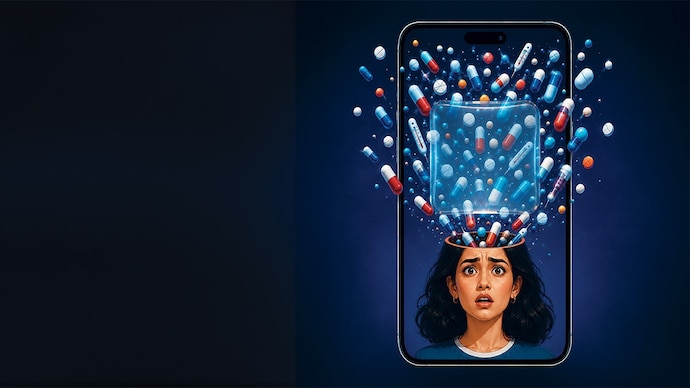
Seven months ago, 41-year-old Ritoban Sen, an Indian Institute of Management Ahmedabad graduate working with a leading bank in Mumbai, noticed a small lump on his knee. With rising paranoia, spurred by a family history of cancer, he fed every detail into ChatGPT, and received an elaborate explanation suggesting bone cancer. He consulted three oncologists in Mumbai, all of whom diagnosed simple inflammation and ruled out a biopsy. Still unconvinced, Sen flew to New York City for a fourth opinion, with the same result. “I feel foolish now, but the anxiety then was overwhelming,” Sen says with a laugh. If the hypochondriac of yore imagined the slightest bodily symptom as evidence of some debilitating disease, now he has a tool to confirm his worst fears: Dr ChatGPT. Together, they have spawned a creature called the cyberchondriac, whose quick search for online symptoms rapidly spirals into repeated, obsessive checking, with each result escalating anxiety rather than resolving it.
Seven months ago, 41-year-old Ritoban Sen, an Indian Institute of Management Ahmedabad graduate working with a leading bank in Mumbai, noticed a small lump on his knee. With rising paranoia, spurred by a family history of cancer, he fed every detail into ChatGPT, and received an elaborate explanation suggesting bone cancer. He consulted three oncologists in Mumbai, all of whom diagnosed simple inflammation and ruled out a biopsy. Still unconvinced, Sen flew to New York City for a fourth opinion, with the same result. “I feel foolish now, but the anxiety then was overwhelming,” Sen says with a laugh. If the hypochondriac of yore imagined the slightest bodily symptom as evidence of some debilitating disease, now he has a tool to confirm his worst fears: Dr ChatGPT. Together, they have spawned a creature called the cyberchondriac, whose quick search for online symptoms rapidly spirals into repeated, obsessive checking, with each result escalating anxiety rather than resolving it.
The visit to the doctor is not in search for an answer, but for validation of a diagnosis that has already taken root in the mind. The physician, in turn, has to attend to two tasks: assess the symptoms before them and treat the health anxiety bred by online self-diagnosis. It is a continuation of an old problem—of patients arriving after a second opinion or alternate medical advice. Online search engines made the task even easier, seek and you had an answer for any of your health queries. Now, AI has accelerated that tendency.
The malaise is serious enough to warrant research on the subject. A 2024 review in the Indian Journal of Psychiatry cited a study of the IT sector in Chennai in which 55.6 per cent of the employees showed signs of cyberchondria. A 2026 scoping review in The Scientific World Journal (TSWJ), which analysed international studies, including Indian data, found reported prevalence estimates ranging from 30.7 per cent to 55.6 per cent, with Indian occupational samples among the highest. Another 2022 Indian adult-population study in the Archives of Mental Health journal found 45.3 per cent prevalence. Among students, a 2023 study in the BLDE University Journal of Health Sciences reported that 22.5 per cent of the cohort was already affected and 36.2 per cent at risk.
AGE OF THE INSTA DIAGNOSIS
In a country where access to medical specialists remains uneven, AI tools come in handy to diagnose ailments that perhaps aren’t. The confidence and speed with which they produce fluent, personalised explanations makes them sound authoritative. Generative AI chatbots are even more persuasive, changing how misinformation is created and consumed, says Sudipta Sengupta, founder of The Healthy Indian Project, a fact-checking company. As a result, say doctors, patients imagine even mild symptoms as worst-case scenarios. “Thanks to AI symptom checkers and easy access to health videos online,” says Dr Rahul Mehrotra, chief of NIC and clinical cardiology at Artemis Gurgaon, “a lot of people now think that the mildest chest pain means they are having a heart attack. It is thus becoming increasingly common for patients to come to the emergency room in a state of panic and fearing the worst.”
The effects show up in different ways. Some panic, seek repeated consultations or ask for scans they may not need, eroding the doctor–patient trust. Others self-medicate, misuse supplements or antibiotics and delay diagnosis. The phenomenon is now so established that researchers have formal screening tools for it, the Cyberchondria Severity Scale (CSS-12) being one of them. In a 2025 validation study in the Indian Journal of Psychiatry, researchers from the University of Calcutta and partner institutions formally tested the scale for local populations, underscoring how clinically relevant the condition has become.
THE EPIDEMIC OF ANXIETY
On a weekday morning, the OPD waiting hall of Max Super Speciality Hospital Saket is milling with patients who seem certain of the disease they are suffering from. A middle-aged man is telling a relative that he has a thyroid condition. A young woman scrolling through her phone mentions PCOS, or polycystic ovarian syndrome now rechristened Polyendocrine Metabolic Ovarian Syndrome (PMOS). Another patient, clutching earlier reports, is debating whether his chest discomfort is cardiac or gastric. None has been to the doctor yet.
Across Indian hospitals, this kind of patient is becoming a familiar sight. Department after department—from neurology and cardiology to gynaecology, oncology and psychiatry—reports patients coming to them with simple symptoms that they believe reflect serious disease. “Headaches, tingling, dizziness, or brief memory lapses, once considered minor or transient, are now often interpreted as serious conditions such as stroke, brain tumours, or neurological decline,” says Dr Rishi Sharma, consultant-paediatric neurologist at Delhi’s Rainbow Hospital. “As a result, many patients walk in with a diagnosis already in their heads, often accompanied by heightened anxiety.”
Nowhere is cyberchondria more emotionally combustible than in oncology. “Cyberchondria is increasingly common among both young and older adults. Many now interpret fatigue, pain, unexplained weight loss, or lumps as cancer after an internet search,” says Dr Siddharth Shankar Sood, senior consultant of oncology at Fortis Escorts Hospital, Faridabad.
Dr Meera Singh (name changed on request), who heads the internal medicine department at a national hospital chain, recalls a patient at her OPD who was convinced he needed tuberculosis medication urgently because his cousin had TB. He interpreted Singh’s repeated advice for tests before treatment as deliberate denial of care. It took nearly an hour of her OPD time to finally persuade him. The TB test was negative, but so anxious was her patient that he repeated it twice before accepting the result. He later confessed an AI tool had warned him about TB exposure.
Orthopaedic specialists face similar cases. “There is a growing trend of patients with back pain, knee pain and posture-related concerns following internet advice on generic exercises or one-size-fits-all routines without understanding the root cause of their pain,” says Dr Ramkinkar Jha, director of orthopaedics at the C.K. Birla Hospital in Delhi. What this ends up in is delayed diagnosis, aggravated inflammation, prolonged pain, or months lost to ineffective self-treatment. Nabonil Chatterjee, a 38-year-old product manager from Gurugram, discovered this the hard way. Alarmed by the tingling and numbness running down one arm, he went online and found videos and threads that convinced him that long hours at his desk had given him a posture problem. He changed his pillows, followed stretching routines, bought a neck brace, and delayed seeing a specialist for weeks. When he finally sought medical help, he was diagnosed with nerve compression requiring targeted treatment. Orthopaedic clinics regularly come across patients like Chatterjee who have treated themselves through generic internet fixes. “Performing inappropriate exercises,” says Dr Jha, “can aggravate the problem, sometimes leading to increased inflammation, muscle spasms, or nerve compression.” A reel showing stretches for knee pain may help one viewer but worsen pain for someone who may have ligament damage or arthritis.
Women’s health specialists encounter patients who are convinced they are in the midst of hormonal catastrophe. Whatever their symptom, there is a social media reel, symptom checklist or chatbot explanation for it. “It is increasingly common to see patients come in with a self-diagnosis, especially around conditions like PMOS, thyroid disorders or perimenopause. Many women tend to match symptoms such as irregular periods, weight gain, acne, or mood changes with what they read online,” says Dr Tripti Raheja, director-obstetrics and gynaecology at C.K. Birla Hospital. And sometimes such self-diagnosis becomes a medical emergency. As it did for a 29-year-old South Delhi professional, who, after a delayed period and online symptom searches, realised she was pregnant and procured abortion pills, without a consultation or ultrasound. Hours later, after severe cramps and heavy bleeding, she landed up at the hospital. Dr Anita Gupta, senior director–obstetrics & gynaecology, Fortis La Femme, New Delhi, says such cases are deeply concerning. Women may not be pregnant at all, may have an ectopic pregnancy, or may be at a gestation stage where pills are unsafe or ineffective. They then come with incomplete abortion, retained tissue or uncontrolled bleeding, with some cases requiring suction evacuation or emergency surgery.
With all the rage around GLP-1 drugs like Ozempic and Wegovy, weight and metabolic conditions are another area where self-directed routines are common. “People should not be taking medication for weight loss or diabetes without consulting a doctor,” says Dr Jasjeet Wasir, chairman of endocrinology at Medanta Hospital in Gurugram. “If weight or blood sugar is a concern, following online routines and repeatedly gaining and losing weight can do more harm than good. It is better to have a structured plan guided by a doctor, which will improve health as well as peace of mind.”
Psychiatry offers another version of the problem. A 20-year-old college student spent weeks consuming short videos on adult ADHD. She began to reinterpret ordinary procrastination, boredom, restlessness and missed deadlines, telling friends she finally knew “what is wrong” with her. By the time she sought help, she had begun performing the diagnosis as much as believing it. What she did not know is that a psychiatric assessment does not rely on a checklist alone. Clinicians look at childhood history, persistence across settings, anxiety, depression, sleep quality, and whether symptoms impair life consistently or only during difficult periods. In her case, clinicians found severe anxiety, poor sleep and exam stress, not ADHD.
The trouble with patients landing up after AI has convinced them that their symptoms match the worst possible disease is that it begins to tell not just on the individual but on the entire healthcare system. Anxiety sends these low-risk patients to overwhelm emergency rooms, clogging up triage desks, waiting areas and taking up the precious time of hospital staff, delaying care for people who are really sick. Unnecessary tests are another outcome. “Patients frequently request advanced investigations like MRI scans, even when clinical evaluation may not immediately indicate the need. This shift adds pressure on healthcare systems and can lead to unnecessary testing,” says Dr Sharma.
HOW TO BREAK THE CYCLE
In a time of instant gratification, AI is a convenient tool to relieve anxiety. It can produce a convincing answer in seconds, along with treatment suggestions. A few quick taps, and you can have lists of “best tests for chest pain”, a dosage schedule for over-the-counter medicines, and recommendations such as an MRI scan for headaches. Chatbots can make the answers seem personal and customised, except that explanations are only as good as the information fed into them. They cannot, for example, examine a swollen knee or notice pallor. They cannot assess what a patient may have left out because they did not know it was relevant.
Educated, capable people are not immune to cyberchondria either. This is because such behaviour is driven less by ignorance than by anxiety. Dr Neha Aggarwal, MD Psychiatry at Fortis Hospital Manesar and Adayu Mindfulness, Gurugram, says health awareness is good: you look up symptoms, consider common causes and, if needed, consult a doctor. Cyberchondria, by contrast, she says, is “cyclical and distress-driven—hours of searching, quickly assuming the worst, seeking reassurance that never lasts and returning to the same fears. The line is crossed when searching for information no longer leads to clarity or action, but to escalating anxiety and repeated checking that begins to affect mental well-being.” Most vulnerable are those who already have high health anxiety, a tendency to worry, perfectionistic traits or low tolerance for uncertainty. For them, she notes, “maybe it is nothing” is not enough. What she proposes is asking oneself a simple question: “Does your search end with a plan, or does it reopen anxiety?” If the pattern feels compulsive and difficult to stop, she says, professional support may be needed.
For many patients, the solution is not another test but addressing the anxiety underneath it. Experts say treatment often involves helping people step back from compulsive symptom-checking and the need for constant reassurance. “The goal is to build tolerance for uncertainty rather than eliminate every doubt,” says Dr Upasana Chaddha, head psychologist, Mindscape Centre for Counseling, Delhi. Therapy is the mainstay, while yoga, mindfulness and stress-management practices further help reduce the anxiety that keeps the cycle going. For severe anxiety, psychiatrists may recommend sleep or anxiety medication.
MAKING CYBERCHONDRIA WORK
Cyberchondria is also not entirely negative, say doctors. Rather than mock or dismiss it, it must be redirected. Health anxiety should become an opportunity for preventive care, counselling and timely diagnosis. “These health anxieties create an important opportunity,” says Dr Siddharth Shankar Sood. “When a worried individual visits the clinic, it allows me to counsel them, rule out serious disease, and initiate age-appropriate cancer screening based on their risk profile. If nothing serious is found, reassurance itself is therapeutic.” The same goes for online advice—it is not automatically harmful. “Basic awareness around posture correction, stretching, and movement can be beneficial when applied correctly,” notes Dr Jha; the real problem is the lack of personalisation and clinical evaluation. Greater vigilance can also save lives. According to Dr Sharma, it means some patients seek help earlier in genuine emergencies such as a stroke, where every minute matters.
Not all in the medical fraternity or the drugs industry blame technology either. Saransh Chaudhary, CEO, Venus Remedies, says the challenge is not technology itself since it can improve access, awareness and clinical decision-making when used responsibly. “The real question is whether its use is underpinned by transparent, traceable and regulated frameworks,” he says. “With AI penetrating healthcare, there is a growing risk of consumers relying on partial or unverified information. This can have public health consequences, especially in an era of antimicrobial resistance driven by misuse and overuseof antibiotics.”
Aditya Kandoi, founder & CEO, Redcliffe Labs, also lauds the roles of AI tools that encourage preventive screening or guide users toward the right tests. But his prescription, too, comes accompanied by a caveat: “Healthcare decisions require context, interpretation and medical judgement.” AI, in his view, should support decisions, not become the diagnosis itself.
And under no circumstances should such a diagnosis progress to self-medication. According to Rohan Sanghvi, director of pharma distribution firm Shantilal Brothers, there is “rampant misuse of topical steroids, antifungals, painkillers and antibiotic combinations. Easy access to painkillers can mask underlying disease, while repeated or unsupervised use of common medicines can create its own health risks”. He advocates tighter oversight of over-the-counter sales, especially antibiotics, steroids and certain anti-inflammatory drugs. He also believes that the neighbourhood pharmacy is crucial in breaking the cycle of self-diagnosis and self-medication. “Since pharmacists,” says Sanghvi, “often see patients before doctors do, with the right training and protocols, they can identify red flags such as recurrent symptoms, unclear diagnoses or requests for high-risk drugs and redirect patients to doctors when needed. Their role can move from passive dispensing to active triaging, counselling and patient education.”
Cyberchondria thrives because doctor appointments are difficult to get, and access to quality healthcare remains uneven, leaving patients with no recourse but to turn to the internet. They do get quick, easy answers, but ones that only stoke fears, not reassure an individual. If cyberchondria must be cured, credible medical advice has to be made even, and accessible.

