Needed, a unified rocket force
India is contemplating a dedicated missile and rocket force to better manage its growing inventory, but many in the defence establishment oppose the move
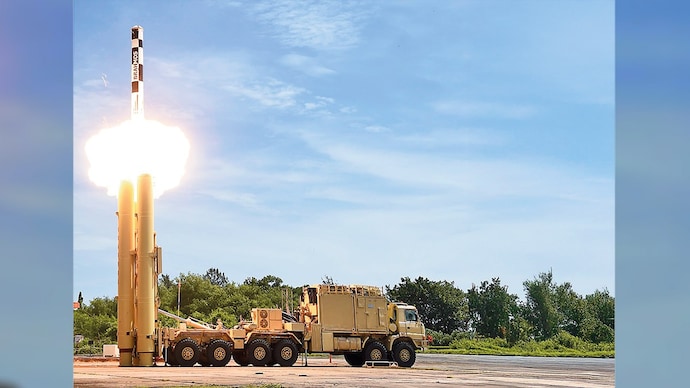
Recent global conflicts have made one thing clear—salvoes of missiles, swarms of drones and precision-guided munitions striking targets hundreds of kilometres away represent the front line in military face-offs. Operation Sindoor in May 2025 offered a glimpse of this emerging reality—India’s use of BrahMos, Pralay, SCALP cruise missiles, long-range artillery and kamikaze drones demonstrated a capacity for precision strikes against terrorist infrastructure and military targets across Pakistan. The operation also laid a question before India’s military planners: does India now need a dedicated rocket and missile force to better marshal its assets, or can existing structures deliver on ever-growing demands?
Recent global conflicts have made one thing clear—salvoes of missiles, swarms of drones and precision-guided munitions striking targets hundreds of kilometres away represent the front line in military face-offs. Operation Sindoor in May 2025 offered a glimpse of this emerging reality—India’s use of BrahMos, Pralay, SCALP cruise missiles, long-range artillery and kamikaze drones demonstrated a capacity for precision strikes against terrorist infrastructure and military targets across Pakistan. The operation also laid a question before India’s military planners: does India now need a dedicated rocket and missile force to better marshal its assets, or can existing structures deliver on ever-growing demands?
An integrated rocket/ missile force would provide a single framework for India’s growing inventory of conventional precision-strike weapons, including drones. Military planners believe that bringing them under a dedicated missile force would make it easier to manage resources, shorten decision cycles and enable faster responses during crises. Officials say that an integrated missile force would also firm up the emerging ‘Sindoor Doctrine’ of swift and calibrated conventional strikes below the nuclear threshold. Analysts point out that in an era where wartime supply chains cannot be guaranteed, better management of missile power is a necessity.
Currently, in the Indian military, rocket and missile systems are operated directly by the individual services. Through units of its three artillery divisions, the Indian Army operates surface-to-surface missiles (Pralay, Prahaar, Shaurya), longer-range cruise missiles (BrahMos, Nirbhay) and rockets through multi-barrelled launchers (Pinaka, Smerch). The Indian Air Force (IAF) has control over air-launched missiles like Astra, BrahMos-A and SCALP. Both the army and the IAF have units that operate an array of surface-to-air missile (SAM) defence systems like Akash, Barak-8 and S-400. The Indian Navy operates ship- and submarine-launched anti-ship and land attack missiles like the naval BrahMos along with ship-based surface-to-air defence systems like Dhanush. All nuclear-capable ballistic (Agni) and submarine-launched missiles (the K-series missiles) are managed by the Strategic Forces Command.
The strategic environment strengthens the argument in favour of a missile force. Both China and Pakistan have established dedicated missile and rocket forces, recognising long-range precision weapons as a central instrument of deterrence and coercion. Pakistan’s Army Rocket Force Command (ARFC) is modelled on China’s People’s Liberation Army Rocket Force (PLARF). India’s dispersed arrangements compare unfavourably with these integrated structures, say some experts.
The matter was noted by outgoing army chief General Upendra Dwivedi. “If we want to achieve an impact, both rockets and missiles can deliver it. We are looking at a rocket and missile force because Pakistan has established a rocket force and China has also created such a force. It is the need of the hour,” he said recently. Gen. Dwivedi clarified that military planners will have to decide whether the “rocket-cum-missile” force would be part of the army, operated directly under the Union ministry of defence or be under the control of the Chief of Defence Staff. He did indicate that it might initially be under the army’s artillery branch.
Defence Secretary R.K. Singh, too, recently confirmed that India is working to develop a conventional missile force spanning short- medium- and long-range missiles/ rockets. “Evolving global conflicts and Pakistan’s growing conventional missile capabilities have prompted this strategic shift,” Singh said.
Though military planners are tight-lipped, it is believed that a missile force will integrate the missiles to be used by the army, navy and air force under a single command. A senior MoD official claims, albeit guardedly, that the creation of such a force has strong backing from the topmost security apparatus, including the National Security Council, but has yet to get the final go-ahead.
According to Christopher Clary, associate professor of political science at the University at Albany, there is no universal model for how militaries organise their missile-based strike capabilities. Some countries like Russia and China maintain dedicated missile forces, others integrate assets within their nuclear command structures, while many distribute them among the three services.
RIVAL ROCKET FORCES
Pakistan prime minister Shehbaz Sharif announced the establishment of the ARFC on August 13, 2025. Earlier, speaking at the Shangri La Dialogue in May, Lt Gen. Nauman Zakaria, the ARFC commander, stated that the newly established force was strictly for conventional deterrence, highlighting the need for rapid reaction times.
Pakistan’s nuclear-capable, strategic missile arsenal is managed by Army Strategic Forces Command under the National Strategic Command. The ARFC will focus on conventional rocket/ missile systems like the Abdali, Ghaznavi, Fatah, and the Babur cruise missiles.
Experts say Op. Sindoor exposed holes in Pakistan’s strategic deterrence. “Pakistan is plugging the gap they had for long. Its missile inventory does not have many conventional missiles,” says Lt Gen. P. Ravi Shankar, former Director General of Artillery.
In contrast, China’s PLARF is one of the world’s largest missile forces, responsible for both nuclear-capable missiles and conventional long-range strike operations. Its inventory includes intercontinental ballistic missiles, intermediate- and medium-range systems and advanced hypersonic weapons. They provide China with the capability to conduct precision conventional strikes across the Indo-Pacific while maintaining a credible nuclear deterrent.
‘FORCE DUPLICATION’
Lt Gen. Shankar believes India possesses the nucleus of a future deep-strike force in its three artillery divisions, which integrate artillery pieces, rocket systems, BrahMos and other missiles and established command-and-control networks. Rather than creating a separate missile force, he advocates expanding these formations with newer long-range missiles, precision munitions, UAVs and joint-service staffing.
Gen. Shankar also proposes increasing the number of artillery divisions from the existing three to nine—four facing China, two towards Pakistan, one for the Andaman and Nicobar Command and two more for the mainland. “What India needs is an integrated DRAM—Drones, Rockets, Artillery and Missiles—ecosystem networked through ISR (intelligence, surveillance and reconnaissance) and joint theatre commands. The objective should be deep-strike dominance, not organisational duplication,” he says.
Similarly, Lt Gen. Anil K. Ahuja, former army corps commander and an artillery officer, believes a missile force would require substantial logistical investments that could be directed towards expanding missile/ rocket inventories. He advocates more coordination between the army and the IAF on long-range missile strike roles through clearer allocation of responsibilities. “The debate should not be about creating a missile force for its own sake, but about generating maximum long-range strike capability at the lowest organisational cost,” Lt Gen. Ahuja concludes.
Even Clary believes that an integrated rocket force is not necessary for India at this stage. Most militaries, he reiterates, distribute strike capabilities across traditional services and rely on joint targeting mechanisms to coordinate their use. “An integrated force would only make sense if such joint processes were failing or if the senior leadership felt the services were not prioritising long-range strike capabilities,” Clary says.
While the government seems keen on a missile force, experts are divided on the issue. All, however, agree that India’s rocket/ missile forces need constant expansion through newer indigenous systems.

