From the Editor-in-Chief
As the government goes into structured crisis management mode, the Iran war now highlights the urgent need to examine our long-term energy security
Let not the transient moves of the stock market lull you. The war in West Asia has unleashed one of the biggest energy supply shocks of our times. The International Energy Agency reckons its full eventual impact will outmatch the Ukraine war and the twin oil shocks of the 1970s put together. The danger lies not only in its scale but also in its timing. Ascribe it first to timing. The world economy was already in a precarious state with Donald Trump’s tariff wars and talks of recession in the air. This was compounded by geography. The Strait of Hormuz conveys 20 per cent of the world’s oil and gas, a bulk of it to Asia’s powerhouse economies. For India, it brings 90 per cent of its Liquefied Petroleum Gas (LPG) imports and half its crude. After a month, crude prices are still riding 50 per cent above pre-war levels, portending a domino effect on everything else. The world is also staring at a supply shock across essentials like fertilisers, critical metals and materials like helium. The collateral damage extends to the full range of economic activity from food production to high-end industries. The 1973 oil embargo had led to a decade-long global stagflation; economists fear the return of that spectre. The Indian government has been proactive in mitigating the immediate agony, but experts forecast a quantum of demand destruction as well as investment slowdown. The Goldilocks moment we spoke of at the end of 2025 has lost its shine.
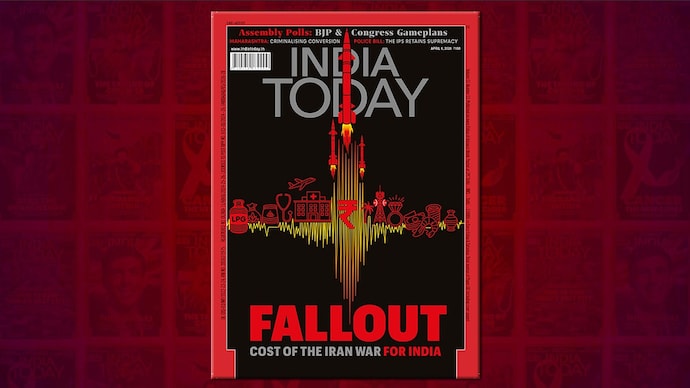
Our cover story traces the spread of this crisis through India’s economy and into the everyday life of its citizens. The first flashpoint was LPG. The Centre kept it from erupting into a full-blown crisis through urgent diplomacy, prudent rationing and diversion from commercial supplies. But panic and chaos could not be entirely staved off amid soaring prices, delayed refilling and rampant black marketing. Many small restaurants and street eateries have shut shop. Piped natural gas, where India is more comfortably placed, still feeds only 16.5 million points as against LPG’s footprint of 330 million. As for petroleum, India’s strategic reserves are well below the 90-day global benchmark: not ideal for the world’s third largest importer, with 85 per cent dependence. Mercifully, retail prices are partly insulated from global volatility. Going by their disclosures, oil companies made windfall profits of nearly Rs 2 lakh crore in the fiscals since FY23. So, they presumably have the capacity to absorb the shock. But if the war stretches on, their buffers will evaporate fast. Even if it ends soon, pain has entered the system and may linger. In a financialised world, crises are financialised too. Crude oil is now in the sight of market speculators, and analysts note it’s not Iran but insurance that first closed the Strait of Hormuz. High war risk premia are likely to linger.
The deeper lesson lies in the second-order effects. Even when shipping lanes fully reopen, higher insurance costs will continue to raise freight charges and make exports more expensive in a world already short of demand. The UAE also represents a $39 billion export market, soaking up about 7,000 product categories, besides being a vital re-export corridor. Aviation is feeling the strain too. Higher jet fuel prices, steeper insurance and longer diversions have added at least a 20 per cent strain to already thin airline margins, with passengers paying heavy surcharges. In the hospitality sector, foreign tourist arrivals are projected to decline by up to 50 per cent; the industry is banking on domestic demand, which, too, may weaken under pressure. Another jolt may come from the 10 million Indians in the Gulf, who may be forced to return if the war prolongs, endangering the $50 billion remittances they bring.
Indians will feel the pinch in many mundane areas. Healthcare is one. A whole array of pharma products are petroleum derivatives, from aspirin to paracetamol to the basic diabetes drug metformin. Wholesale drug prices are already up 10-15 per cent. That’s not counting plastic syringes, IV bags, disposable gloves and the like. Helium, a byproduct of gas extraction, is the only element that can cool the magnets inside MRI scanners. Besides, it’s also vital in chip fabrication, fibre-optics, space and science research. It will impact our Semiconductor Mission. Industrial diesel has been upped by 25 per cent; its weight on mining and manufacturing will soon percolate through a wide range of consumer prices.
India’s buffer stocks may have alleviated the food inflation scare, but perhaps not for long. Global fertiliser prices have soared 30-40 per cent, and over 70 per cent of urea imports come from West Asia. The space to watch will be June-July, when demand peaks for kharif sowing. Far from the farms, the war has already wrought mayhem on stock markets, with BSE listed companies losing Rs 48.3 lakh crore, or 10.4 per cent, in market capitalisation up to March 23. In macroeconomic terms, India is facing a big fiscal stress test, with a potential Rs 1 lakh crore deviation in its budget calculations. The US-Israel and Iran may call truce at some point, but the Narendra Modi government is right to respond on a war footing. Drawing from the COVID playbook, high-level inter-ministerial groups have been activated for structured crisis management.
Opportunity often comes wrapped in adversity. The Trump tariffs saw us sign trade deals to find other markets and open our economy. It also meant the government had to ease several suffocating regulations and compliances that prevented us from being globally competitive. The Iran war now highlights the urgent need to examine our long-term energy security. The current conflict demonstrates that, despite all the talk of deglobalisation, we remain interconnected. It also shows, with brutal clarity, how quickly a distant conflict can enter every Indian home.
Let not the transient moves of the stock market lull you. The war in West Asia has unleashed one of the biggest energy supply shocks of our times. The International Energy Agency reckons its full eventual impact will outmatch the Ukraine war and the twin oil shocks of the 1970s put together. The danger lies not only in its scale but also in its timing. Ascribe it first to timing. The world economy was already in a precarious state with Donald Trump’s tariff wars and talks of recession in the air. This was compounded by geography. The Strait of Hormuz conveys 20 per cent of the world’s oil and gas, a bulk of it to Asia’s powerhouse economies. For India, it brings 90 per cent of its Liquefied Petroleum Gas (LPG) imports and half its crude. After a month, crude prices are still riding 50 per cent above pre-war levels, portending a domino effect on everything else. The world is also staring at a supply shock across essentials like fertilisers, critical metals and materials like helium. The collateral damage extends to the full range of economic activity from food production to high-end industries. The 1973 oil embargo had led to a decade-long global stagflation; economists fear the return of that spectre. The Indian government has been proactive in mitigating the immediate agony, but experts forecast a quantum of demand destruction as well as investment slowdown. The Goldilocks moment we spoke of at the end of 2025 has lost its shine.
Our cover story traces the spread of this crisis through India’s economy and into the everyday life of its citizens. The first flashpoint was LPG. The Centre kept it from erupting into a full-blown crisis through urgent diplomacy, prudent rationing and diversion from commercial supplies. But panic and chaos could not be entirely staved off amid soaring prices, delayed refilling and rampant black marketing. Many small restaurants and street eateries have shut shop. Piped natural gas, where India is more comfortably placed, still feeds only 16.5 million points as against LPG’s footprint of 330 million. As for petroleum, India’s strategic reserves are well below the 90-day global benchmark: not ideal for the world’s third largest importer, with 85 per cent dependence. Mercifully, retail prices are partly insulated from global volatility. Going by their disclosures, oil companies made windfall profits of nearly Rs 2 lakh crore in the fiscals since FY23. So, they presumably have the capacity to absorb the shock. But if the war stretches on, their buffers will evaporate fast. Even if it ends soon, pain has entered the system and may linger. In a financialised world, crises are financialised too. Crude oil is now in the sight of market speculators, and analysts note it’s not Iran but insurance that first closed the Strait of Hormuz. High war risk premia are likely to linger.
The deeper lesson lies in the second-order effects. Even when shipping lanes fully reopen, higher insurance costs will continue to raise freight charges and make exports more expensive in a world already short of demand. The UAE also represents a $39 billion export market, soaking up about 7,000 product categories, besides being a vital re-export corridor. Aviation is feeling the strain too. Higher jet fuel prices, steeper insurance and longer diversions have added at least a 20 per cent strain to already thin airline margins, with passengers paying heavy surcharges. In the hospitality sector, foreign tourist arrivals are projected to decline by up to 50 per cent; the industry is banking on domestic demand, which, too, may weaken under pressure. Another jolt may come from the 10 million Indians in the Gulf, who may be forced to return if the war prolongs, endangering the $50 billion remittances they bring.
Indians will feel the pinch in many mundane areas. Healthcare is one. A whole array of pharma products are petroleum derivatives, from aspirin to paracetamol to the basic diabetes drug metformin. Wholesale drug prices are already up 10-15 per cent. That’s not counting plastic syringes, IV bags, disposable gloves and the like. Helium, a byproduct of gas extraction, is the only element that can cool the magnets inside MRI scanners. Besides, it’s also vital in chip fabrication, fibre-optics, space and science research. It will impact our Semiconductor Mission. Industrial diesel has been upped by 25 per cent; its weight on mining and manufacturing will soon percolate through a wide range of consumer prices.
India’s buffer stocks may have alleviated the food inflation scare, but perhaps not for long. Global fertiliser prices have soared 30-40 per cent, and over 70 per cent of urea imports come from West Asia. The space to watch will be June-July, when demand peaks for kharif sowing. Far from the farms, the war has already wrought mayhem on stock markets, with BSE listed companies losing Rs 48.3 lakh crore, or 10.4 per cent, in market capitalisation up to March 23. In macroeconomic terms, India is facing a big fiscal stress test, with a potential Rs 1 lakh crore deviation in its budget calculations. The US-Israel and Iran may call truce at some point, but the Narendra Modi government is right to respond on a war footing. Drawing from the COVID playbook, high-level inter-ministerial groups have been activated for structured crisis management.
Opportunity often comes wrapped in adversity. The Trump tariffs saw us sign trade deals to find other markets and open our economy. It also meant the government had to ease several suffocating regulations and compliances that prevented us from being globally competitive. The Iran war now highlights the urgent need to examine our long-term energy security. The current conflict demonstrates that, despite all the talk of deglobalisation, we remain interconnected. It also shows, with brutal clarity, how quickly a distant conflict can enter every Indian home.

