Living histories | Indian art at The Hermitage
A dedicated contemporary Indian art exhibition is opening at St. Petersburg's storied Hermitage Museum
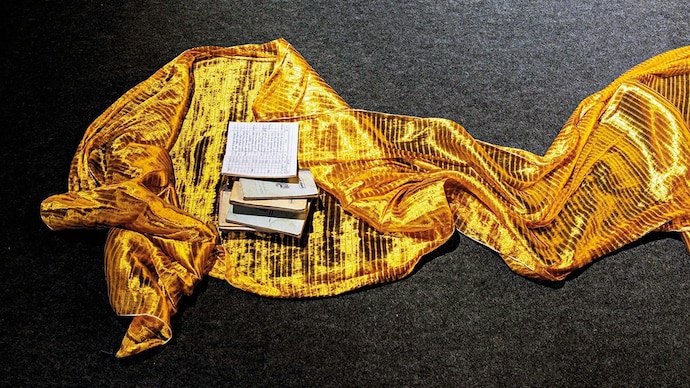
For the first time in its 260-year history, the State Hermitage Museum in St. Petersburg is presenting a focused view of India’s contemporary art. Sediments of Becoming: Fossilised Present, Summoned Pasts showcases works of 11 Indian artists along with historical objects like icons, frescoes and decorative art from the Hermitage’s collection. “The overarching concern was about narrative authority—about art that is considered complex enough, rigorous enough and urgent enough to stand alongside the masters in an institution of world standing,” says Tunty Chauhan, director of Delhi’s Gallery Threshold and co-curator of the exhibition with Marina Schulz, head of the Hermitage’s contemporary art department.
For the first time in its 260-year history, the State Hermitage Museum in St. Petersburg is presenting a focused view of India’s contemporary art. Sediments of Becoming: Fossilised Present, Summoned Pasts showcases works of 11 Indian artists along with historical objects like icons, frescoes and decorative art from the Hermitage’s collection. “The overarching concern was about narrative authority—about art that is considered complex enough, rigorous enough and urgent enough to stand alongside the masters in an institution of world standing,” says Tunty Chauhan, director of Delhi’s Gallery Threshold and co-curator of the exhibition with Marina Schulz, head of the Hermitage’s contemporary art department.
Works include a multimedia installation by Afrah Shafiq that builds an archive of Soviet-era fairy tales in the form of a video game; Debasish Mukherjee’s mixed media on linen that maps how rapid urbanisation is transforming India’s heritage cities; conceptual artist Lakshmi Madhavan’s Kasavu (traditional gold/ silver borders that are a symbol of Kerala's textiles) that highlights the cultural memory of the weaver and V. Ramesh’s triptych celebrating the life of Nandanar, a 7th-century Dalit saint who overcame social barriers through intense devotion. “The artists were selected across genres to show the conceptual rigour of their practice,” says Chauhan. “It was a conscious effort to choose mid-career artists with a distinct vocabulary.”
Contemporary Indian art has not been shown in Russia in recent years. “The exhibition emerged not from official visits or institutional exchanges but from friendships, horizontal connections and a desire to understand the other,” says Schulz.
—The exhibition will be on display from June 4 to October 4

