Strings without borders | Sitar virtuoso Purbayan Chatterjee
Sitar virtuoso Purbayan Chatterjee is rewriting the rules of classical music through global collaborations
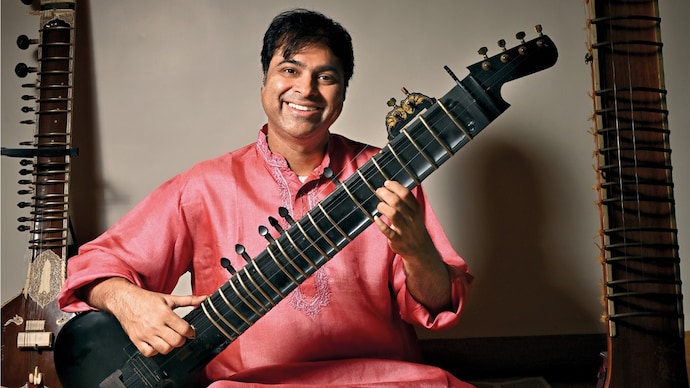
If you ever spot sitar maestro Purbayan Chatterjee on a flight, deeply immersed in listening to his headphones and staring out the window, you might think he is simply unwinding between gruelling performance schedules. In reality, he is working his second job—being a “good thief”. Borrowing a piece of advice from his close friend and mentor, jazz icon Ranjit Barot, who once told him, “You are a good artist when you are a good thief,” Chatterjee spends his travel hours listening to everything from John Mayer and Miles Davis to Taylor Swift and progressive metal. No, he isn’t looking to plagiarise a melody; he is looking for an idea or a philosophy that inspires him enough to weave it into his classical performances.
If you ever spot sitar maestro Purbayan Chatterjee on a flight, deeply immersed in listening to his headphones and staring out the window, you might think he is simply unwinding between gruelling performance schedules. In reality, he is working his second job—being a “good thief”. Borrowing a piece of advice from his close friend and mentor, jazz icon Ranjit Barot, who once told him, “You are a good artist when you are a good thief,” Chatterjee spends his travel hours listening to everything from John Mayer and Miles Davis to Taylor Swift and progressive metal. No, he isn’t looking to plagiarise a melody; he is looking for an idea or a philosophy that inspires him enough to weave it into his classical performances.
This uninhibited willingness to learn other musical languages is precisely what has made the 49-year-old one of the most exciting, genre-defying forces on the global stage today. It is a mindset that beautifully sets the stage for an incredibly ambitious season ahead. This summer, the sitar virtuoso is living out his philosophy in two deeply interconnected ways—first, by embarking on a six-city India tour alongside long-time collaborator flutist Rakesh Chaurasia; and second, by dropping his cross-cultural album, Feathered Creatures, a striking dialogue with Grammy-winning American guitarist Mark Lettieri of Snarky Puppy.
“Rakeshbhai and I made an album called Saath Saath in 2022 and toured with it in the US and UK. We have been doing jugalbandi for the past three decades now and we wanted to celebrate this long partnership with a tour,” he shares. The Saath Saath six-city tour, starting from May 30, will see the duo perform in Kolkata, Delhi, Surat, Nagpur, Chennai and Mumbai. As for the new album with Lettieri, Chatterjee shares that its foundation lies in the friendship and bonhomie he enjoys with the acclaimed guitarist and their shared curiosity for strings. They didn’t rush the album—over the course of three years, they meticulously sculpted, layered and stripped back sounds to create Feathered Creatures. Their organic camaraderie is the secret sauce behind how an Indian sitar and an American electric guitar strike a delicate, ego-free balance without overpowering one another.
Collaborations, Chatterjee believes, are all about venturing into the world. “For any artist, there are two crucial dimensions to your identity—where you are coming from, and where you are going,” he says, adding that the beautiful irony is that the deeper your understanding of your roots, the more effectively you can navigate where you want to go. “But it also works in reverse. The more courageously you venture out into new territories without inhibition, the better you ultimately understand your own origins,” he adds.
The torchbearer of the Senia Maihar Gharana was just 15 years old when he received the President of India Award for Best Instrumentalist. As he candidly recalls, his teenage self was mostly thinking—“The food is going to be great at home tonight, my peers are going to look at me differently, and the girls are definitely going to give me a lot of attention!” The euphoria lasted for a couple of days. What kept him grounded was the advice he received from his father and guru, sitarist Pandit Parthapratim Chatterjee. “He told me to be very happy today and forget about it tomorrow,” recalls Chatterjee.
That foundational grounding gave him the ultimate creative freedom. It allowed him to shed the heavy burden of legacy and traditional expectations. He grew his hair long, rocked a goatee, rebelled by playing the sitar standing up, and eventually came to a point where he was comfortable being who he is—a classical musician.
Now, whether he is bridging the gap between classical ragas and mainstream pop, or collaborating with western music giants, he is not afraid to push the envelope. “You will garner some criticism on the way, but let’s face it, you will garner some criticism anyway. So, why not take risks and do what your heart really desires?” he says. One of his most ambitious works to date, Unbounded (Abaad) (2021), traverses multiple genres, including jazz, Latin, folk, Sufi, country and Hindustani classical music, and features Indian and international musicians. “I believe it is very important to build these bridges across genres and countries, especially in today’s divided times,” he says.
Chatterjee is also working closely with actor Farhan Akhtar for his Hollywood debut in the Beatles biopic where Akhtar portrays the sitar maestro Pandit Ravi Shankar. He is clearly impressed by Akhtar’s ability to pick up the nuances of the sitar quickly, owing to the fact that the actor is also a musician and plays the guitar. “He asked me to show him how to play ‘Sa Re Ga Ma’ on the sitar only twice and he almost got it right,” he smiles, adding that they have been constantly exchanging notes on WhatsApp.
—The Saath Saath tour will travel across six cities: Kolkata (May 30), Delhi (June 6), Surat (Jun. 13), Nagpur (June 20), Chennai (June 27) and Mumbai (June 28)

