A space of freedom | Kader Attia's vision for Kochi-Muziris Biennale
Kader Attia, the first non-Indian curator of the Kochi Biennale, believes in collaboration and creating bridges between communities
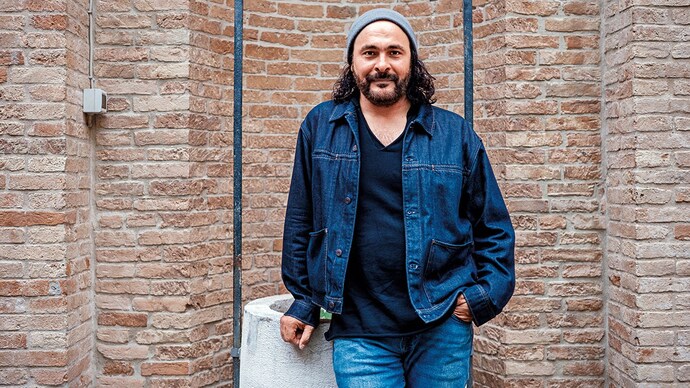
Colonialism refuses to become history. Memory cannot be archived. How can repair ever be ‘complete’ when ancient wounds continue to stalk us? When Algerian-French artist Kader Attia curated the Berlin Biennale in 2022, many reached for an easy classification—‘decoloniality’—ignoring the fact that he has always resisted linear time. Multiple fissures run through his work: who can define civilisation, significance, aesthetics, and expertise? By incorporating fractured perspectives—oral histories and unofficial records—he disrupted the authority of western institutions at the Berlin Biennale. But Attia, the first non-Indian curator of the Kochi-Muziris Biennale, smiles at the first question.
Colonialism refuses to become history. Memory cannot be archived. How can repair ever be ‘complete’ when ancient wounds continue to stalk us? When Algerian-French artist Kader Attia curated the Berlin Biennale in 2022, many reached for an easy classification—‘decoloniality’—ignoring the fact that he has always resisted linear time. Multiple fissures run through his work: who can define civilisation, significance, aesthetics, and expertise? By incorporating fractured perspectives—oral histories and unofficial records—he disrupted the authority of western institutions at the Berlin Biennale. But Attia, the first non-Indian curator of the Kochi-Muziris Biennale, smiles at the first question.
“Don’t you think it is a bit too early to disclose the key elements of my curatorial vision for KMB 2027? But yes, I want to draw from the city’s history and focus on creating bridges between communities, between Kochi and the rest of the world, in the real world—as opposed to the digital one. It is important to generate spaces of freedom where dialogue and exchange can flow effortlessly.” Returning to Kochi, where he once exhibited, Attia describes the city as a harbour shaped by centuries of exchange. Human connections and influences, he insists, have blended in the town to create a multi-layered culture.
Known for collaborations across disciplines, Attia suggests that KMB 2027 will likely bring together psychoanalysis, psychiatry, history, architecture, craft, cinema, and cooking, while also emerging from conversations with local communities. “Upon arriving in Kochi, I could sense the imposed presence of European colonisers, but also how this part of Indian society has absorbed these influences and re-appropriated them from its own perspective. This is something I will keep in mind,” he adds.
Migration, especially the Mediterranean as a tragic corridor, remains central to his thought. However, Attia insists that the tragedy has less to do with the sea than with “wild capitalism”. Seeing art through the lens of poetry—as something that binds one to the cosmos—he cautions against a future in which desire is increasingly bypassed by digital automation. “We must invest much more in verse before it becomes artificially predictable,” he says.
Attia has been suspicious of beauty when it anaesthetises violence, and believes that artists serve as bridges between visible and invisible worlds. “That is the reason art has always been a sacred space-time.”

