Staying power | MIDIval Punditz's new album 'Love And Machines'
Long-running electronic music duo MIDIval Punditz are back with a much-awaited new album
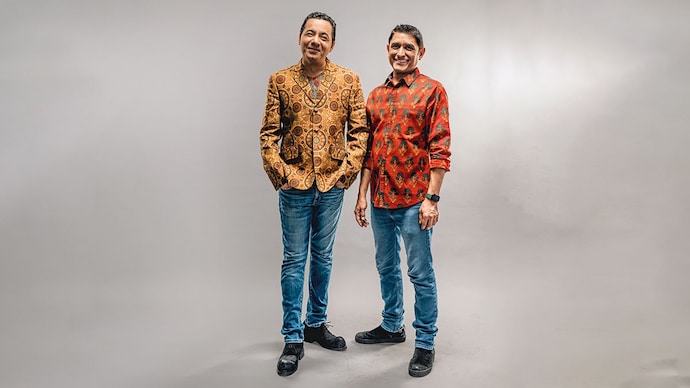
In an age when artists are expected to feed the algorithms by consistently dropping new material every few weeks, it might seem that the 11 years it took electronic music duo MIDIval Punditz to follow up their last album, 2015’s Light, with their recently-released fifth full-length effort, Love and Machines, was a bad career move. Yet it may be the very reason they’re still together.
In an age when artists are expected to feed the algorithms by consistently dropping new material every few weeks, it might seem that the 11 years it took electronic music duo MIDIval Punditz to follow up their last album, 2015’s Light, with their recently-released fifth full-length effort, Love and Machines, was a bad career move. Yet it may be the very reason they’re still together.
Composer-producers and high-school friends Gaurav Raina and Tapan Raj formed MIDIval Punditz in 1997, which makes them one of the longest-running Indian independent music acts around. The reason behind their longevity is that “we allow each other the time to evolve and do other things”, says Raj. “We fully support each other’s aspirations outside [of the duo]. Once we’re done with those, we come back to being the Punditz. Then, we treat it quite sacredly. In some other acts that have fallen apart, [venturing] outside the band has become a point of friction.”
Over the past decade—during which they’ve put out a handful of singles—Raina has turned his attention to composing scores and soundtracks for web series such as Made in Heaven and Dabba Cartel with singer-songwriter Tarana Marwah aka Komorebi, whom he married in 2025. Raj has focused on his career as a DJ, playing residencies at clubs in their home city of Delhi and simultaneously building startups in the enterprise software space.
In the interim, they never stopped making music, and constantly sent each other tracks they thought could work for MIDIval Punditz. “The desire to make an album never goes away,” Raina says. “I guess we’re old-school like that.” When they had about eight tunes in total, they decided it was time to record the LP. Love and Machines is a familiar yet fresh collection that adds a few new flourishes to their signature
Blend of electronic music with Indian folk, semi-classical and sufi elements.
The difference this time around was that their solo work naturally influenced the sound. “Tapan, because of his rise in the DJ space, has got a stronger sense of fast rhythms and dance floor vibe [and my] going into OTT has made my composition a little more emotional,” says Raina. These changes “were more than welcome”, he adds. “Because it’s just who we are, right? How else does music have individuality, if not that of the individuals themselves? To be able to capture that honestly was the intention of this album.”
Fittingly, the featured artists on Love and Machines are a mix of both old and new collaborators. Among those they reunite with are folk singer Malini Awasthi, who appears on the trippy ‘Jogi’ and drum and bass cut ‘Koyaliya’, and Papon, who returns on the poignant ballad ‘Na Jaaney Kyun’. Singers that finally make their debut on a MIDIval Punditz record are Shruti Pathak, with whom Raina has performed at concerts by Karsh Kale and who renders the ghazal ‘Dafatan’. There is also Shubha Mudgal, whom they got on board for the evocative kajri ‘Sakhi’. The lilting ‘Rangeeli’ features Indian Ocean’s Rahul Ram on bass. Percussionist Vineet Singh aka Bang It Paaji, whom they enlisted for the experimental instrumental ‘Encrypted’, gelled so well with the duo that he’s now a part of their live ensemble.
They’re all tracks that will fit seamlessly into their set list when they take the album on tour towards the end of the year. Fortunately for fans, they’ve continued to perform relatively frequently. Most recently, they played festivals such as Motoverse in Goa and SulaFest in Nashik. Such gigs serve as heartening reminders of the strong bond the pair share. “We may not talk to each other for a week,” says Raina. “But we always come back and remember that we’re friends before we’re business partners. That’s important [because] you need something that keeps the foundation intact. So, when there’s a problem, it gets handled.”

