The politics of visibility | Abinash Bikram Shah's 'Elephants in the Fog'
Abinash Bikram Shah's Cannes-winning debut feature, Elephants in the Fog, marks a watershed moment for Nepal's independent cinema movement
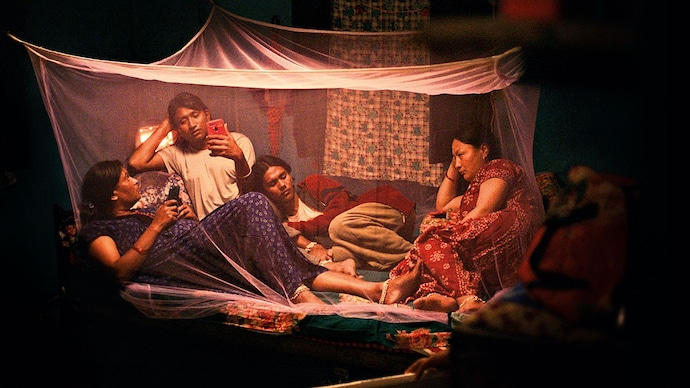
Abinash Bikram Shah is looking forward to some rest because, deep inside, he can’t wait to get back to his next project, which is reviving a decade-old script that went into cold storage. The filmmaker has marked a shift for Nepali cinema this year, as his debut feature film, Elephants in the Fog, has won the Un Certain Regard Jury Prize at the Cannes Film Festival, one of the most prestigious honours marking standout new talent in international cinema.
Abinash Bikram Shah is looking forward to some rest because, deep inside, he can’t wait to get back to his next project, which is reviving a decade-old script that went into cold storage. The filmmaker has marked a shift for Nepali cinema this year, as his debut feature film, Elephants in the Fog, has won the Un Certain Regard Jury Prize at the Cannes Film Festival, one of the most prestigious honours marking standout new talent in international cinema.
It’s a story of the kinnar or transgender community in Nepal’s southern Terai region, and follows Pirati, a trans community leader whose life is disrupted after one of her daughters disappears. The film is structured like a thriller, exploring the themes of belonging, exclusion and survival within Nepal’s transgender community. What makes the storytelling rather exceptional is the way Shah has involved community members not just as actors but also in the film’s production, which is a personal win of sorts for the filmmaker.
“Visibility means nothing if it lacks depth,” Shah says. “Otherwise, it’s reduced to mere tokens and political talking points, and I wanted to avoid that at all costs.” Through the film, he reflects on Nepal’s uneven progress on gender rights. The country legalised same-sex marriage in 2023, and yet, in April this year—days before Shah’s Cannes win—the authorities stopped processing applications from transgender people seeking to change their legal gender on identity documents.
Shah positions the film within this gap, where, rather than explicitly arguing policy, it demonstrates the emotional and physical consequences of a society that promises rights while often denying dignity in practice. He spent over two years immersing himself in the community. “It was imperative for me to unlearn my privileges and assumptions,” Shah says, and for that, there could be no shortcuts whatsoever. The film is expected to release in theatres in Nepal in September, and Shah hopes it’ll find takers in India too. “Art is for everyone,” he says, “and everyone should be able to take part in it.”

