Comedy of errors | Mohammed Hanif's 'Rebel English Academy'
Mohammed Hanif employs satire to good effect in his new novel, Rebel English Academy
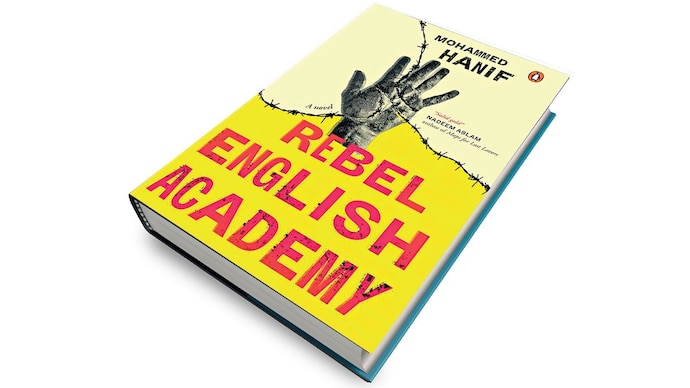
Mohammed Hanif’s amusing new novel, Rebel English Academy, opens in 1979—things are not quite okay in OK Town, Pakistan, a nondescript place whose name speaks for itself. Rumours abound that the recently executed prime minister, Zulfikar Ali Bhutto, is still alive, prompting his supporters to foment mischief. Captain Gul, an intelligence officer, has been despatched there on a “punishment posting”, where his many problems include former lovers with pregnancy claims, an annoying man Friday and unruly civilians threatening to immolate themselves.
Mohammed Hanif’s amusing new novel, Rebel English Academy, opens in 1979—things are not quite okay in OK Town, Pakistan, a nondescript place whose name speaks for itself. Rumours abound that the recently executed prime minister, Zulfikar Ali Bhutto, is still alive, prompting his supporters to foment mischief. Captain Gul, an intelligence officer, has been despatched there on a “punishment posting”, where his many problems include former lovers with pregnancy claims, an annoying man Friday and unruly civilians threatening to immolate themselves.
The civilian principals of the story have their own problems. Sir Baghi, an English teacher at the titular Rebel English Academy, is an atheist, a gay man and a lapsed revolutionary in a country that has little appetite for any of these. When his friend and landlord, the local maulvi, tells him he needs to shelter a runaway widow, Baghi is both perplexed and irritated. The third pillar of this plot is Sabiha Bano, the widow, a running champion on the run, whose husband has died in a mysterious fire. Soon, she will find herself becoming a target of the lustful Captain Gul. The story alternates between these three points of view, with Bano’s portions told through autobiographical homework assignments. The cast is rounded up by a glad-eyed imam, a conscience-free cop and a shady advocate who moonlights as a palm-reader.
Despite deaths, disappearances and assaults throughout the novel, Hanif’s mode is satire, not pure social realism. The army, the police, the legal system, religious leaders and Communist revolutionaries are all fair game for laughs. Hanif has a distinct, irreverent voice; the comedy is both broad and pointed. Of the three central figures, Bano’s portions felt the weakest. A very funny book for the large part that loses steam by the end.

