Maharashtra | Quotas within quota
The volatile debate over SC sub-categorisation sharpens in the state. In special focus is the Buddhist Dalit cohort
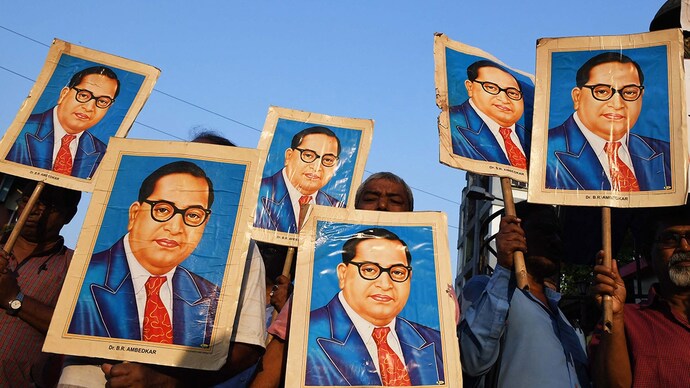
Before caste quotas return to the national headlines with the Census, Maharashtra is offering a sneak preview of the wars that lie ahead—with a proposed quota within a quota for Dalits. The siege is on the very birthplace of reservations in India, centred around Buddhist Dalits, the erstwhile Mahars, who exited Hinduism with Dr Babasaheb Ambedkar in 1956. So the chief question is on uneven development within Dalit communities, but a volatile subclause has been tagged: religion.
Before caste quotas return to the national headlines with the Census, Maharashtra is offering a sneak preview of the wars that lie ahead—with a proposed quota within a quota for Dalits. The siege is on the very birthplace of reservations in India, centred around Buddhist Dalits, the erstwhile Mahars, who exited Hinduism with Dr Babasaheb Ambedkar in 1956. So the chief question is on uneven development within Dalit communities, but a volatile subclause has been tagged: religion.
The Scheduled Castes have a 13 per cent quota. In 2011, they numbered around 13.2 million out of Maharashtra’s 112.3 million population. Hindu Dalit bodies allege Buddhist Dalits, the largest sub-bloc at about 60 per cent, secure most of the benefits; the latter refute this narrative.
‘HINDU VS BUDDHIST’
This old debate will now be addressed within a formal process. In March, a one-man committee under former Patna High Court judge Anant Manohar Badar submitted its report on sub-categorisation of SC reservations. The state has appointed another committee, under chief secretary Rajesh Aggarwal, to invite suggestions and objections and conduct hearings—though the report is not public yet.
A total of 59 castes are in the state’s SC list. Despite a rise in reach, the Sangh parivar has struggled to shed its Brahminical image. With disruptions in the Dalit sphere like Bhima-Koregaon behind it, Sangh affiliates have countered with inroads into Hindu Dalit groups like the Matangs and Charmakars, who form the bulk of Hindu Dalits. New ring-fencing of categories, they say, will protect their interests.
This has a precedent in the state’s 30 per cent OBC quota: 11 per cent within that is set aside for Vimukta Jati (VJ) and Nomadic Tribes (NTs); the latter spectrum is further subdivided into denotified tribes or VJ (3 per cent), NT B-category (2.5 per cent), C-category (Dhangars, 3.5 per cent) and D-category (Vanjaris, 2 per cent).
RESERVATIONS OVER IT
Such a prospect for Dalits splits even the Mahayuti into a spectrum of opinions. Some BJP leaders, like MLC Amit Gorkhe, seek sub-quotas; others, like former BJP Rajya Sabha MP Amar Sable and ex-minister and NCP MLA Rajkumar Badole, well, have reservations. Sable demands a “fact-finding committee” to prove uneven benefits. Badole questions the haste around the Badar panel. “The new Census will yield contemporary data on the economic, educational, and political progress made by various SC casteswhy not first wait for its results,” he asks.
Badole also puts his finger on the key political point: any quota within a quota would divide the sense of consolidation among Dalits, whom he calls a homogenous class insofar as having been equal victims of untouchability. “A Presidential order is needed to include a caste in the SC category. How can it be left to the discretion of states to go in for sub-categorisation?” he asks.
Opposition leaders like Dr Amb-edkar’s grandson Prakash and former Congress minister Nitin Raut, too, have slammed the move. Raut questions the empirical and technical basis of the exercise, and asks how political reservations would be split. Five Lok Sabha seats and 29 assembly seats in Maharashtra are reserved for SCs.
Vikram Gaikwad of the Matang Samaj Sangh, a face of the second largest Dalit group, insists quotas presently pass over “the deprived sections”. Splitting them into four sub-categories will ensure all castes will benefit, instead of a select few, goes the line. The government says the process is on, though social justice minister Sanjay Shirsat admits the Badar report needs to be made public for the public to file their objections and suggestions.
Outside the policymaking sphere, the move promises to run into the main current of Dalit empowerment politics. Sociologist P.G. Jogdand, former dean, Faculty of Arts, University of Mumbai, says sub-categorisation is not in line with the constitutional scheme. “This is part of divide-and-rule politics,” he alleges. Refuting the contention that Buddhist Dalits had “cornered” quota benefits, he says the community is simply more numerous and was also the first to take to education and hence enabled to avail the opportunities.
The counter is six decades old. In 1965, the B.N. Lokur committee had noted: “It has been in evidence for some time now that a lion’s share [of quota benefits] is appropriated by numerically larger and politically well-organised communities. The smaller and more backward communities have tended to get lost, though more deserving of special aid.” That was the logic behind the Supreme Court’s August 2024 permission for state-level sub-quotas.

