Uttar Pradesh | A trail opens for those who witness the path in silence
Going beyond Ayodhya-Kashi-Mathura, UP opens up the Nath sect's spiritual circuit to the mindful
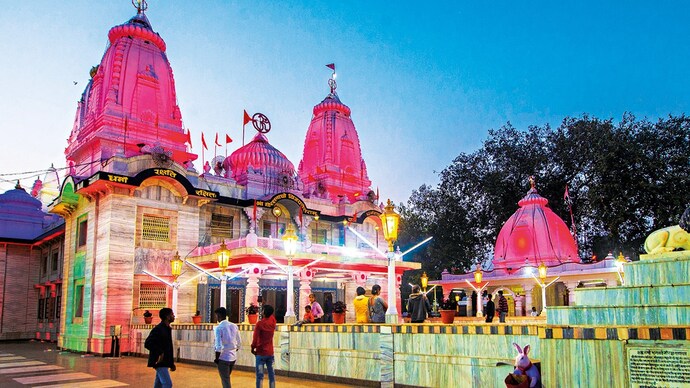
Its older circuit was known across India for centuries: Kashi, Mathura, then Prayagraj (Allahabad) for the Kumbh. Recent years have added to that Ayodhya, reinvented as a 21st-century pilgrimage hotspot. No wonder these cities were central to the state’s positioning of faith as a cultural and economic engine. But now, Uttar Pradesh is trawling deeper into its spiritual geography: quieter places on its native map of the soul that the pan-India throngs are less familiar with, places that tap into a ‘little culture’ distinct from the Hindu mainstream.
Its older circuit was known across India for centuries: Kashi, Mathura, then Prayagraj (Allahabad) for the Kumbh. Recent years have added to that Ayodhya, reinvented as a 21st-century pilgrimage hotspot. No wonder these cities were central to the state’s positioning of faith as a cultural and economic engine. But now, Uttar Pradesh is trawling deeper into its spiritual geography: quieter places on its native map of the soul that the pan-India throngs are less familiar with, places that tap into a ‘little culture’ distinct from the Hindu mainstream.
Across that scattered landscape, stretching from Gorakhpur in eastern UP to Mahoba in Bundelkhand, the state is seeking to spruce up its old Nathpanthi spiritual circuit into a modern pilgrim tourism network. The circuit will connect temples, caves, monasteries, meditation centres and religious sites linked to the Nath sect with infrastructure, branding and improved connectivity.
The Nath tradition is a Shaivite ascetic stream whose evolution dates back to the 9th-12th centuries. Revering Shiva as Adinath, or the original guru, the sect is associated with Matsyendranath and his disciple Guru Gorakhnath, who helped shape it into a wider spiritual movement in medieval north India. At its centre: Gorakhnath Temple in Gorakhpur, headquarters of the Gorakshapeeth, where Yogi Adityanath himself has been mahant since 2014. The larger footprint extends from Mahoba and Chitrakoot in Bundelkhand to Bareilly in the west, and from Amethi and Ayodhya in central UP to Balrampur and Shravasti in the east.
Of late, UP has invested heavily in religious infrastructure across sites: beyond Kashi, Mathura-Vrindavan and Ayodhya, teerths like Vindhyachal in Mirzapur, Naimisharanya in Sitapur, Sambhal and Shukratirth in Muzaffarnagar. Roads, railway stations and airport connectivity around temple towns have seen large-scale upgrades. Alongside, the tourism department has expanded the yearly calendar of organised festivals, cultural events and spiritual gatherings. Officials say the objective is to sustain footfalls beyond traditional occasions and encourage repeat tourism.
Guru Gorakhnath, as founder-preceptor, is revered by Nathpanthis across UP, Uttarakhand, Rajasthan, Bihar, Maharashtra and Nepal. Unlike traditions centred around a single shrine, the Nath circuit reveals its itinerant shramanism, being spread through monasteries, caves, meditation sites and temples associated with yogic practice and ascetic lineages. The state now wants to convert these dispersed spiritual locations into an integrated, navigable network.
The latest addition to that effort is Mahoba’s Gorakhgiri Parvat, where a Rs 11.21 crore tourism project has now been completed under the Centre’s Swadesh Darshan 2.0 scheme. The site, associated with Guru Gorakhnath and his disciple Siddhodeepaknath, is being developed as part of the Nath-linked sub-circuit within UP’s broader framework of 12 thematic tourism circuits that seek to tap into messaging more profound than mere recreation: these are linked to the Ramayana, Krishna-Braj, Buddhism, the Mahabharata, Shaktipeeths, the Sufi-Kabir ways, Jainism, Bundelkhand, Eco-Tourism, Wildlife and the Freedom Struggle.
The Mahoba project includes a meditation centre, open-air theatre, tourist facilitation centre, sanitation infrastructure, pathways, vendor kiosks and a ceremonial entrance gate. Officials say the model is designed not just for pilgrimage, but for longer stays that can feed into local economic activity. Mahoba already receives nearly 2.8 million visitors annually. Improved infrastructure is expected to convert the older itinerant pilgrim footfalls into a sustained tourism economy.
A STATUE IN AMETHI
State tourism and culture minister Jaiveer Singh describes Gorakhgiri as a vital spiritual site that has long stayed outside the mainstream. “We are working to ensure significant destinations beyond established centres also receive infrastructure and visibility. Gorakhgiri is an important step for Bundelkhand’s tourism landscape,” he says.
Amethi will see a 25-foot bronze statue of Guru Gorakhnath, to be sculpted at a cost of Rs 5.95 crore. This is coming up in Jais, regarded by many as his birthplace. In Shravasti, work has been completed at the Vibhutinath temple complex in Sirsiya, which attracts over 1.5 million devotees annually, at a cost of Rs 3.27 crore. In Chitrakoot, tourism work worth Rs 1.81 crore is under way at Paleshwarnath hill temple. Besides the Devi Patan temple in Balrampur and Nath Math in Ayodhya, officials say talks are on to strengthen linkages with Nepal, where the Nath tradition has a strong historical presence.
Amrit Abhijat, additional chief secretary for tourism, culture and religious affairs, says the idea is to diversify UP’s spiritual tourism economy beyond a handful of major cities. “The state has already developed strong tourism identities around Ram, Krishna, Buddhism and Shaktipeeths. Sites linked to Gorakhnath present a new opening,” he says. What’s novel here is that, rather than concentrate sanctity at one site, a sacred geography is unveiled across paths trodden by ancient monks.

