Nomination shock | Meenakshi Natarajan
How Meenakshi Natarajan lost a Rajya Sabha seat the Congress thought secure
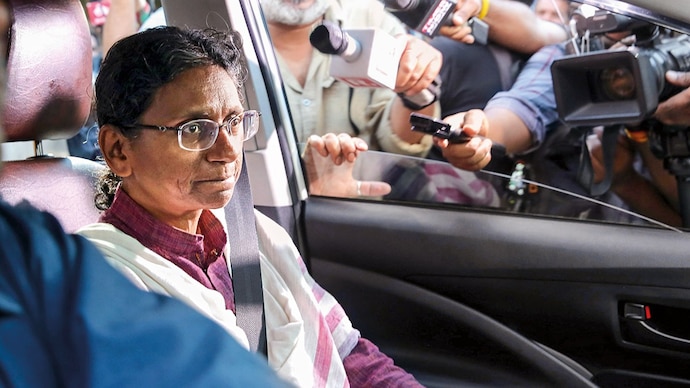
The cancellation of Meenakshi Natarajan’s Rajya Sabha nomination in Madhya Pradesh says more about the Congress than the BJP. It exposes the party’s chronic infighting, poor preparedness and refusal to learn from past mistakes. The BJP did what any party with an aggressive election machinery does. It found, or, as the Congress alleges, ‘invented’ a weakness in the opposition candidate’s papers, raised an objection and converted a contest into an unopposed win.
The cancellation of Meenakshi Natarajan’s Rajya Sabha nomination in Madhya Pradesh says more about the Congress than the BJP. It exposes the party’s chronic infighting, poor preparedness and refusal to learn from past mistakes. The BJP did what any party with an aggressive election machinery does. It found, or, as the Congress alleges, ‘invented’ a weakness in the opposition candidate’s papers, raised an objection and converted a contest into an unopposed win.
The math had looked straightforward. In the 230-member MP assembly, each RS candidate needed 58 first-preference votes. With 164 MLAs, the BJP could win two seats; with 62, the Congress could win one (two MLAs have cases in court and couldn’t vote). But the BJP fielded a third candidate, Mahesh Kewat, forcing a contest. On June 9, scrutiny day, the BJP objected that Natarajan had not disclosed a pending Hyderabad court matter in her Form 26 affidavit. The returning officer cited an incomplete form and concealment of facts and rejected her nomination. On June 11, all three BJP candidates were declared elected unopposed.
THE DISCLOSURE DEBATE
Several legal experts say the ground for rejection was weak. Section 33A of the Representation of the People Act requires disclosure when charges have been framed for an offence carrying a jail term of two years or more. The Hyderabad matter was a private complaint in which Natarajan was named a respondent. There was a pre-cognisance notice under Section 223 of the Bharatiya Nagarik Suraksha Sanhita (BNSS), but no FIR and no framed charges. Congress leader and jurist Abhishek Manu Singhvi called the order “perverse”, arguing that without cognisance, there is no criminal case in law. The party also said returning officers are expected to allow candidates to correct defects, not reject them over disputed ones. It cited the contrast with Jharkhand, where NDA-backed independent Parimal Nathwani was cleared despite a name mismatch, blank Form 26 columns and non-disclosure of directorships. Former principal secretary of the MP Vidhan Sabha, Bhagwan Dev Israni, too, cites the RS election handbook to point out that Natarajan should have been given an opportunity to rectify/address the deficiencies.
The Supreme Court gave the Congress no relief. On June 12, it dismissed Natarajan’s plea, holding that the courts cannot interfere once an election is under way and that her remedy lies in a post-election petition. It did not rule on whether the rejection was right or wrong. There is, however, a legal grey zone. The respondents’ case, as summarised by the SC, was that Form 26 needs disclosure of all pending criminal matters, with the ‘charges framed’ column only indicating the stage of progress. The question, then, is whether a preliminary/disputed proceeding had to be disclosed.
Past rulings cut both ways. In Resurgence India versus ECI, the Supreme Court held that blank particulars could justify rejection because they violate the voter’s right to know. In Ajmera Shyam v. Kova Laxmi, in August 2025, the court held that not every technical omission in Form 26 is substantial enough to void a nomination.
INTERNAL COMBUSTION
Yet the more damaging story for the Congress is internal. The seat was vacated by veteran leader Digvijaya Singh, and suspicion quickly fell on two fronts. The case originated in Telangana, where Natarajan is the Congress in-charge and the party is in power. BJP minister in MP, Kailash Vijayvargiya, claimed the papers came from Congress sources in Telangana. The opposition Bharat Rashtra Samithi there accused chief minister Revanth Reddy—said to be a Natarajan critic—and his camp of leaking the file. The CM denied sabotage and met Rahul Gandhi on June 13 to clear the air.
Digvijaya, too, was blamed in softer whispers, amid old guard resentment that Natarajan had been imposed on them by the top leadership. His camp denies this. In fact, Digvijaya has said the party will persist till Natarajan reaches the Upper House. The likely route now is Telangana, if the Congress chooses to create a vacancy there.
Of late, the Congress’s Rajya Sabha scars are often self-inflicted. In 2016 in Haryana, 14 invalid votes turned a winning hand into the ‘ink-gate’ fiasco. Again in Haryana in 2022, Ajay Maken lost despite having the numbers, undone by a cross-vote and vote mismanagement. In Himachal in 2024, cross-voting left Abhishek Singhvi tied and then defeated by a draw of lots. Odisha and Haryana in 2026 exposed the same malaise. The Congress keeps failing the basics: training MLAs, managing factions, choosing popular candidates and protecting its numbers till the last ballot.
Natarajan, 52, was hand-picked by Rahul in 2008 and won the LS election from Mandsaur in MP in 2009. In February 2025, she became Telangana in-charge. She is low-profile, ideological and the kind of grassroots Gandhian Rahul has long tried to promote. That is what makes the episode more than a nomination setback. Natarajan may still find a route to the Rajya Sabha, but the Congress has again shown it can lose even when the math is on its side. In a contest decided by paperwork and preparedness, the BJP arrived armed, the Congress came divided.

