Heritage in the fast lane | Breguet's Classique 7225 and Classique Phase de Lune 7235
With the Classique 7225 and Classique Phase de Lune 7235, Breguet proves that true heritage is not about standing still. It is about knowing exactly when to move.
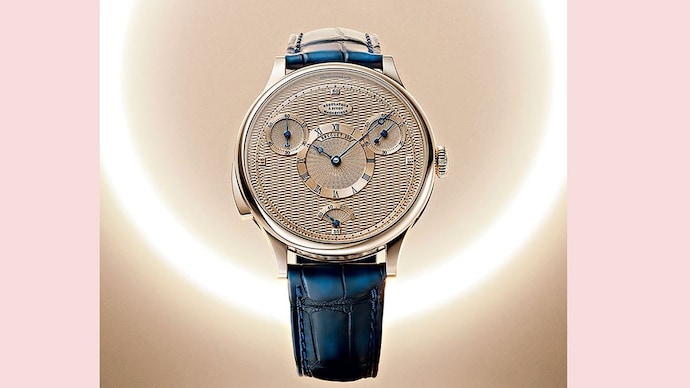
Breguet has the sort of history that can become a burden if handled too reverently. When your founder more or less wrote the grammar of fine watchmaking, the temptation is to put everything under glass and speak in hushed tones. Mercifully, the Classique 7225 and Classique Phase de Lune 7235 do the opposite. They are unmistakably Breguet, all guilloch, blue hands and old-world poise, but neither feels embalmed. One is a serious piece of chronometric engineering dressed like an aristocrat. The other is a moonphase so disarmingly elegant it makes most contemporary dress watches look like they are trying far too hard.
Breguet has the sort of history that can become a burden if handled too reverently. When your founder more or less wrote the grammar of fine watchmaking, the temptation is to put everything under glass and speak in hushed tones. Mercifully, the Classique 7225 and Classique Phase de Lune 7235 do the opposite. They are unmistakably Breguet, all guilloch, blue hands and old-world poise, but neither feels embalmed. One is a serious piece of chronometric engineering dressed like an aristocrat. The other is a moonphase so disarmingly elegant it makes most contemporary dress watches look like they are trying far too hard.
The more intellectually intoxicating of the pair is the 7225. On paper, it is irresistible for the mechanically inclined: a 41mm Breguet gold case, a dial inspired by historical pocket-watch architecture, a hand-wound calibre beating at 10Hz, and the return of Breguet’s magnetic-pivot system. That last bit matters. Magnetism is usually the villain in a watch story; here it is enlisted as an accomplice, stabilising the balance staff, reducing friction and helping the watch achieve a claimed precision of +/-1 second a day. Better still, Breguet has had the good sense not to make the 7225 look like a science project. It still reads as classical, even romantic. The observation seconds display with flyback pusher adds a lovely note of oddness too, like finding a hidden cocktail bar behind the carved doors of an old Jaipur haveli.
Then there is the 7235, which is less about flexing technical muscle and more about demonstrating taste. Inspired by Breguet’s watch No. 5 from 1794, it comes in a more compact 39mm case and wraps its moonphase, power reserve and small seconds in a gold-on-gold composition that could easily have tipped into excess. It does not. The tone is rich but measured, helped by the hand-guilloch dial and the “Quai de l’Horloge” motif engraved not just on the dial but on the case middle as well. That detail is crucial. It gives the watch texture, nuance and an expensive quietness. The 3Hz automatic movement is comparatively traditional, but the silicon balance spring is a reminder that Breguet still believes progress belongs inside beauty, not in opposition to it.
That, really, is the point of both watches. The 7225 is the mind. The 7235 is the manners. One tells you Breguet can still think radically; the other reminds you it can still seduce. In a market where “heritage” is too often used as cover for creative exhaustion, these two feel refreshingly alive. Breguet is not interesting because it is old. It is interesting because, 250 years on, it still seems unwilling to become boring.

