Home bars | Where design meets indulgence
No longer defined by function alone, the present-day home bar is shaped by proportion, light, material, and the subtle choreography of use.
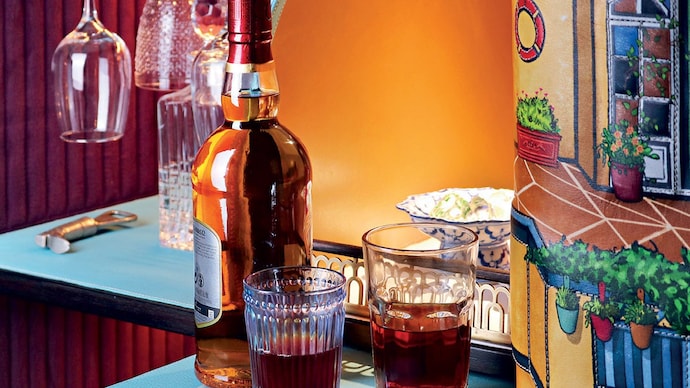
The home bar has grown up. What began as a lockdown necessity during Covid—a place to recreate the ritual when bars were closed for business—has evolved into one of the most considered spaces in the contemporary home. Not a cabinet tucked away or a trolley wheeled out, but a room within a room, designed as much for atmosphere as function. The shift reflects something larger in luxury interiors. Excess has given way to intention. Where ostentation once signalled wealth, restraint now foretells taste. The materials are still exceptional, think onyx countertops, smoked glass cabinets, aged walnut, leather and brushed brass, but deployed with precision.
The home bar has grown up. What began as a lockdown necessity during Covid—a place to recreate the ritual when bars were closed for business—has evolved into one of the most considered spaces in the contemporary home. Not a cabinet tucked away or a trolley wheeled out, but a room within a room, designed as much for atmosphere as function. The shift reflects something larger in luxury interiors. Excess has given way to intention. Where ostentation once signalled wealth, restraint now foretells taste. The materials are still exceptional, think onyx countertops, smoked glass cabinets, aged walnut, leather and brushed brass, but deployed with precision.
Lighting does the heavy lifting. Backlit shelving that shifts with the hour and integrated systems responsive to voice or app. Alongside it, the objects: a monogrammed decanter, single malts and glassware chosen for weight as much as form. Architects and designers now treat these spaces with the rigour once reserved for kitchens or libraries. Proportion matters and so does the sequence, right from when you enter, how the light changes, and where you choose to sit. Here are some well-curated home bars that don’t announce themselves but create the cosy nooks that let you enjoy the drink.
Heritage Reframed
These aren’t cabinets, they’re miniature faadesthat capture history. For instance, each limited edition piece channels Mumbai’s Art Deco legacy: the geometric window grills of Prakash Manzil, stacked balconies of Rajjab Mahal and Liberty Cinema’s sweeping curves and vertical bands. What defined those buildings—repetition, symmetry, and bold linear forms—lives and breathes in these bars from the Portside Cafe Furniture Studio in leather, wood, and brass.
The geometry is rigid but leather breathes while wood grounds it. Handcrafted exteriors in printed and distressed leather carry intricate Deco patterns with material warmth. Inside, the mood shifts: bright quilted ultra suede, brass railings echoing old cinema halls and their faded glamour. Open a door and you’re not just reaching for a bottle, but stepping into heritage.
The palette draws from classic Deco luxury: warm ochres against deep blues and muted teals with metallic accents; it’s architecture you can pour a drink from.
“Bombay always finds its way into my work. It’s the city that taught me to see from the rounded corners of Shiv Shakti Bhavan at Oval Maidan to the quiet geometry that stays with you. I didn’t want just another cabinet. I wanted to capture Bombay evenings: lived-in elegance, something nostalgic yet breathing. These bars hold on to one of the city’s greatest legacies,” says Bobby Aggarwal, founder and designer, Portside Cafe Furniture Studio. These bars are just that; layered and a little indulgent, like dwelling inside history. And it shows up in the details.
Sculptural Indulgence
More than functional furniture, these bars are
Designed as statement pieces. The Gold Foil Bar (above)combines clean lines with champagne-gold finishes, hand-finished brass details, and a carefully selected marble top, creating a look that feels both refined and understated. Compact in scale yet visually striking, it works as practical storage while adding warmth and sophistication to the interiors.
The Tango Bar, on the other hand, takes inspiration from movement and rhythm, with soft folds replacing rigid lines to create a form that feels fluid and almost alive. Brass, Saint Laurent stone, and stained oak veneer come together in a material palette that balances richness and warmth. Crafted through custom metalwork and detailed finishing, it functions both as a bar and a statement piece. Together, the two designs from KOKO by K2 India reflect co-founder and creative director Kohelika Kohli’s approach to creating objects that go beyond utility—pieces that shape the mood of a room through texture, light, and craftsmanship.
The Atmospheric experience
Now these bars are sculptural moments that define a room and lend it a different energy. Each one approaches luxury differently: bold red curves that catch light and hold attention, layered glass over mirrors that shift through the day, and dark moody spaces that slow you down, different yet unique, the three invite you to stay, rewind and reenergise. What ties them together is restraint. Yes, they make a statement with their high-gloss finishes, hand-blown glass, and aged brass detailing, without overwhelming.
The materials do the talking here: Panda White stone against polished wood, glass tiles catching light at different angles, and black -and-white inlay patterns that give your eye something to follow. These choices aren’t decorative, they’re structural and integral to how each piece feels and functions. “It’s not just about how something looks but how it behaves,” says Sachin Gupta, founder and principal designer, Beyond Designs. He’s right. A bar anchored by mirrored panels changes as natural light moves across it. Brass catches evening light differently than noon. These pieces live in real time responding to their environment rather than just occupying it. The best part? They actually make you want to sit down. Not because they’re performing some design trick, but because they create the kind of atmosphere where conversations happen naturally, where you’re not rushing to the next thing.
When a Bar becomes Art
A sleek black fluted faade meets hammered metal detailing for a look that’s unmistakably modern. The Noir Wave home bar from the House of Lalittya is luxury reimagined. The mirrored back wall doesn’t just reflect but it amplifies, bouncing light off glassware and creating depth where there wasn’t any before. The metallic arch frame anchors the piece without overwhelming it while glass shelves on metal frames keep things light and open.
“We wanted something fluid yet structured, bold without being loud. The play between reflection, texture and form is what makes it special. It’s functional art, designed to celebrate craft and material in equal measure,” says Shivani Gupta Mittal, principal designer, House of Lalittya.
High-gloss metal, rippled sheets, black PU with a mirror finish, and reflective glass layer together create texture and contrast. Built for entertaining, evening cocktails, or elevating the everyday, it’s custommade to lift your space.
Bold without Compromise
Flowing metal surfaces and hidden mechanics define this artistic, high-function bar system. The Serendipity Bar from Nivasa is conceived as a spatial anchor. Metal bending and cladding techniques shape the surfaces into continuous, wave-like forms that flow across both the counter and the vertical storage behind it. A matte metallic finish keeps things refined while integrated backlighting adds depth and a sense of drama. Beneath that striking exterior lies a fully automated vertical drop-down storage system. The back panel houses revolving storage units and the bar height adjusts across four to five preset positions depending on use. Everything operates through a fixed built-in interface. What sets the bar apart is how design and engineering support each other. Form and function are not balanced here, they are fused.
Contemporary Craft
The home bar designs move beyond function to become immersive experiences shaped by material, light, and craftsmanship. Though created for very different settings, both treat the bar as an artistic focal point, something to be experienced as much as used.
The outdoor bar by The Arch Studio blends architecture with landscape, creating a luxurious setting that feels open yet intimate. Its curved form softens the surrounding structure and draws people together. Backlit onyx adds a warm glow that transforms the space after dark, while gold-toned metal, stained mirrors, and patterned stone flooring introduce depth and reflection. Framed by greenery and sheltered beneath a light glass pavilion, the bar feels connected to nature without losing its sense of refinement. Every curve and finish is carefully crafted, giving the space the presence of a living sculpture.
While the home bar by Disha Subramanium, principal designer, Design by Disha Subramanium, takes a quieter, more refined approach. Created as a luminous monolith, it uses backlit onyx, layered textures and sculptural detailing to create a seamless, atmospheric setting. Soft lighting flows across surfaces while bespoke panelling and glass elements add depth without excess. The result is elegant and understated, a space where luxury comes through material precision.
Together, these projects show how bar design can move beyond utility to shape mood and experience. One embraces openness and landscape, the other creates intimacy through light and restraint.

