Energy positive living | Net-zero homes
The blueprint for India's urban future has homes that generate more power than they consume
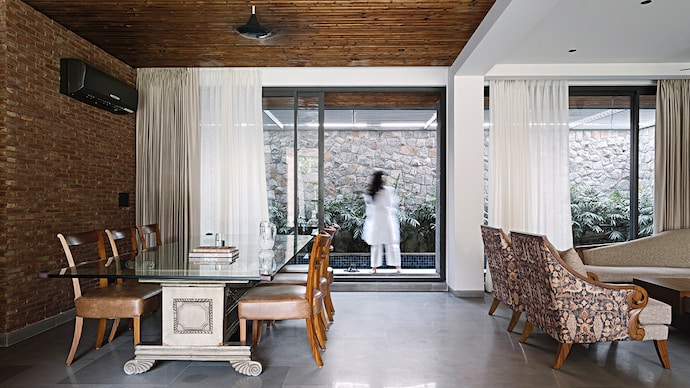
The most expensive building in the world is the one that keeps sending you a bill. India’s residential architecture has long treated energy as someone else’s problem—the utility company’s, the government’s and eventually the tenant’s. We design the home, hand over the keys and absolve ourselves of what happens when the air conditioners switch on in May. In Delhi, they switch on in April now.
The most expensive building in the world is the one that keeps sending you a bill. India’s residential architecture has long treated energy as someone else’s problem—the utility company’s, the government’s and eventually the tenant’s. We design the home, hand over the keys and absolve ourselves of what happens when the air conditioners switch on in May. In Delhi, they switch on in April now.
The conversation is shifting, though not fast enough. Net-zero, what a home consumes matched against what it produces, has become the fashionable ambition. In 2026, it is a modest one. The question is whether a home can give back more than it takes.
At AKDA, we have spent several years putting solar on residential roofs, as a deliberate design decision, never bolted on to satisfy a checklist. BIPV, Building-Integrated Photovoltaics, takes that same intent and scales it across the full skin of the building. In Delhi, where a typical roof is consumed by water tanks and service equipment, south-and west-facing elevations are vastly underutilised. Wrap them in solar glass and a home’s power yield multiplies two to three times over. The wall that once only kept the weather out now actively pushes electricity in.
But generation is half the equation. A home that generates three times the power it needs but leaks heat through single-glazed windows in July is running two broken systems. High-performance glazing, double or triple-glazed units with low-emissivity coatings and argon-filled cavities, does the quieter work of making the envelope function. In our projects, well-specified glazing alone has reduced peak summer cooling loads by 25 to 30 per cent, energy that never needs generating because it was never wasted.
The third element is what most homeowners underestimate. An AI-driven energy management system does not simply monitor, it governs. It learns when the family wakes and sleeps, reads the week’s forecast and acts before you do. On a day forecast to hit 45 degrees, it pre-cools the home during morning solar peaks so that by afternoon, when the grid is most strained, the house is already ahead, surplus flowing to battery walls or back to the grid. The home runs its own energy economy, increasingly better than its occupants would.
For Indian homeowners, the returns are real: elimination of utility bills, resilience against NCR power cuts, an asset that appreciates as energy costs rise. For architects, it demands a different discipline—orientation, simulation and integration, with the MEP consultant at the table before the sections are drawn.
The technology exists. The climate more than justifies it. What has been slower to arrive is the willingness to treat the home not as a container for modern life, but as a participant in it.
A home that produces more than it consumes is not a utopian idea. It is simply a better-designed one.

