Interiors | Living sanctuary
By weaving salvaged sandstone, centuries-old antiques and a soaring central void, this Bangalore home transforms into an enduring wellness refuge that bridges history and architecture
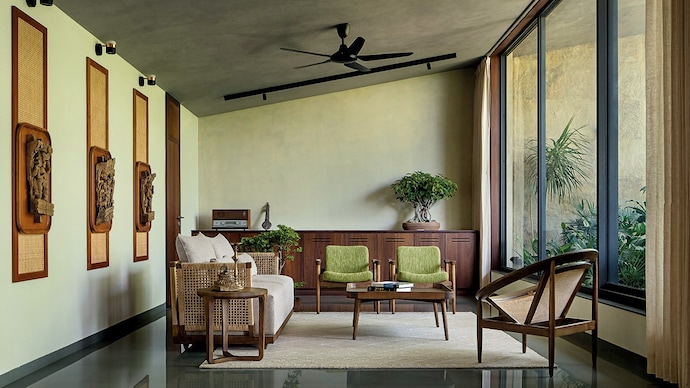
Design should centre on creating spaces that breathe, heal and tell a story. When two doctors approached us to design their 7,800 sq ft sanctuary at the edge of Bangalore, the mandate was clear yet profound. They sought a revitalising refuge that could seamlessly house the numerous treasures they had collected over a lifetime. Anchored by lush greenery and opening directly onto a golf course, the residence was conceived with well-being as its chief design intent. Drenched in natural light and optimised for ventilation, the finishes are made of stone and lime plaster. It stands today as a peaceful sanctuary of strength and grace, nodding gently to the endurance of traditional craft and raw material honesty.
Design should centre on creating spaces that breathe, heal and tell a story. When two doctors approached us to design their 7,800 sq ft sanctuary at the edge of Bangalore, the mandate was clear yet profound. They sought a revitalising refuge that could seamlessly house the numerous treasures they had collected over a lifetime. Anchored by lush greenery and opening directly onto a golf course, the residence was conceived with well-being as its chief design intent. Drenched in natural light and optimised for ventilation, the finishes are made of stone and lime plaster. It stands today as a peaceful sanctuary of strength and grace, nodding gently to the endurance of traditional craft and raw material honesty.
THE SERENDIPITY OF SALVAGED STONE
The distinct visual identity of the home exterior began with an unexpected detour in Jaipur. While searching for antiques with the clients, we stumbled upon a Gwalior Mint quarry where discarded slabs lay cast aside. While the quarry yard had disregarded these pieces due to natural colour variations, my eye was immediately drawn to the incredible grain and character of this imperfect stone. Recognising its irreplaceable spirit, we chose this rescued material over traditional artifacts. We left the stone entirely untreated and each slab was meticulously hand-chipped on-site. This raw, honest skin now wraps the entire exterior of the house, grounding the architecture in an authentic, textured and deeply tactile presence.
INTEGRATING HISTORY INTO LIVING WALLS
Inside the home, artifacts and antiques are never treated as static showpieces. Instead, they are integrated as symbiotic companions that heighten the atmosphere and define the spatial intent. At the main entrance, two 50-year-old earthen granary pots frame the arrival with a sculptural presence, giving the threshold a quiet weight of memory. Moving inside, the foyer is anchored by a majestic five-foot-tall Nataraja statue. By mounting it securely within a custom scooped recess in the wall, the statue is woven directly into the architectural skin. This deliberate embedding transforms everyday objects into functional spatial devices that punctuate walls, mark transitions and mediate scale.
DIALOGUE OF MATERIAL AND HERITAGE
Throughout the interiors, the dialogue between historical artifact and modern architecture is one of constant reciprocity. The living rooms are deliberately kept free of televisions to foster genuine human connection. Instead, the surfaces are animated with fragments of a pre-independence wooden chariot and weathered wooden printing blocks that layer the walls with texture and narrative. These cultural pieces temper the natural austerity of the stone and lime plaster. This design language extends into the master bedroom, where an open 200-year-old wooden chest reminiscent of 19th-century Lahore sits gracefully. This intimacy of lived heritage ensures that history is felt during daily rhythms, allowing the design to coalesce into an immersive environment.
COURTYARD AS A LIVING HEART
The home is physically and spiritually bound by a massive central void that channels light, ventilation and circulation. The ground floor unfolds seamlessly around this courtyard, with the main living room, dining area and open kitchen embracing the opening, while the formal living room and foyer act as protective thresholds. This two-story puncture rises upward to hold two bedrooms, a bonsai terrace garden and an inward-looking amphitheatre. The stepped seating of the amphitheatre culminates as a wall to create a vibrant, living green backdrop visible from the ground floor. Clad in hand-slit quartz sandstone, the courtyard walls mirror the exterior, while a venerable Thanjavur painting presides from the gallery above to watch over the home.
Ultimately, the residence breathes through the profound calm emanating from its simple, enduring design. The refined interior finishes serve as an open canvas for family stories to unfold over generations. By allowing art, stone and architecture to converge naturally, we created a layered presence that remains entirely unassuming yet deeply rewarding for its inhabitants.
—Vandana Taluru is founder and principal architect at 4Brick Studio, an architecture and design practice based in Bangalore and Hyderabad @4brickstudio (Instagram)

