Old walls, new lives | Architects saving buildings that already stand
Four architects. Four forgotten structures. One powerful argument for saving what already stands
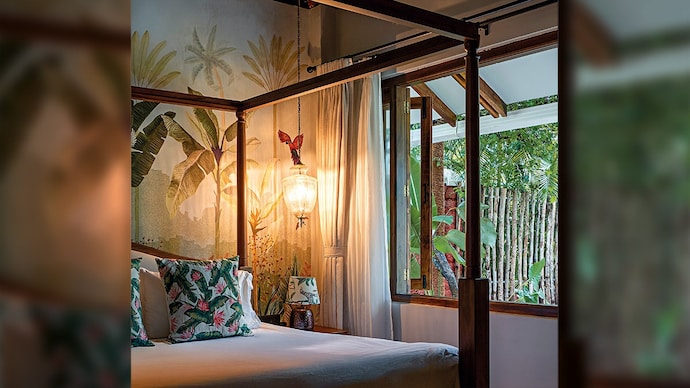
The easiest thing to do with an old building is to tear it down. In India’s fast-growing cities that instinct has become almost reflexive. Pull permits; clear the plot; pour fresh concrete. It is faster and involves none of the legal complexity or structural uncertainty that comes with working within existing walls. But a quieter counter-movement is gaining ground. Across Goa’s coastal villages and the suburban sprawl of Gurgaon, a new generation of architects are championing the art of giving old structures a second life. The homes that result carry something that new buildings simply cannot manufacture: the weight of what came before. They also carry something that the demolition quietly destroys, every kilogramme of steel, concrete and timber in an existing structure represents energy already spent and carbon already emitted. To tear it down is to waste that embedded cost entirely and then spend it again. In a country building at India’s pace, that math is becoming impossible to ignore.
The easiest thing to do with an old building is to tear it down. In India’s fast-growing cities that instinct has become almost reflexive. Pull permits; clear the plot; pour fresh concrete. It is faster and involves none of the legal complexity or structural uncertainty that comes with working within existing walls. But a quieter counter-movement is gaining ground. Across Goa’s coastal villages and the suburban sprawl of Gurgaon, a new generation of architects are championing the art of giving old structures a second life. The homes that result carry something that new buildings simply cannot manufacture: the weight of what came before. They also carry something that the demolition quietly destroys, every kilogramme of steel, concrete and timber in an existing structure represents energy already spent and carbon already emitted. To tear it down is to waste that embedded cost entirely and then spend it again. In a country building at India’s pace, that math is becoming impossible to ignore.
VERNACULAR VOCABULARY RESTORED
When Anjali Mangalgiri of Goa-based Grounded acquired a 160-year-old Portuguese house in the quiet village of Aldona, the instinct that most would have followed—clear it, start clean—never entered the conversation. Her team documented everything first, with every opening catalogued and piece of timber assessed, to map the Goan-Portuguese vernacular vocabulary before a single intervention was planned. The result, completed in 2025, is a contemporary family home that reads as a love letter.
Existing red-oxide floors were restored and paired with lime-plaster walls and reclaimed teak. Iron window grills became gates. The balcao was disassembled and rebuilt further out to frame a new garden and stone pool; the same structure, in a new conversation with the land. The prayer niche in the central room, likely vandalised by a previous owner, was repaired and returned to its place. It now watches over the eat-in kitchen, a solemn presence among people who didn’t know it was there before them.
What Grounded has also done, quietly, is absorb the legal complexity that typically keeps buyers away from heritage property in Goa; titles with 20-plus owners, documentation in archaic Portuguese, inheritance lines under a colonial civil code. The poetic and the practical, for once, in the same hands.
SANCTUARY FOR BOOKS AND BEINGS
In Siolim (Goa), a short drive north, Studio Tilt co-founders Natasha Kumar and Abhijit Sawant encountered a structure with almost no legible history; possibly a barn, possibly animal storage. Where another practice might have treated that ambiguity as a licence to start afresh, they treated it as a kind of freedom.
Their clients, literary agent Hemali Sodhi and HarperCollins India CEO Ananth Padmanabhan, had asked for a home that reflected who they actually were: people for whom books, animals, and time spent entirely in nature constituted the primary luxuries. The architects responded by treating the existing site as something to work around rather than clear. Every plant was retained. The bougainvillea pergola at the entry, its supports already deeply entwined with roots too established to disturb, was preserved and built around. Throughout construction, the rescue animals from the adjacent welfare shelter continued their daily routes uninterrupted. “We would be greeted every day by rescued dogs, rabbits and ducks,” Kumar recalls.
The rawness of the structure became a guide rather than a problem. Parts of the old roof were preserved; deteriorating beams were reinforced or replaced. Skylights were cut into the existing roof, pulling light into spaces that had been dim and unusable. “The process became less about recreating something pristine and more about carefully revealing the character already present within the space,” says Kumar. The 1,500 sq ft result—a lily pond on the rear verandah, a preserved mango tree at the heart of the landscape, the clients’ book collection providing the only real colour against grey cement and raw lime plaster—feels like it grew natively on the site. A home that carries, as Kumar puts it, “A sense of memory and emotional continuity that a completely new structure could not have replicated.”
UPGRADING ENERGY EFFICIENCY
Further north, in Gurgaon, groupDCA’s project began with a 20-year-old family home that had grown out of alignment with the life inside it. Spaces had fallen into disuse; circulation routes that once made sense no longer did. The response was to work through the house carefully by rethinking the layout, untangling the services and introducing one intervention that would redefine the quality of the entire structure: a sunken courtyard carved into the basement level, bringing daylight and planting into what had been the home’s most neglected space. A fabricated staircase, capped by a skylight, now draws light down through every floor.
Solar panels and a comprehensive overhaul of the home’s HVAC and lighting systems now run beneath the project’s restrained surface—earthy tones, exposed brick, warm joinery—and have measurably extended the building’s useful life while reducing its energy demand. Saved from demolition, the house performs considerably better than it did when new.
AN INNOVATIVE SHIFT
A few kilometres away in Gurgaon, Renesa Architecture Design Interiors was asking a different question: what a home might say to the surrounding city. The starting point was a 20-year-old concrete-and-steel residential block: structurally sound and visually unremarkable, yet spatially adequate. Renesa’s response was a louvred steel exoskeleton, a new outer skin wrapped around the existing frame, its vertical fins angled to intercept the south-facing sun as it moves across the facade throughout the day. The fins create shifting patterns of light and shadow on the interior walls, open up new balcony spaces and draw ventilation through the house in a way the original structure never managed. Stand inside on a bright afternoon and the light is something the old building could not have produced: warm and in constant, quiet motion.
The structural frame the exoskeleton wraps, its concrete, its steel, two decades of embedded material, remains entirely intact. Nothing was extracted. Nothing was demolished. The building that Gurgaon would have routinely replaced is still there, carrying what it always carried and doing considerably more with it.
The American architect Carl Elefante once framed it plainly: the greenest building is the one that already exists. India’s most sustainable new homes, it turns out, aren’t new at all. They are old structures, carefully heard and given the chance to say something new.

