Tuning out the noise | RJ Raunac Shankar's Noida home
A public voice meets a silent canvas. We step inside the deliberate, all white, sun drenched Noida home of a popular radio jockey, where the architecture celebrates quietude and serenity
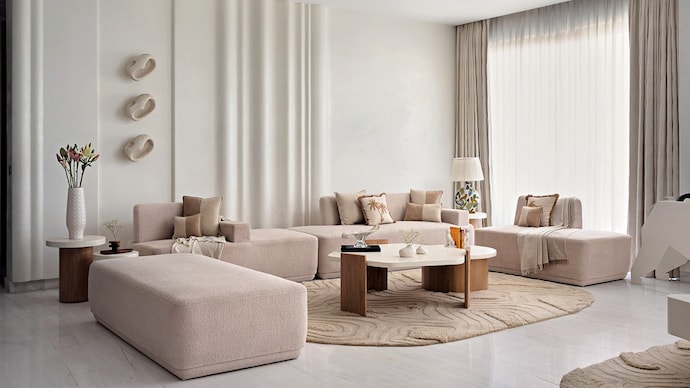
When Radio Jockey Raunac Shankar and his wife, Sonam, approached my firm, Point Plus Designs, their brief was a fascinating contradiction to his public life. As one of India’s most recognisable voices, Raunac’s days are a high-decibel blur of energy, humour and non-stop conversation. For their 4,700 sq ft home, they wanted the exact antithesis: absolute stillness. They envisioned a sanctuary engineered for a slower pace, uncluttered, emotionally grounding and entirely free from visual noise.
When Radio Jockey Raunac Shankar and his wife, Sonam, approached my firm, Point Plus Designs, their brief was a fascinating contradiction to his public life. As one of India’s most recognisable voices, Raunac’s days are a high-decibel blur of energy, humour and non-stop conversation. For their 4,700 sq ft home, they wanted the exact antithesis: absolute stillness. They envisioned a sanctuary engineered for a slower pace, uncluttered, emotionally grounding and entirely free from visual noise.
THE WHITE CANVAS
The main architectural challenge we faced was maintaining an all-white palette across furniture, walls and finishes. Without careful curation, white can quickly feel clinical, lifeless or flat. To combat this, my team and I introduced subtle layers and material nuances to give the space depth. Instead of flat paint, we utilised micro-concrete and lime-based finishes. These artisanal textures give the walls a fine grain that catches the light, creating a gentle play of shadow. We then injected warmth into the white canvas using light wood veneers and intricate cane detailing. Drawing heavily from Japandi sensibilities, we prioritised tactile materials, soft curves, and low-profile furniture that allows the eye to move through the volumes without interruption.
FIRST IMPRESSIONS
We wanted the design language to establish itself right at the threshold. In the foyer, we used rounded cabinetry, compact modular storage and a tactile boucl pouffe to introduce a soft, restrained geometry. Step past this arrival zone and the volume shifts dramatically. The living and dining areas feature soaring ceilings punctuated by sunroofs that flood the core of the home with natural light. To celebrate this verticality without crowding the room, we anchored the space with low-profile seating. Underfoot, we laid marble flooring with linear brown inlays to structurally ground the ethereal palette.
AXIS OF SERENITY
The true test of our minimalist discipline lay in the home’s spiritual center. Raunac, a follower of the Isha Foundation, wanted an Adiyogi statue in the living room. In an all-white interior, placing a dark, powerful sculptural form without it feeling discordant was a challenge. Our solution was a custom-designed, contemporary metal console inspired by the form of Nandi. Rather than competing with the dark sculpture, the console supports and frames it.
PRIVATE NARRATIVES
While minimalism rules, I ensured personal storytelling wasn’t sacrificed. In the dining room, we introduced a customised wallpaper inspired by the couple’s travels to Bali, adding a gentle layer of narrative to the space. The bedrooms maintain this muted vocabulary. Textured stucco walls serve as a backdrop for warm taupe headboards and softly upholstered beds. Curved bedside tables echo the foyer’s gentle geometry, while bespoke cabinetry conceals an integrated work corner tailored to their daily routines.
When evening falls, the home’s mood shifts entirely on the terrace. Breaking away from the Japandi restraint, we embraced Mediterranean undertones here. Vibrant blue-and-white patterned tile flooring introduces colour and rhythm, softened by simple seating and lush layers of greenery. It has naturally become the home’s most relaxed gathering spot.
For a public figure whose voice fills millions of rooms across the country, this home offers contrast through silence. Here, we let architecture become the quietest voice in the room, slowing the rhythm of each day.

