Expert Voice | Why great architecture needs a little disobedience
Bending design rules trades raw efficiency for unforgettable spaces
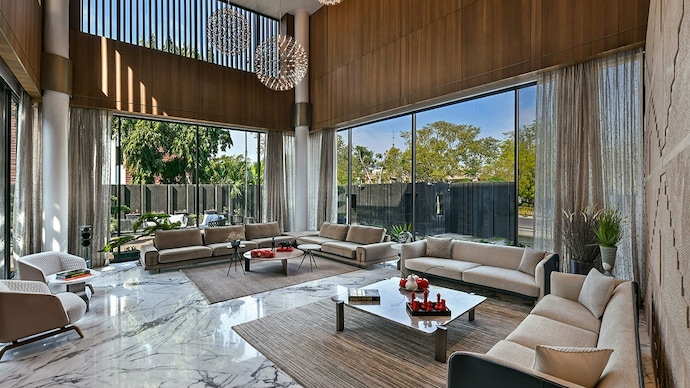
Good architecture is taught through rules. Great architecture often begins with the temptation to question one. A living room ceiling can become a sculpture. A staircase can claim more space than function demands. A courtyard can cut straight through the middle of a home. A piece of art can be deliberately oversized. In a larger public or commercial setting, the same instinct might produce a soaring atrium, a suspended installation or a wall that appears to bend under ribbons of light. The intention is not to make architecture eccentric but to give it a personality.
Good architecture is taught through rules. Great architecture often begins with the temptation to question one. A living room ceiling can become a sculpture. A staircase can claim more space than function demands. A courtyard can cut straight through the middle of a home. A piece of art can be deliberately oversized. In a larger public or commercial setting, the same instinct might produce a soaring atrium, a suspended installation or a wall that appears to bend under ribbons of light. The intention is not to make architecture eccentric but to give it a personality.
Good architecture is taught through rules. Great architecture often begins with the temptation to question one. A living room ceiling can become a sculpture. A staircase can claim more space than function demands. A courtyard can cut straight through the middle of a home. A piece of art can be deliberately oversized. In a larger public or commercial setting, the same instinct might produce a soaring atrium, a suspended installation or a wall that appears to bend under ribbons of light. The intention is not to make architecture eccentric but to give it a personality.
Scale is particularly powerful. In a residence, a double-height living room can make an everyday gathering feel unexpectedly grand, while a low passage leading into it heightens that sense of volume. A window stretched almost to the ceiling changes not only the elevation, but also the quality of daylight inside. An unusually deep overhang can create shade, drama and a stronger connection between the house and its garden.
Materials need not be excessively polite either. Raw brick can sit beside finely veined marble. Concrete can meet warm timber. A highly patterned floor can hold its own against restrained furniture. Contrast allows each surface to retain its character, instead of dissolving into a perfectly coordinated palette.
Then there is nature, perhaps architecture’s most useful troublemaker. We like it when a courtyard cuts into an otherwise efficient plan, when a tree forces circulation to bend around it or when a garden arrives unexpectedly inside a hard architectural volume. Efficiency loses a little ground, but experience gains enormously.
Of course, disobedience without reason is merely spectacle. Every exaggerated proportion, unlikely material pairing or unexpected interruption has to earn its place.
Perhaps that is the distinction that matters. Great architecture does not break rules to appear different. It knows which rules can be bent to make a room feel more intimate, an arrival more dramatic, a garden more present or an ordinary walk through a building impossible to forget.

