Batwara 1947: Did you know Sunny Deol film is based on a play banned in Pakistan?
Amid the curiosity around Sunny Deol's upcoming film Batwara 1947, not many would know that it is based on a play that was reportedly banned in Pakistan.
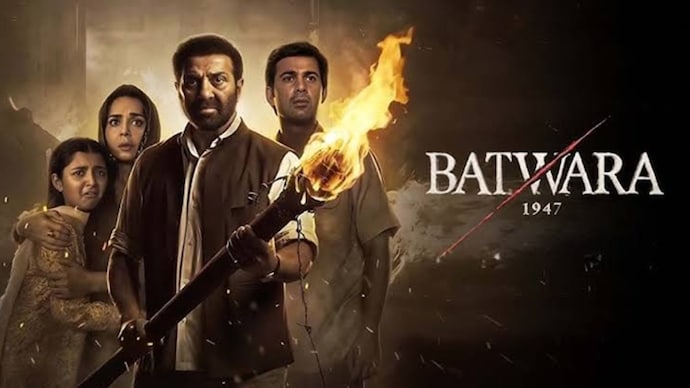
Aamir Khan Productions' upcoming historical film Batwara 1947 traces its origins to Jis Lahore Nai Vekhya, O Jamya E Nai, the acclaimed 1989 play by Professor Asghar Wajahat that was reportedly banned in Pakistan. The film revisits the Partition era, while drawing from a story centred on an elderly Hindu woman who refuses to leave her home in Lahore after the subcontinent was divided.
The adaptation brings to the screen a narrative built around humanity, coexistence and resilience in the face of division. Decades after the play drew attention for its subject and message, the story is now being reimagined on a larger cinematic scale through Batwara 1947.
Jis Lahore Nai Vekhya, O Jamya E Nai has, over the years, received critical acclaim and has been staged across India and in several other countries. Despite its wide reach and universal message, the play has reportedly faced restrictions in Pakistan.
Directed by Rajkumar Santoshi and produced by Aamir Khan Productions, Batwara 1947 revisits one of history's most painful chapters through a human story. The film also marks a rare collaboration between Sunny and Aamir.
The cast includes Shabana Azmi, Preity G Zinta, Karan Deol, Ali Fazal, Abhimanyu Singh, Khhushi Hajare and Kanikka Kapur. The film features music by AR Rahman and lyrics by Javed Akhtar.
About the play
The play is set in post-Partition Lahore and centres on a Muslim family that migrates from Lucknow after being allotted a haveli abandoned by a Hindu family. However, their new beginning takes an unexpected turn when they discover an elderly Hindu woman still living in the house. Refusing to leave, she insists that the haveli belongs to her. What begins as a dispute over property gradually unfolds into a deeply moving exploration of loss, displacement, identity and humanity against the backdrop of one of the most traumatic events in the subcontinent's history.
The controversy arose because the plot ends with a local Maulvi advising the Muslim family to cremate the old woman according to Hindu religious rites following her death.
Batwara 1947 is slated for a theatrical release on August 14.
Aamir Khan Productions' upcoming historical film Batwara 1947 traces its origins to Jis Lahore Nai Vekhya, O Jamya E Nai, the acclaimed 1989 play by Professor Asghar Wajahat that was reportedly banned in Pakistan. The film revisits the Partition era, while drawing from a story centred on an elderly Hindu woman who refuses to leave her home in Lahore after the subcontinent was divided.
The adaptation brings to the screen a narrative built around humanity, coexistence and resilience in the face of division. Decades after the play drew attention for its subject and message, the story is now being reimagined on a larger cinematic scale through Batwara 1947.
Jis Lahore Nai Vekhya, O Jamya E Nai has, over the years, received critical acclaim and has been staged across India and in several other countries. Despite its wide reach and universal message, the play has reportedly faced restrictions in Pakistan.
Directed by Rajkumar Santoshi and produced by Aamir Khan Productions, Batwara 1947 revisits one of history's most painful chapters through a human story. The film also marks a rare collaboration between Sunny and Aamir.
The cast includes Shabana Azmi, Preity G Zinta, Karan Deol, Ali Fazal, Abhimanyu Singh, Khhushi Hajare and Kanikka Kapur. The film features music by AR Rahman and lyrics by Javed Akhtar.
About the play
The play is set in post-Partition Lahore and centres on a Muslim family that migrates from Lucknow after being allotted a haveli abandoned by a Hindu family. However, their new beginning takes an unexpected turn when they discover an elderly Hindu woman still living in the house. Refusing to leave, she insists that the haveli belongs to her. What begins as a dispute over property gradually unfolds into a deeply moving exploration of loss, displacement, identity and humanity against the backdrop of one of the most traumatic events in the subcontinent's history.
The controversy arose because the plot ends with a local Maulvi advising the Muslim family to cremate the old woman according to Hindu religious rites following her death.
Batwara 1947 is slated for a theatrical release on August 14.

