Michael, Elvis, Bohemian Rhapsody: Three musical lives, one cinematic impact
With Michael now in theatres, comparisons with Elvis and Bohemian Rhapsody are inevitable—different in style yet united in resonance, as all three continue to strike a chord with music lovers across audiences
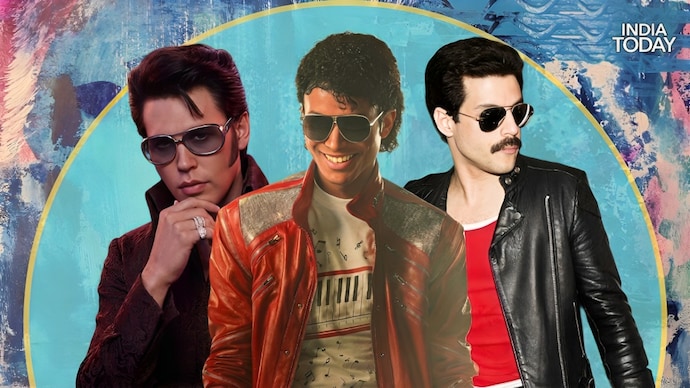
Michael Jackson is back in the spotlight. The Jaafar Jackson-led biopic on the King of Pop, released on April 24, has already shattered box office records, registering the biggest opening ever for a biopic and surpassing films like Oppenheimer. Its success also signals a continuing trend—musical biopics remain a dominant force with audiences.
Films like Bohemian Rhapsody and Elvis, both big hits in recent years, have proven that this genre can strike gold with commercial success and also win critical appreciation from the audience. While comparisons are inevitable, each of these films also stands apart, carrying its own distinct identity.
Michael
Michael (2026), directed by Antoine Fuqua, has Jaafar Jackson stepping into the shoes of his uncle, Michael Jackson—and his performance already has the world talking about the film more than it already was. The film traces Jackson’s journey from his early days with the Jackson 5 in the 1960s to his rise as a global superstar, culminating around the Bad tour in the late 1980s, focusing largely on his musical evolution and stardom.
Elvis
Elvis (2022), directed by Baz Luhrmann, stars Austin Butler as Elvis Presley and plays out like a flashy, high-energy ride through his life. The film doesn’t just chart his rise to fame—it zooms in on his complicated equation with his manager, Colonel Tom Parker (played by Tom Hanks), making it as much about control and manipulation as it is about music. Compared to Michael, this one is more chaotic and stylised and delves into themes of fame, control, identity and the cultural shifts in America during Presley’s peak years.
Bohemian Rhapsody
Bohemian Rhapsody (2018), directed by Bryan Singer (and completed by Dexter Fletcher), features Rami Malek as Freddie Mercury and is probably the most “band-centric” of the three. It follows Mercury’s journey from an outsider to the frontman of Queen, blending personal struggles with the group’s rise to fame, all leading up to the iconic Live Aid performance. Compared to Elvis and Michael, this one feels more structured and familiar—less chaotic than Elvis, less star-worship-driven than Michael—but powered by nostalgia and a crowd-pleasing formula.
The three films invite comparisons, no doubt, but their unique selling points are just as evident. You can approach the conversation from multiple angles—be it structure, tone or thematic focus. While they all stick to a fairly standard biopic skeleton at the core, it’s the way each film builds on that base that sets them apart. From screenplay choices to narrative tone and the themes they choose to emphasise, each one brings its own flavour to the table, ensuring they don’t feel like carbon copies of the same formula.
The musical stars and their depiction
When it comes to performances, all three films lean heavily on their leading men—and rightly so. Rami Malek’s portrayal of Freddie Mercury not only anchored Bohemian Rhapsody but also earned him the Academy Award for Best Actor, with his meticulous attention to detail shining through, especially in the recreation of the iconic Live Aid performance.
Austin Butler, meanwhile, delivered a transformative turn in Elvis, earning an Oscar nomination and, for many, feeling like the rightful winner—his rendition of Unchained Melody standing out as a defining moment that captured both vulnerability and stage presence.
Now, with Michael, early conversations are already leaning towards Jaafar Jackson, whose performance as Michael Jackson is drawing attention for its physical precision and commitment. Moments like him dancing to Thriller highlight not just imitation, but an attempt to embody the aura of the legend. Across all three, it’s clear that beyond the wigs, costumes and recreated concerts, it is the performances—and the effort to relive these iconic moments—that truly drive the films.
The filmmaking styles
From a filmmaking standpoint, the three films feel distinctly different, even if a few parallels can be drawn. Bohemian Rhapsody and Michael share a somewhat familiar, linear screenplay structure, while Elvis stands far apart with its more experimental, free-flowing narrative. Michael takes on a mellow, breezy tone, leaning into personal struggles, inspiration and the spectacle of stardom.
Bohemian Rhapsody, with its emotional depth, is more hard-hitting and doesn’t completely shy away from showing the messier sides of fame and personal struggle. Elvis, on the other hand, is the most stylistically bold of the lot, refusing to stick to a conventional biopic format and instead embracing a more chaotic, creative storytelling approach.
Even in their openings, the differences are evident. Both Elvis and Bohemian Rhapsody quickly track their leads from the point of discovery—Freddie Mercury finding his way into Queen and Elvis Presley stepping into the spotlight—with Elvis also offering glimpses of his childhood musical influences, particularly blues. Freddie’s early influences, in comparison, are mostly touched upon in passing.
Michael takes a different route altogether, starting from his childhood, given his early rise as a prodigy with the Jackson 5, and building his journey from there. So while the foundation may be similar, the way each film chooses to tell its story makes all the difference.
A musical treat
A common thread across all three films is how they double up as a full-blown musical treat for audiences in theatres. Beyond the storytelling, it’s the music that truly drives the experience—turning screenings into near-concert-like events where nostalgia, energy and crowd reactions take over.
From We Will Rock You and Bohemian Rhapsody, to Jailhouse Rock, Can’t Help Falling in Love and Unchained Melody, and now with Michael Jackson hits like Beat It, Thriller and Bad, each film taps into a catalogue of iconic tracks that audiences already love. The result is an immersive experience where the theatre becomes part stage, part celebration—reminding you that, more than anything else, it’s this musical high that ultimately makes these films winners.
Complains of exploiting creative liberty
Creative liberty becomes a talking point across all three films. There’s even a line in Michael—“be free to create”—but it does make you wonder: were the filmmakers truly free, or were they picking and choosing what to show? Questions around inaccuracies and altered timelines come up in all three.
Mixing events, compressing arcs and reshaping real-life moments is common ground here, but how each film uses that liberty is what sets them apart. The angles they choose—and the stories they prioritise—ultimately define the kind of creative liberties they take.
Elvis is the most distinctive in this regard. By making Colonel Tom Parker (played by Tom Hanks) the narrator, the film adds a clear perspective—a lens through which the story unfolds, making it feel more interpretative than definitive.
Bohemian Rhapsody and Michael may appear more straightforward at first glance, as they broadly track the lives of their central figures, but they aren’t that simple either. Michael stays tightly focused on its subject—Michael with his father, Michael with the Jackson 5, and Michael as a solo star—keeping the narrative largely centred on his individual journey.
Bohemian Rhapsody, while anchored by Freddie Mercury, constantly shifts between his life with Queen, his time away from the band, and the eventual reunion, all while exploring his personal struggles. Same foundation, different lenses—and that’s where the real difference in creative liberty lies.
In conclusion
In the end, these are stories that are far too vast to be boxed into neat comparisons. The personalities are larger than life, the legacies even bigger, and the untold stories endlessly intriguing—enough to warrant a thesis of their own. But perhaps the takeaway isn’t in how similar or different these films are. It lies in their impact. In how they resonate with audiences, especially fans who walk into theatres not just to watch a film, but to relive a connection.
These films blur the line between cinema and memory, turning moments into shared celebrations. And in doing so, they remind you that beyond structure, accuracy or style, it’s the emotional pull—the music, the nostalgia and the legacy—that truly defines their success.
Michael Jackson is back in the spotlight. The Jaafar Jackson-led biopic on the King of Pop, released on April 24, has already shattered box office records, registering the biggest opening ever for a biopic and surpassing films like Oppenheimer. Its success also signals a continuing trend—musical biopics remain a dominant force with audiences.
Films like Bohemian Rhapsody and Elvis, both big hits in recent years, have proven that this genre can strike gold with commercial success and also win critical appreciation from the audience. While comparisons are inevitable, each of these films also stands apart, carrying its own distinct identity.
Michael
Michael (2026), directed by Antoine Fuqua, has Jaafar Jackson stepping into the shoes of his uncle, Michael Jackson—and his performance already has the world talking about the film more than it already was. The film traces Jackson’s journey from his early days with the Jackson 5 in the 1960s to his rise as a global superstar, culminating around the Bad tour in the late 1980s, focusing largely on his musical evolution and stardom.
Elvis
Elvis (2022), directed by Baz Luhrmann, stars Austin Butler as Elvis Presley and plays out like a flashy, high-energy ride through his life. The film doesn’t just chart his rise to fame—it zooms in on his complicated equation with his manager, Colonel Tom Parker (played by Tom Hanks), making it as much about control and manipulation as it is about music. Compared to Michael, this one is more chaotic and stylised and delves into themes of fame, control, identity and the cultural shifts in America during Presley’s peak years.
Bohemian Rhapsody
Bohemian Rhapsody (2018), directed by Bryan Singer (and completed by Dexter Fletcher), features Rami Malek as Freddie Mercury and is probably the most “band-centric” of the three. It follows Mercury’s journey from an outsider to the frontman of Queen, blending personal struggles with the group’s rise to fame, all leading up to the iconic Live Aid performance. Compared to Elvis and Michael, this one feels more structured and familiar—less chaotic than Elvis, less star-worship-driven than Michael—but powered by nostalgia and a crowd-pleasing formula.
The three films invite comparisons, no doubt, but their unique selling points are just as evident. You can approach the conversation from multiple angles—be it structure, tone or thematic focus. While they all stick to a fairly standard biopic skeleton at the core, it’s the way each film builds on that base that sets them apart. From screenplay choices to narrative tone and the themes they choose to emphasise, each one brings its own flavour to the table, ensuring they don’t feel like carbon copies of the same formula.
The musical stars and their depiction
When it comes to performances, all three films lean heavily on their leading men—and rightly so. Rami Malek’s portrayal of Freddie Mercury not only anchored Bohemian Rhapsody but also earned him the Academy Award for Best Actor, with his meticulous attention to detail shining through, especially in the recreation of the iconic Live Aid performance.
Austin Butler, meanwhile, delivered a transformative turn in Elvis, earning an Oscar nomination and, for many, feeling like the rightful winner—his rendition of Unchained Melody standing out as a defining moment that captured both vulnerability and stage presence.
Now, with Michael, early conversations are already leaning towards Jaafar Jackson, whose performance as Michael Jackson is drawing attention for its physical precision and commitment. Moments like him dancing to Thriller highlight not just imitation, but an attempt to embody the aura of the legend. Across all three, it’s clear that beyond the wigs, costumes and recreated concerts, it is the performances—and the effort to relive these iconic moments—that truly drive the films.
The filmmaking styles
From a filmmaking standpoint, the three films feel distinctly different, even if a few parallels can be drawn. Bohemian Rhapsody and Michael share a somewhat familiar, linear screenplay structure, while Elvis stands far apart with its more experimental, free-flowing narrative. Michael takes on a mellow, breezy tone, leaning into personal struggles, inspiration and the spectacle of stardom.
Bohemian Rhapsody, with its emotional depth, is more hard-hitting and doesn’t completely shy away from showing the messier sides of fame and personal struggle. Elvis, on the other hand, is the most stylistically bold of the lot, refusing to stick to a conventional biopic format and instead embracing a more chaotic, creative storytelling approach.
Even in their openings, the differences are evident. Both Elvis and Bohemian Rhapsody quickly track their leads from the point of discovery—Freddie Mercury finding his way into Queen and Elvis Presley stepping into the spotlight—with Elvis also offering glimpses of his childhood musical influences, particularly blues. Freddie’s early influences, in comparison, are mostly touched upon in passing.
Michael takes a different route altogether, starting from his childhood, given his early rise as a prodigy with the Jackson 5, and building his journey from there. So while the foundation may be similar, the way each film chooses to tell its story makes all the difference.
A musical treat
A common thread across all three films is how they double up as a full-blown musical treat for audiences in theatres. Beyond the storytelling, it’s the music that truly drives the experience—turning screenings into near-concert-like events where nostalgia, energy and crowd reactions take over.
From We Will Rock You and Bohemian Rhapsody, to Jailhouse Rock, Can’t Help Falling in Love and Unchained Melody, and now with Michael Jackson hits like Beat It, Thriller and Bad, each film taps into a catalogue of iconic tracks that audiences already love. The result is an immersive experience where the theatre becomes part stage, part celebration—reminding you that, more than anything else, it’s this musical high that ultimately makes these films winners.
Complains of exploiting creative liberty
Creative liberty becomes a talking point across all three films. There’s even a line in Michael—“be free to create”—but it does make you wonder: were the filmmakers truly free, or were they picking and choosing what to show? Questions around inaccuracies and altered timelines come up in all three.
Mixing events, compressing arcs and reshaping real-life moments is common ground here, but how each film uses that liberty is what sets them apart. The angles they choose—and the stories they prioritise—ultimately define the kind of creative liberties they take.
Elvis is the most distinctive in this regard. By making Colonel Tom Parker (played by Tom Hanks) the narrator, the film adds a clear perspective—a lens through which the story unfolds, making it feel more interpretative than definitive.
Bohemian Rhapsody and Michael may appear more straightforward at first glance, as they broadly track the lives of their central figures, but they aren’t that simple either. Michael stays tightly focused on its subject—Michael with his father, Michael with the Jackson 5, and Michael as a solo star—keeping the narrative largely centred on his individual journey.
Bohemian Rhapsody, while anchored by Freddie Mercury, constantly shifts between his life with Queen, his time away from the band, and the eventual reunion, all while exploring his personal struggles. Same foundation, different lenses—and that’s where the real difference in creative liberty lies.
In conclusion
In the end, these are stories that are far too vast to be boxed into neat comparisons. The personalities are larger than life, the legacies even bigger, and the untold stories endlessly intriguing—enough to warrant a thesis of their own. But perhaps the takeaway isn’t in how similar or different these films are. It lies in their impact. In how they resonate with audiences, especially fans who walk into theatres not just to watch a film, but to relive a connection.
These films blur the line between cinema and memory, turning moments into shared celebrations. And in doing so, they remind you that beyond structure, accuracy or style, it’s the emotional pull—the music, the nostalgia and the legacy—that truly defines their success.

