Obsession has a Bart Simpson link, it's not the only reason Gen Z loves the film
Director Curry Barker has revealed how an episode of The Simpsons inspired his global hit, Obsession. It connects with Gen Z thought process, though there is more.
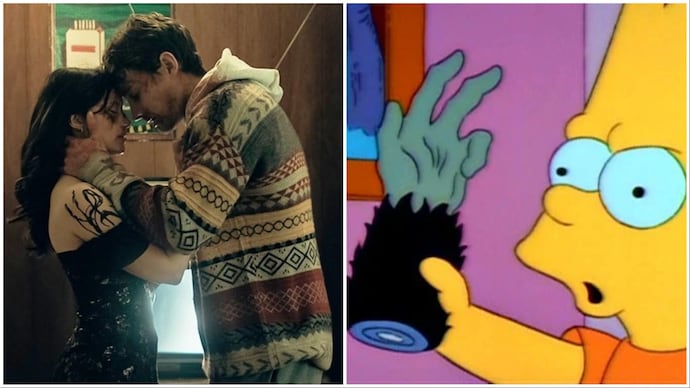
Who would have spotted a global horror hit in a Bart Simpson gag? Curry Barker did, and the outcome was Obsession. The indie horror thriller has just emerged one of the most profitable ventures in cinema ever, having raked in $151 million (and counting) against a budget that barely touches a million. In India, the film has earned Rs 11.83 crore in five days (and counting) despite opening two weeks after its global release and with practically no promotion.
The Bart Simpson context, of course, had to be a big reason why Gen Z is loving Obsession. The Simpsons may have perpetually frozen his screen age to around 10, but Bart has, time and again, shown traits that reflect tendencies representing the young generation as a whole. One of TV's certified brats, Bart's shenanigans and rebellious bursts have endeared him to youngsters cutting across generations.
Think about it. Bart is known for his shortlived obsessive bouts, and this is where Obsession finds its roots. He is known for his intense fixation with things that can range from yo-yos to Dungeons & Dragons to comicbooks, and, during his obsessive streaks, Bart can go to any lengths from being prankish to mischievous to pure evil.
The Bart syndrome Gen Z can't get over
Writer-director Barker has said the brainwave for Obsession came during a casual watch of The Simpsons Episode 7 Season 3, titled Treehouse of Horror II. Briefly, Bart's father Homer Simpson buys a Monkey's Paw during a holiday in Morocco that grants four wishes. Bart lays hands on the paw, naturally, and he wishes the Simpson family to get rich. They do, but there are repercussions.
In Barker's film, the concept of obsession gets a nasty, eerie spin. It starts with young Baron 'Bear' Bailey (played by Michael Johnston) breaking a One Wish Willow to win over Nikki (Inde Navarrette), the girl he is secretly obsessed with. Bear gets his wish, Nikki falls head over heels for him. Unlike Bart's story in The Simpsons, though, things don't get happily sorted out. Nikki, controlled by the willow's power, now becomes obsessed with Bear and there is a brutally tragic price to pay in the end.
Speaking to Cinemablend, Curry Barker explained how, watching Bart's antics, he understood how to craft a horror tale that instantly connects with today's audience. "The Simpsons episode kind of just sparked that – my way in, to break into that story was through a wish. And then it was – it, kind of, like, all clicked into place, (sic)" he said.
Here's what Curry Barker said about the inspiration of Bart Simpson in his indie horror hit, Obsession:
It's a plot ploy as old as fairytales, actually: Make a wish, cast a spell. Spell goes wrong, horror takes over. The oldest horror stories often revolve around a single warning: Be careful what you wish for. In fact, The Simpsons episode itself drew inspiration from WW Jacobs' short story of 1902 titled The Monkey's Paw, which was based on the idea.
More than Bart's influence, of course
Obsession drags fantasy horror centred on a mythical wish willow into the modern age of dating apps and emotional confusion to give the timeless trope a modern twist. His characters aren't gothic archetypes or supernatural thrill-seekers. They're awkward young adults struggling with a life where love is increasingly about right swiping, and the fear of rejection and loneliness.
Barker's screenplay also scores as a critical dissection of new-age dating culture, male entitlement and the question of consent.
What emerges isn't simply a horror film. The darkly funny subtexts of the film raise uncomfortable questions related to how an entire generation thinks about love and relationships. These are subjects that instantly start conversations on social media, which is exactly what Gen Z is constantly looking for.
A twist of Gen Z uncertainty rounds it off
Importantly, Obsession grimly reminds this is an age when nothing is certain any more. Bear and Nikki belong to a generation wrestling with doubt and indecision more than at any point of modern history. Unlike Bart Simpson, Bear doesn't wish to end money problems. He doesn't wish for power, either. He wishes to end something that feels painfully relatable to many among Gen Z: Uncertainty in love. His method is not natural and, given the lack of consent of the other person, it isn't ethical either.
Bear's horror begins with certainty in love obtained by unnatural force. What initially seems like a dream come true gradually mutates into something disturbing. The romance Bear wished into existence feels less like love and becomes a nightmare that's an outcome of blind desire.
The film asks a question that lands forcefully in 2026: What if the fantasy version of love you've constructed in your head could suddenly become real? Importantly, would the reality, which you had the power to alter, leave space for happily ever after?
Many have said Obsession is a modern cautionary tale, and it's easy to see why. The One Wish Willow grants exactly what Bear asks for. The tragedy is he never understands what he's asking for.
The film's most unsettling horror factor isn't carved out of about its often bloody supernatural spectacle – you've seen that and more before. It spawns from wrong, one-sided passion.
Fatal Attraction to Darr and beyond that is an idea many films have used in the past, to create scope of sympathy for the lover who tries unfairly manipulating life to win over his love. Obsession pivots the story by using horror as a device, to train focus on the victim of such passion or lust.
But compared to Glenn Close's Alex from Fatal Attraction in 1987, or SRK's Rahul in the 1993 hit Darr, Bear executes his obsession for Nikki using twisted fantasy. He's not a villain unlike past lead characters of obsessive love stories. He's far more complex, and that's what draws today's audience to him. His deepseated sense of entitlement over Nikki is his primary flaw, as is his inability to accept what she thinks of him.
Curry Barker started out as a sketch comedy artist, and he also formed a new-age rock band once. Those were practice grounds where he's honed his skills at connecting with the new-age psyche. He might have now given a film that stands a good chance to become Gen Z's defining horror hit. We'll wait for the sequel, of course, before deciding on that one.
Who would have spotted a global horror hit in a Bart Simpson gag? Curry Barker did, and the outcome was Obsession. The indie horror thriller has just emerged one of the most profitable ventures in cinema ever, having raked in $151 million (and counting) against a budget that barely touches a million. In India, the film has earned Rs 11.83 crore in five days (and counting) despite opening two weeks after its global release and with practically no promotion.
The Bart Simpson context, of course, had to be a big reason why Gen Z is loving Obsession. The Simpsons may have perpetually frozen his screen age to around 10, but Bart has, time and again, shown traits that reflect tendencies representing the young generation as a whole. One of TV's certified brats, Bart's shenanigans and rebellious bursts have endeared him to youngsters cutting across generations.
Think about it. Bart is known for his shortlived obsessive bouts, and this is where Obsession finds its roots. He is known for his intense fixation with things that can range from yo-yos to Dungeons & Dragons to comicbooks, and, during his obsessive streaks, Bart can go to any lengths from being prankish to mischievous to pure evil.
The Bart syndrome Gen Z can't get over
Writer-director Barker has said the brainwave for Obsession came during a casual watch of The Simpsons Episode 7 Season 3, titled Treehouse of Horror II. Briefly, Bart's father Homer Simpson buys a Monkey's Paw during a holiday in Morocco that grants four wishes. Bart lays hands on the paw, naturally, and he wishes the Simpson family to get rich. They do, but there are repercussions.
In Barker's film, the concept of obsession gets a nasty, eerie spin. It starts with young Baron 'Bear' Bailey (played by Michael Johnston) breaking a One Wish Willow to win over Nikki (Inde Navarrette), the girl he is secretly obsessed with. Bear gets his wish, Nikki falls head over heels for him. Unlike Bart's story in The Simpsons, though, things don't get happily sorted out. Nikki, controlled by the willow's power, now becomes obsessed with Bear and there is a brutally tragic price to pay in the end.
Speaking to Cinemablend, Curry Barker explained how, watching Bart's antics, he understood how to craft a horror tale that instantly connects with today's audience. "The Simpsons episode kind of just sparked that – my way in, to break into that story was through a wish. And then it was – it, kind of, like, all clicked into place, (sic)" he said.
Here's what Curry Barker said about the inspiration of Bart Simpson in his indie horror hit, Obsession:
It's a plot ploy as old as fairytales, actually: Make a wish, cast a spell. Spell goes wrong, horror takes over. The oldest horror stories often revolve around a single warning: Be careful what you wish for. In fact, The Simpsons episode itself drew inspiration from WW Jacobs' short story of 1902 titled The Monkey's Paw, which was based on the idea.
More than Bart's influence, of course
Obsession drags fantasy horror centred on a mythical wish willow into the modern age of dating apps and emotional confusion to give the timeless trope a modern twist. His characters aren't gothic archetypes or supernatural thrill-seekers. They're awkward young adults struggling with a life where love is increasingly about right swiping, and the fear of rejection and loneliness.
Barker's screenplay also scores as a critical dissection of new-age dating culture, male entitlement and the question of consent.
What emerges isn't simply a horror film. The darkly funny subtexts of the film raise uncomfortable questions related to how an entire generation thinks about love and relationships. These are subjects that instantly start conversations on social media, which is exactly what Gen Z is constantly looking for.
A twist of Gen Z uncertainty rounds it off
Importantly, Obsession grimly reminds this is an age when nothing is certain any more. Bear and Nikki belong to a generation wrestling with doubt and indecision more than at any point of modern history. Unlike Bart Simpson, Bear doesn't wish to end money problems. He doesn't wish for power, either. He wishes to end something that feels painfully relatable to many among Gen Z: Uncertainty in love. His method is not natural and, given the lack of consent of the other person, it isn't ethical either.
Bear's horror begins with certainty in love obtained by unnatural force. What initially seems like a dream come true gradually mutates into something disturbing. The romance Bear wished into existence feels less like love and becomes a nightmare that's an outcome of blind desire.
The film asks a question that lands forcefully in 2026: What if the fantasy version of love you've constructed in your head could suddenly become real? Importantly, would the reality, which you had the power to alter, leave space for happily ever after?
Many have said Obsession is a modern cautionary tale, and it's easy to see why. The One Wish Willow grants exactly what Bear asks for. The tragedy is he never understands what he's asking for.
The film's most unsettling horror factor isn't carved out of about its often bloody supernatural spectacle – you've seen that and more before. It spawns from wrong, one-sided passion.
Fatal Attraction to Darr and beyond that is an idea many films have used in the past, to create scope of sympathy for the lover who tries unfairly manipulating life to win over his love. Obsession pivots the story by using horror as a device, to train focus on the victim of such passion or lust.
But compared to Glenn Close's Alex from Fatal Attraction in 1987, or SRK's Rahul in the 1993 hit Darr, Bear executes his obsession for Nikki using twisted fantasy. He's not a villain unlike past lead characters of obsessive love stories. He's far more complex, and that's what draws today's audience to him. His deepseated sense of entitlement over Nikki is his primary flaw, as is his inability to accept what she thinks of him.
Curry Barker started out as a sketch comedy artist, and he also formed a new-age rock band once. Those were practice grounds where he's honed his skills at connecting with the new-age psyche. He might have now given a film that stands a good chance to become Gen Z's defining horror hit. We'll wait for the sequel, of course, before deciding on that one.

