Obsession takeover: A Rs 7 crore horror film just exposed Bollywood's biggest issue
Curry Barker's low-budget horror film Obsession has become Hollywood's biggest ROI story of 2026. Its breakout run has renewed attention on Bollywood's shrinking space for mid-budget theatrical films.
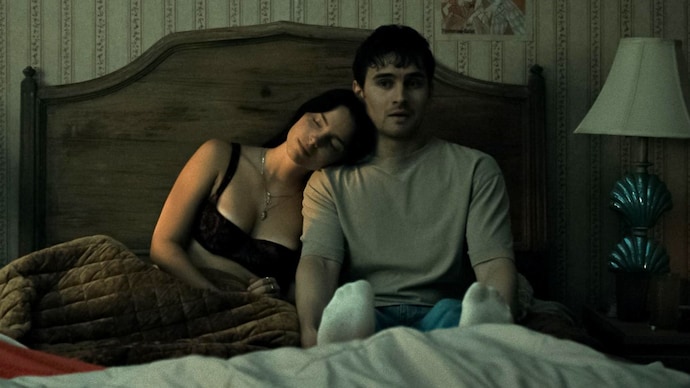
At a time when studios across the world are increasingly betting on giant spectacles, franchise universes and inflated blockbuster economics, Hollywood’s biggest success story of 2026 has arrived from the unlikeliest corner: a tiny indie horror film made by a 26-year-old YouTuber – Obsession.
The Rs 7 crore horror film that stunned Hollywood
Obsession, directed by Curry Barker and starring Michael Johnston and Inde Navarrette, was reportedly mounted on a budget of just $750,000 to $1 million (roughly Rs 6–8 crore). Within two weeks of release, the film had already grossed $100 million worldwide (Rs 950 crore). That means the film has earned nearly 80 to 100 times its production cost, an ROI (Return on Investment) almost unheard of in modern theatrical business.
The most fascinating part is not merely the number itself. It is what the number represents. Because Obsession did not rely on a cinematic universe, massive visual spectacle, franchise nostalgia or superstar casting. It sold one thing: an idea. And somewhere here lies Bollywood’s growing crisis.
Hindi cinema today increasingly operates on a “go big or go home” philosophy. The mid-budget movie structure, once the backbone of the industry, appears more fractured than ever. Films are either mounted as giant theatrical “events” costing hundreds of crores or quietly pushed to streaming platforms with little cultural conversation around them.
Small budget and mid-budget films are disappearing
The middle space is shrinking rapidly. This is especially ironic because Bollywood once thrived in exactly that zone. Films like Kahaani, Queen, Vicky Donor, Andhadhun, Tumbbad and even the original Stree proved that strong concepts and controlled budgets could create both theatrical success and long-term cultural recall.
Today, however, scale itself has become the selling point. Consider the economics of India’s modern blockbuster era.
SS Rajamouli’s RRR was reportedly made on a budget of around Rs 550–600 crore and eventually grossed nearly Rs 1,300 crore worldwide. By every metric, it was a massive blockbuster and a landmark cinematic achievement. But purely from an ROI perspective, the film earned roughly two times its budget.
Compare that to Obsession, which is currently operating at nearly 80x returns. Of course, it is an anomaly. Not every mid-budget film will outperform the scale. But there’s hope.
Similarly, recent mega spectacles like Dhurandhar: The Revenge reportedly carried production and acquisition costs exceeding Rs 250 crore. The film emerged as a blockbuster success, reportedly grossing over Rs 1,800 crore worldwide. That’s approximately 17–20 times its ROI. Again, that is an enormous commercial victory but also a reminder of how dependent the current ecosystem has become on giant bets.
The disappearing middle of Bollywood
Even films that are not positioned as large-scale spectacles are now being mounted on budgets ranging from Rs 50 crore to Rs 100 crore, often with disappointing returns.
Take Bhooth Bangla, reportedly made on a budget exceeding Rs 100 crore, or Mardaani, which is said to have cost between Rs 80 crore and Rs 100 crore. More recently, Pati Patni Aur Woh Do, made on an estimated Rs 45–60 crore budget, struggled to recover its costs at the box office.
As several of these films fail to break even, the rationale behind their escalating budgets continues to raise questions within the industry.
A similar comparison can be made with Hollywood spectacles. Because while global blockbusters are still earning massive gross numbers, their budgets have ballooned so dramatically that profitability margins often look surprisingly modest in comparison.
Take Michael, one of Hollywood’s biggest event films of the year. The film has grossed around $788 million globally (approximately Rs 6,550 crore). But against a reported budget of nearly $155 million (around Rs 1,290 crore), the film’s returns currently stand at roughly five times its production spend.
Similarly, Project Hail Mary, mounted as a large-scale sci-fi spectacle, has earned around $675 million worldwide (roughly Rs 5,600 crore). But with a budget estimated at over $200 million (approximately Rs 1,660 crore), its returns sit closer to three times its cost.
That is where Obsession becomes such a powerful case study.
The film reportedly shot in under a month. It had no major stars. No franchise baggage. No “pan-world” positioning. Yet audiences turned up in large numbers because word-of-mouth became the marketing engine itself. In fact, the film reportedly grew nearly 39% in its second weekend, a rarity in today’s front-loaded box office ecosystem.
The Blumhouse model and the power of low-risk storytelling
Hollywood’s horror economy has understood this model for years. Studios like Blumhouse Productions built entire business strategies around controlled budgets and high-concept storytelling. Paranormal Activity (2007), made for around $15,000 (roughly Rs 12 lakh), went on to gross nearly $194 million (Rs 1610 crore) globally over years. Jordan Peele’s Get Out (2017) earned over $255 million (around Rs 2,120 crore) worldwide on a modest $4.5 million (approximately Rs 37 crore) budget. The risk-reward ratio is fundamentally healthier.
The formula is remarkably simple: low risk, high experimentation, massive upside.
Bollywood, meanwhile, increasingly behaves as though every Friday release must become a national spectacle. Part of that shift is also tied to the industry’s growing pan-India and pan-global ambitions. Actors, studios and filmmakers are now designing films to cater to larger markets across languages and international territories which, creatively, is an exciting evolution for Indian cinema. But those ambitions are also dramatically inflating budgets.
Take Toxic or Ramayana, for instance. The Yash-starrer and Ranbir Kapoor-Sai Pallavi starrer have reportedly been mounted on a scale designed for global crossover appeal, with extensive action, international technicians and multilingual positioning. That ambition is undeniably exciting. Indian cinema reaching for larger global audiences is a positive development.
The challenge is that once films are engineered as global “event spectacles,” budgets begin escalating rapidly, and with that comes enormous recovery pressure. And that is not sustainable.
Because an industry cannot survive on tentpoles alone. Tentpole films create headlines, but mid-budget cinema sustains ecosystems. It creates space for new writers, younger directors, experimental genres and fresh stars. It also gives audiences variety, something increasingly missing in Hindi theatrical cinema today.
Ironically, one of Bollywood’s few recent success stories has come from a genre that embraced precisely this balance: horror-comedy. Maddock Films’ growing horror universe succeeded not because it chased the scale of superhero franchises, but because it trusted rooted storytelling and genre identity.
That middle space is where Bollywood’s revival may eventually lie again.
Because right now, a Rs 7 crore horror film from Hollywood is exposing one uncomfortable truth: audiences still care more about novelty, atmosphere and storytelling than studios often assume.
Not every film needs to cost Rs 500 crore. Not every Friday needs a cinematic universe. And not every theatrical experience needs to be engineered as a “pan-India event.”
Sometimes, all it takes is one strong idea. And in 2026, that idea came from a tiny horror film made by a YouTuber. Curry Barker.
At a time when studios across the world are increasingly betting on giant spectacles, franchise universes and inflated blockbuster economics, Hollywood’s biggest success story of 2026 has arrived from the unlikeliest corner: a tiny indie horror film made by a 26-year-old YouTuber – Obsession.
The Rs 7 crore horror film that stunned Hollywood
Obsession, directed by Curry Barker and starring Michael Johnston and Inde Navarrette, was reportedly mounted on a budget of just $750,000 to $1 million (roughly Rs 6–8 crore). Within two weeks of release, the film had already grossed $100 million worldwide (Rs 950 crore). That means the film has earned nearly 80 to 100 times its production cost, an ROI (Return on Investment) almost unheard of in modern theatrical business.
The most fascinating part is not merely the number itself. It is what the number represents. Because Obsession did not rely on a cinematic universe, massive visual spectacle, franchise nostalgia or superstar casting. It sold one thing: an idea. And somewhere here lies Bollywood’s growing crisis.
Hindi cinema today increasingly operates on a “go big or go home” philosophy. The mid-budget movie structure, once the backbone of the industry, appears more fractured than ever. Films are either mounted as giant theatrical “events” costing hundreds of crores or quietly pushed to streaming platforms with little cultural conversation around them.
Small budget and mid-budget films are disappearing
The middle space is shrinking rapidly. This is especially ironic because Bollywood once thrived in exactly that zone. Films like Kahaani, Queen, Vicky Donor, Andhadhun, Tumbbad and even the original Stree proved that strong concepts and controlled budgets could create both theatrical success and long-term cultural recall.
Today, however, scale itself has become the selling point. Consider the economics of India’s modern blockbuster era.
SS Rajamouli’s RRR was reportedly made on a budget of around Rs 550–600 crore and eventually grossed nearly Rs 1,300 crore worldwide. By every metric, it was a massive blockbuster and a landmark cinematic achievement. But purely from an ROI perspective, the film earned roughly two times its budget.
Compare that to Obsession, which is currently operating at nearly 80x returns. Of course, it is an anomaly. Not every mid-budget film will outperform the scale. But there’s hope.
Similarly, recent mega spectacles like Dhurandhar: The Revenge reportedly carried production and acquisition costs exceeding Rs 250 crore. The film emerged as a blockbuster success, reportedly grossing over Rs 1,800 crore worldwide. That’s approximately 17–20 times its ROI. Again, that is an enormous commercial victory but also a reminder of how dependent the current ecosystem has become on giant bets.
The disappearing middle of Bollywood
Even films that are not positioned as large-scale spectacles are now being mounted on budgets ranging from Rs 50 crore to Rs 100 crore, often with disappointing returns.
Take Bhooth Bangla, reportedly made on a budget exceeding Rs 100 crore, or Mardaani, which is said to have cost between Rs 80 crore and Rs 100 crore. More recently, Pati Patni Aur Woh Do, made on an estimated Rs 45–60 crore budget, struggled to recover its costs at the box office.
As several of these films fail to break even, the rationale behind their escalating budgets continues to raise questions within the industry.
A similar comparison can be made with Hollywood spectacles. Because while global blockbusters are still earning massive gross numbers, their budgets have ballooned so dramatically that profitability margins often look surprisingly modest in comparison.
Take Michael, one of Hollywood’s biggest event films of the year. The film has grossed around $788 million globally (approximately Rs 6,550 crore). But against a reported budget of nearly $155 million (around Rs 1,290 crore), the film’s returns currently stand at roughly five times its production spend.
Similarly, Project Hail Mary, mounted as a large-scale sci-fi spectacle, has earned around $675 million worldwide (roughly Rs 5,600 crore). But with a budget estimated at over $200 million (approximately Rs 1,660 crore), its returns sit closer to three times its cost.
That is where Obsession becomes such a powerful case study.
The film reportedly shot in under a month. It had no major stars. No franchise baggage. No “pan-world” positioning. Yet audiences turned up in large numbers because word-of-mouth became the marketing engine itself. In fact, the film reportedly grew nearly 39% in its second weekend, a rarity in today’s front-loaded box office ecosystem.
The Blumhouse model and the power of low-risk storytelling
Hollywood’s horror economy has understood this model for years. Studios like Blumhouse Productions built entire business strategies around controlled budgets and high-concept storytelling. Paranormal Activity (2007), made for around $15,000 (roughly Rs 12 lakh), went on to gross nearly $194 million (Rs 1610 crore) globally over years. Jordan Peele’s Get Out (2017) earned over $255 million (around Rs 2,120 crore) worldwide on a modest $4.5 million (approximately Rs 37 crore) budget. The risk-reward ratio is fundamentally healthier.
The formula is remarkably simple: low risk, high experimentation, massive upside.
Bollywood, meanwhile, increasingly behaves as though every Friday release must become a national spectacle. Part of that shift is also tied to the industry’s growing pan-India and pan-global ambitions. Actors, studios and filmmakers are now designing films to cater to larger markets across languages and international territories which, creatively, is an exciting evolution for Indian cinema. But those ambitions are also dramatically inflating budgets.
Take Toxic or Ramayana, for instance. The Yash-starrer and Ranbir Kapoor-Sai Pallavi starrer have reportedly been mounted on a scale designed for global crossover appeal, with extensive action, international technicians and multilingual positioning. That ambition is undeniably exciting. Indian cinema reaching for larger global audiences is a positive development.
The challenge is that once films are engineered as global “event spectacles,” budgets begin escalating rapidly, and with that comes enormous recovery pressure. And that is not sustainable.
Because an industry cannot survive on tentpoles alone. Tentpole films create headlines, but mid-budget cinema sustains ecosystems. It creates space for new writers, younger directors, experimental genres and fresh stars. It also gives audiences variety, something increasingly missing in Hindi theatrical cinema today.
Ironically, one of Bollywood’s few recent success stories has come from a genre that embraced precisely this balance: horror-comedy. Maddock Films’ growing horror universe succeeded not because it chased the scale of superhero franchises, but because it trusted rooted storytelling and genre identity.
That middle space is where Bollywood’s revival may eventually lie again.
Because right now, a Rs 7 crore horror film from Hollywood is exposing one uncomfortable truth: audiences still care more about novelty, atmosphere and storytelling than studios often assume.
Not every film needs to cost Rs 500 crore. Not every Friday needs a cinematic universe. And not every theatrical experience needs to be engineered as a “pan-India event.”
Sometimes, all it takes is one strong idea. And in 2026, that idea came from a tiny horror film made by a YouTuber. Curry Barker.

