Jamuna Rani, legendary playback singer, dies in Bengaluru at 88
Veteran South playback singer Jamuna Rani died in Bengaluru on Thursday at the age of 88. Her songs across Tamil, Telugu and Sinhalese films remained tied to an era shaped by melody and voice.
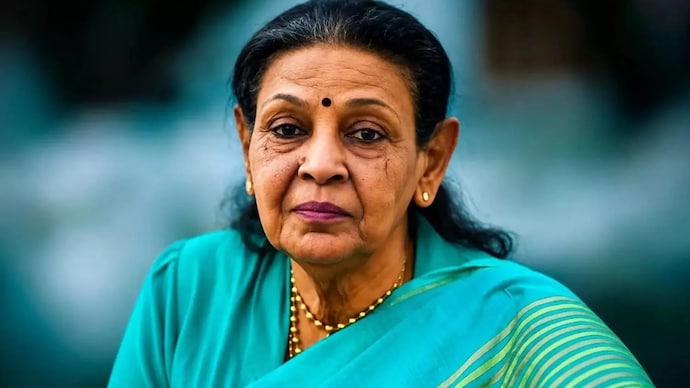
Veteran playback singer Jamuna Rani, whose distinctive voice became synonymous with South Indian cinema's golden era, died in Bengaluru on Thursday, July 30. She was 88. Over a career spanning more than three decades, she recorded thousands of songs in Tamil, Telugu and Sinhalese films, earning acclaim for her folk-inspired style, expressive singing and rhythmic flair.
One of the most recognisable playback voices of the 1950s and 1960s, Jamuna Rani continued to sing into the 1980s. Although a new generation of singers later came to dominate the industry, her songs continued to resonate with audiences across generations.
Among her most memorable Tamil songs was Kaalai Vayasu Kattana Manasu from Deivapiravi. In the same film, she also lent her voice to the poignant version of Senthamizh Thenmozhiyal, while TR Mahalingam's rendition became the more widely celebrated classic. Paattondru Ketten, Paravasam Aanen from Pasamalar, known for its distinctive chorus and humming, remains another enduring favourite.
Her duet with comedian-singer JP Chandrababu, Kungumapoove Konjum Purave, continues to find new listeners even today. Songs such as Mama Mama Mama, celebrated for their folk flavour, and Athikai Kai Kai Alankai Vennilave, in which she was one of four singers, remain well remembered. Her duet with PB Srinivas, Aathimanithan Kathalukkupin, also continues to be cherished by music lovers.
Jamuna Rani began her playback career at the age of seven with a song in the Telugu film Tyagayya. She also sang the child version of the popular number O Devadas in Devadas. Entering the industry at a time when playback singing was dominated by artists such as Jikki, P Leela, ML Vasanthakumari, MS Rajeswari and AP Komala, she carved out a distinct identity through her unique voice and versatility.
She sang extensively for actors Lalitha and Padmini of the Travancore Sisters and shared several memorable duets with leading playback singers, including TM Soundararajan and JP Chandrababu.
Her career received a further boost after she joined Modern Theatres. Decades later, composer Ilaiyaraaja chose Jamuna Rani and MS Rajeswari to sing Naan Sirithal Deepavali for a nautch girl sequence in Kamal Haasan's Nayakan, introducing her voice to a new generation of listeners.
Though she entered the industry before P Susheela, Jamuna Rani was eventually overshadowed by younger playback singers. Yet her influence endured, with many observers noting traces of her expressive vocal style in the singing of LR Eswari.
Veteran playback singer Jamuna Rani, whose distinctive voice became synonymous with South Indian cinema's golden era, died in Bengaluru on Thursday, July 30. She was 88. Over a career spanning more than three decades, she recorded thousands of songs in Tamil, Telugu and Sinhalese films, earning acclaim for her folk-inspired style, expressive singing and rhythmic flair.
One of the most recognisable playback voices of the 1950s and 1960s, Jamuna Rani continued to sing into the 1980s. Although a new generation of singers later came to dominate the industry, her songs continued to resonate with audiences across generations.
Among her most memorable Tamil songs was Kaalai Vayasu Kattana Manasu from Deivapiravi. In the same film, she also lent her voice to the poignant version of Senthamizh Thenmozhiyal, while TR Mahalingam's rendition became the more widely celebrated classic. Paattondru Ketten, Paravasam Aanen from Pasamalar, known for its distinctive chorus and humming, remains another enduring favourite.
Her duet with comedian-singer JP Chandrababu, Kungumapoove Konjum Purave, continues to find new listeners even today. Songs such as Mama Mama Mama, celebrated for their folk flavour, and Athikai Kai Kai Alankai Vennilave, in which she was one of four singers, remain well remembered. Her duet with PB Srinivas, Aathimanithan Kathalukkupin, also continues to be cherished by music lovers.
Jamuna Rani began her playback career at the age of seven with a song in the Telugu film Tyagayya. She also sang the child version of the popular number O Devadas in Devadas. Entering the industry at a time when playback singing was dominated by artists such as Jikki, P Leela, ML Vasanthakumari, MS Rajeswari and AP Komala, she carved out a distinct identity through her unique voice and versatility.
She sang extensively for actors Lalitha and Padmini of the Travancore Sisters and shared several memorable duets with leading playback singers, including TM Soundararajan and JP Chandrababu.
Her career received a further boost after she joined Modern Theatres. Decades later, composer Ilaiyaraaja chose Jamuna Rani and MS Rajeswari to sing Naan Sirithal Deepavali for a nautch girl sequence in Kamal Haasan's Nayakan, introducing her voice to a new generation of listeners.
Though she entered the industry before P Susheela, Jamuna Rani was eventually overshadowed by younger playback singers. Yet her influence endured, with many observers noting traces of her expressive vocal style in the singing of LR Eswari.
Veteran playback singer Jamuna Rani, whose distinctive voice became synonymous with South Indian cinema's golden era, died in Bengaluru on Thursday, July 30. She was 88. Over a career spanning more than three decades, she recorded thousands of songs in Tamil, Telugu and Sinhalese films, earning acclaim for her folk-inspired style, expressive singing and rhythmic flair.
One of the most recognisable playback voices of the 1950s and 1960s, Jamuna Rani continued to sing into the 1980s. Although a new generation of singers later came to dominate the industry, her songs continued to resonate with audiences across generations.
Among her most memorable Tamil songs was Kaalai Vayasu Kattana Manasu from Deivapiravi. In the same film, she also lent her voice to the poignant version of Senthamizh Thenmozhiyal, while TR Mahalingam's rendition became the more widely celebrated classic. Paattondru Ketten, Paravasam Aanen from Pasamalar, known for its distinctive chorus and humming, remains another enduring favourite.
Her duet with comedian-singer JP Chandrababu, Kungumapoove Konjum Purave, continues to find new listeners even today. Songs such as Mama Mama Mama, celebrated for their folk flavour, and Athikai Kai Kai Alankai Vennilave, in which she was one of four singers, remain well remembered. Her duet with PB Srinivas, Aathimanithan Kathalukkupin, also continues to be cherished by music lovers.
Jamuna Rani began her playback career at the age of seven with a song in the Telugu film Tyagayya. She also sang the child version of the popular number O Devadas in Devadas. Entering the industry at a time when playback singing was dominated by artists such as Jikki, P Leela, ML Vasanthakumari, MS Rajeswari and AP Komala, she carved out a distinct identity through her unique voice and versatility.
She sang extensively for actors Lalitha and Padmini of the Travancore Sisters and shared several memorable duets with leading playback singers, including TM Soundararajan and JP Chandrababu.
Her career received a further boost after she joined Modern Theatres. Decades later, composer Ilaiyaraaja chose Jamuna Rani and MS Rajeswari to sing Naan Sirithal Deepavali for a nautch girl sequence in Kamal Haasan's Nayakan, introducing her voice to a new generation of listeners.
Though she entered the industry before P Susheela, Jamuna Rani was eventually overshadowed by younger playback singers. Yet her influence endured, with many observers noting traces of her expressive vocal style in the singing of LR Eswari.

