Bharat Bhhagya Viddhaata review: Kangana is flame in film that could've been a fire
Bharat Bhhagya Viddhaata review: Inspired by the 26/11 Cama Hospital attack, Bharat Bhhagya Viddhaata tells the story of unsung heroes who kept Mumbai going during one of its darkest nights. Led by a powerful Kangana Ranaut, the film shines a light on nurses, security guards and ordinary citizens, even as its one-woman focus leaves many stories untold.
The story of 26/11 has been told many times before. We know the images, the names and how Mumbai came to a standstill as terrorists held the city hostage for nearly three days. Bharat Bhhagya Viddhaata chooses a different angle.
Inspired by the events at Mumbai's Cama Hospital during the 2008 terror attacks, the film fictionalises real events and real people to tell the story of Geeta Madhav, a nurse who finds herself at the centre of one of India's darkest nights. Names have been changed, dramatic liberties have been taken, and emotional layers have been added, but the film's focus remains clear: this is not a story about terrorists. It is a story about those who kept doing their jobs while terror unfolded around them.
At its heart is Kangana Ranaut - both the film's biggest strength and its biggest limitation.
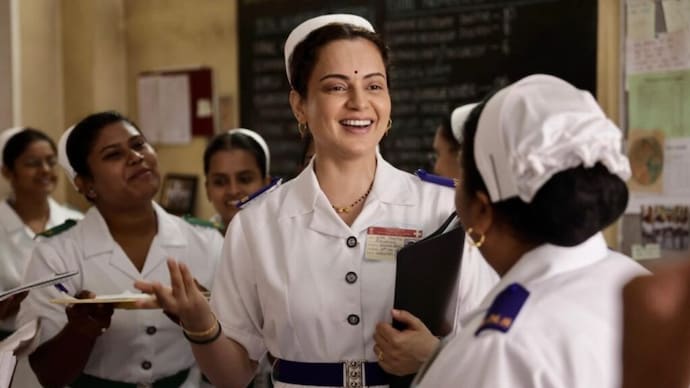
Kangana returns to play a real-life-inspired hero and once again proves why she remains one of the industry's finest performers. The camera frequently lingers on her face, trusting her to communicate fear, determination and grief without saying much. She rarely disappoints. A breakdown scene in particular stands out, revealing the emotional burden carried by a woman trying to save lives while confronting death at every corner.
The film also touches upon something rarely discussed on screen: the everyday struggles of nurses. Their work is often dismissed, undervalued and taken for granted. Bharat Bhhagya Viddhaata acknowledges that reality and also gives dignity to a profession that rarely gets cinematic attention and, as Ranaut said in one of her interviews - has been widely sexualised.
However, the screenplay, by Ritesh Shah, becomes so invested in Geeta's journey that it leaves little room for anyone else. A story like this needed more people, more perspectives, more faces. Because 26/11 was never the story of one individual.
Director Manoj Tapadia keeps the narrative firmly centred on Kangana, and while that gives the film emotional focus, it also limits its scale. The anxiety, confusion and dread of a city under siege often remain outside the frame. There are scenes when the film hints at becoming something larger, but it quickly returns to its protagonist.
The result is a film that feels smaller than the tragedy it is portraying. Ironically, the trailer created a stronger sense of urgency than the film itself.
That absence becomes particularly noticeable because the shadow of terrorist Ajmal Kasab hangs over the entire story. While Bharat Bhhagya Viddhaata is consciously interested in the people caught in the attack rather than the attackers themselves, a slightly wider view of how Mumbai responded to Kasab and the larger terror operation could have added greater context and urgency to the narrative.
This is not to say the film lacks merit. Far from it.
The questions it raises are important. Who does the real work during a crisis? Who gets recognised later? What happens when a hospital becomes a battlefield? What protocols exist when terrorists enter a place designed to save lives?
These questions give the film weight.
A nurse uttering Ghalib's famous coupling, "Humko unse hai wafa ki ummeed jo nahi jaante wafa kya hai," captures the spirit of sacrifice more effectively than many of the film's bigger speeches. Similarly, the film's focus on women is noteworthy. Nurses continue working. Mothers continue protecting. Pregnant women continue bringing life into the world even as terror attempts to destroy it outside.
The supporting cast, unfortunately, is not given enough room to shine. Girija Oak and several capable actors appear throughout the film, but few receive scenes substantial enough to leave a lasting impression. The performances are sincere; the writing simply does not allow them to register strongly.
One of the film's better decisions is its restraint. It does not rely on graphic imagery, and avoids lingering on dead bodies, excessive bloodshed or shock value. The horror of 26/11 is present, but it is not exploited. That keeps the focus on the people more than the violence.
At the same time, the film struggles with pacing. There are multiple points where it feels ready to end, only to continue further. Some portions become repetitive, while a few emotional points are stretched longer than necessary. The closing disclaimer mentioning Prime Minister Narendra Modi arrives after the film has already made its point.
However, despite its flaws, Bharat Bhhagya Viddhaata remains an important watch. It is not the most gripping film on 26/11, but it remembers the people who are often forgotten: the nurses who stayed back, the security guards who stood their ground, the hospital staff who continued working. It acts as a tribute to the ordinary citizens who kept the city functioning when everything around them was falling apart.
History is often held together by people whose names never make the headlines. That makes Bharat Bhhagya Viddhaata a story worth telling.
The story of 26/11 has been told many times before. We know the images, the names and how Mumbai came to a standstill as terrorists held the city hostage for nearly three days. Bharat Bhhagya Viddhaata chooses a different angle.
Inspired by the events at Mumbai's Cama Hospital during the 2008 terror attacks, the film fictionalises real events and real people to tell the story of Geeta Madhav, a nurse who finds herself at the centre of one of India's darkest nights. Names have been changed, dramatic liberties have been taken, and emotional layers have been added, but the film's focus remains clear: this is not a story about terrorists. It is a story about those who kept doing their jobs while terror unfolded around them.
At its heart is Kangana Ranaut - both the film's biggest strength and its biggest limitation.
Kangana returns to play a real-life-inspired hero and once again proves why she remains one of the industry's finest performers. The camera frequently lingers on her face, trusting her to communicate fear, determination and grief without saying much. She rarely disappoints. A breakdown scene in particular stands out, revealing the emotional burden carried by a woman trying to save lives while confronting death at every corner.
The film also touches upon something rarely discussed on screen: the everyday struggles of nurses. Their work is often dismissed, undervalued and taken for granted. Bharat Bhhagya Viddhaata acknowledges that reality and also gives dignity to a profession that rarely gets cinematic attention and, as Ranaut said in one of her interviews - has been widely sexualised.
However, the screenplay, by Ritesh Shah, becomes so invested in Geeta's journey that it leaves little room for anyone else. A story like this needed more people, more perspectives, more faces. Because 26/11 was never the story of one individual.
Director Manoj Tapadia keeps the narrative firmly centred on Kangana, and while that gives the film emotional focus, it also limits its scale. The anxiety, confusion and dread of a city under siege often remain outside the frame. There are scenes when the film hints at becoming something larger, but it quickly returns to its protagonist.
The result is a film that feels smaller than the tragedy it is portraying. Ironically, the trailer created a stronger sense of urgency than the film itself.
That absence becomes particularly noticeable because the shadow of terrorist Ajmal Kasab hangs over the entire story. While Bharat Bhhagya Viddhaata is consciously interested in the people caught in the attack rather than the attackers themselves, a slightly wider view of how Mumbai responded to Kasab and the larger terror operation could have added greater context and urgency to the narrative.
This is not to say the film lacks merit. Far from it.
The questions it raises are important. Who does the real work during a crisis? Who gets recognised later? What happens when a hospital becomes a battlefield? What protocols exist when terrorists enter a place designed to save lives?
These questions give the film weight.
A nurse uttering Ghalib's famous coupling, "Humko unse hai wafa ki ummeed jo nahi jaante wafa kya hai," captures the spirit of sacrifice more effectively than many of the film's bigger speeches. Similarly, the film's focus on women is noteworthy. Nurses continue working. Mothers continue protecting. Pregnant women continue bringing life into the world even as terror attempts to destroy it outside.
The supporting cast, unfortunately, is not given enough room to shine. Girija Oak and several capable actors appear throughout the film, but few receive scenes substantial enough to leave a lasting impression. The performances are sincere; the writing simply does not allow them to register strongly.
One of the film's better decisions is its restraint. It does not rely on graphic imagery, and avoids lingering on dead bodies, excessive bloodshed or shock value. The horror of 26/11 is present, but it is not exploited. That keeps the focus on the people more than the violence.
At the same time, the film struggles with pacing. There are multiple points where it feels ready to end, only to continue further. Some portions become repetitive, while a few emotional points are stretched longer than necessary. The closing disclaimer mentioning Prime Minister Narendra Modi arrives after the film has already made its point.
However, despite its flaws, Bharat Bhhagya Viddhaata remains an important watch. It is not the most gripping film on 26/11, but it remembers the people who are often forgotten: the nurses who stayed back, the security guards who stood their ground, the hospital staff who continued working. It acts as a tribute to the ordinary citizens who kept the city functioning when everything around them was falling apart.
History is often held together by people whose names never make the headlines. That makes Bharat Bhhagya Viddhaata a story worth telling.

